Kenya Safaris
Overview
Kenya in general
Kenya is an East African nation straddling the equator, bordered by Ethiopia and South Sudan to the north, Somalia to the east, Tanzania to the south, Uganda to the west, and the Indian Ocean along its entire southeastern coastline. Covering approximately 580,000 square kilometres, Kenya combines a dramatic range of ecosystems — savannah, highland forest, desert, wetland and tropical coast — with a tourism infrastructure that is among the most developed and experienced in Africa.
Kenya is where the modern safari industry was born — the word itself is Swahili for "journey" — and over a century of wildlife tourism has produced a guide and ranger community of exceptional skill, a lodge and camp sector of remarkable quality across every price point, and a conservation infrastructure that has delivered some of Africa's most celebrated wildlife recoveries, including the elephant population rebound in Amboseli and the recovery of black rhinos from near-extinction. The country remains the reference point against which all other African safari destinations are measured.
Beyond the wildlife, Kenya offers remarkable cultural diversity — over 40 ethnic groups, each with distinct languages, traditions and material cultures — anchored by the Maasai, whose iconic presence in the savannah landscapes of southern Kenya has become one of Africa's most recognisable cultural images, and the Swahili civilisation of the coast, one of the oldest and most sophisticated urban cultures in sub-Saharan Africa. Nairobi, the capital, is East Africa's most cosmopolitan city: fast-moving, entrepreneurial, creative, and surprisingly vibrant for visitors who approach it with curiosity rather than apprehension.
Official languages: Kenya has two official languages — Swahili (Kiswahili), the national language spoken nationwide, and English, the language of government, business, education and tourism. Nearly all tourism staff across Kenya's parks and lodges are fluent English speakers. Visitors encounter no language barrier anywhere in the country's safari and hospitality sector.
Geography & Landscapes
Five entirely different Kenyas
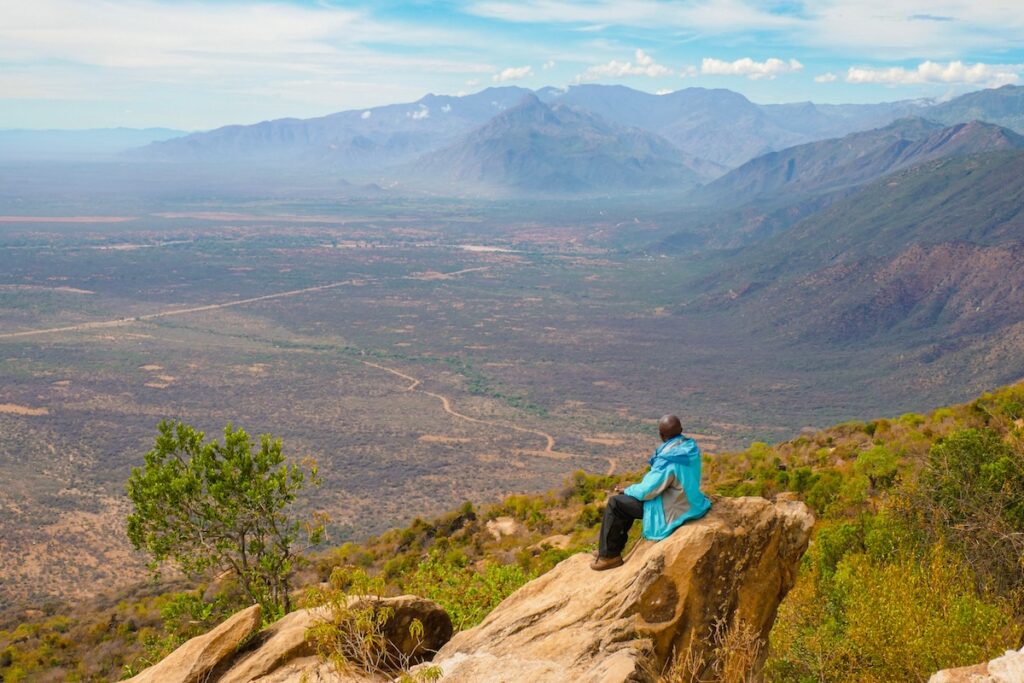
Kenya's geographic range is one of its most remarkable attributes — within a single country, a visitor can move from the tropical warmth of the Indian Ocean coast to the moorlands above 4,000 metres on Mount Kenya, from the open grassland plains of the Mara to the semi-arid thornbush of the north, within transfers that are measured in hours rather than days.
The Southern Savannah — Maasai Mara & Amboseli
Kenya's southern savannah — the Maasai Mara ecosystem in the southwest and the Amboseli basin below Kilimanjaro in the southeast — is the landscape that defines the global image of African wildlife. Open grassland plains stretching to the horizon, acacia woodland threading through seasonal river systems, and a wildlife density that remains, even in an era of growing tourism pressure, genuinely extraordinary. The Mara's annual wildebeest migration crossing is the single most dramatic wildlife event on Earth.
The Central Highlands — Mount Kenya & Aberdares
The volcanic highlands of central Kenya rise dramatically above the savannah floor — Mount Kenya reaching 5,199 metres as Africa's second-highest peak, and the Aberdare Range forming a forested highland plateau. These cooler, forested zones support a different wildlife community from the savannah: forest elephants, bongo, giant forest hogs, and the tree lodges that allow guests to observe wildlife at waterholes from elevated platforms through the night — a uniquely Kenyan game-viewing tradition.
The Rift Valley — Lakes & Flamingos
The Great Rift Valley runs the length of western Kenya, its floor dotted with a chain of soda lakes — Nakuru, Bogoria, Elementaita, Baringo — that support one of the world's most spectacular concentrations of flamingos alongside diverse wildlife communities. Lake Nakuru is Kenya's most celebrated rhino sanctuary; Lake Baringo is one of East Africa's finest freshwater birding destinations. The Rift Valley's dramatic escarpments frame every viewpoint with a geological grandeur that no photograph fully captures.
The Arid North — Samburu & Laikipia
Northern Kenya's semi-arid landscapes — Samburu and Buffalo Springs reserves along the Ewaso Nyiro River, and the private conservancy ecosystem of Laikipia Plateau — offer a completely different safari experience from the southern parks. The endemic wildlife of the north — Grevy's zebra, reticulated giraffe, gerenuk, Somali ostrich and Beisa oryx — exists nowhere in the world's other safari circuits, and the wild, remote atmosphere of the northern frontier gives this landscape a character of extraordinary distinction.
The Indian Ocean Coast — Swahili Heritage & Marine Life
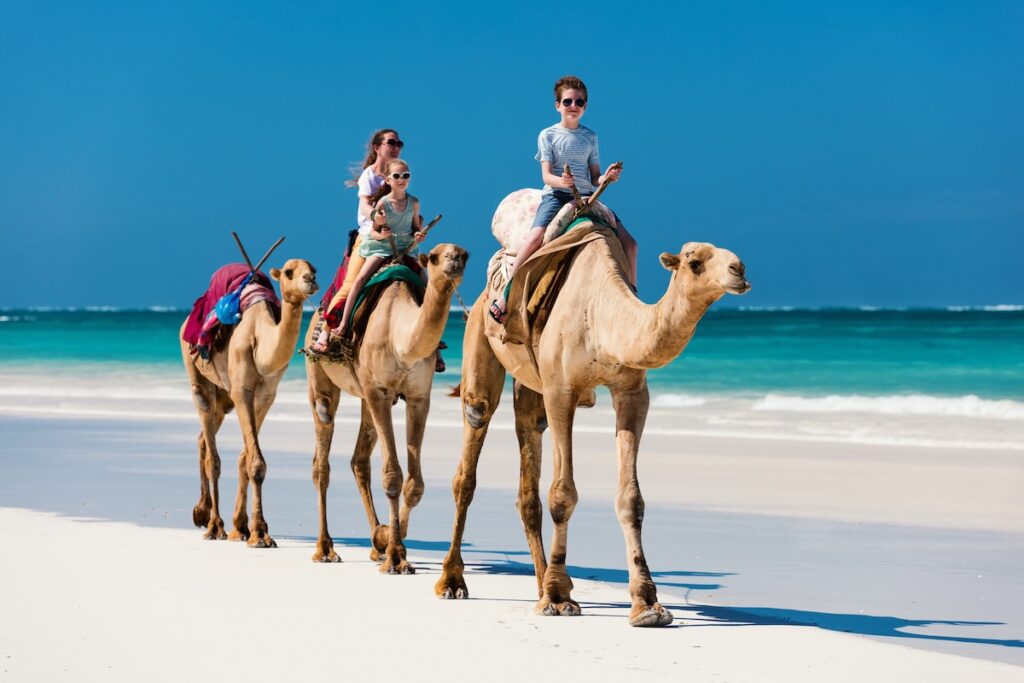
Kenya's coastline — from Lamu in the north through Malindi, Watamu, and Diani to the Tanzanian border — is one of Africa's most beautiful and historically layered. Coral reefs of extraordinary richness run parallel to white sand beaches fringed with coconut palms; offshore, whale sharks, dolphins and sea turtles move through warm equatorial waters. The ancient Swahili city of Lamu — a UNESCO World Heritage Site — is one of the best-preserved medieval Swahili settlements in East Africa and a destination of compelling cultural depth.
Tsavo — Kenya's Largest Wilderness
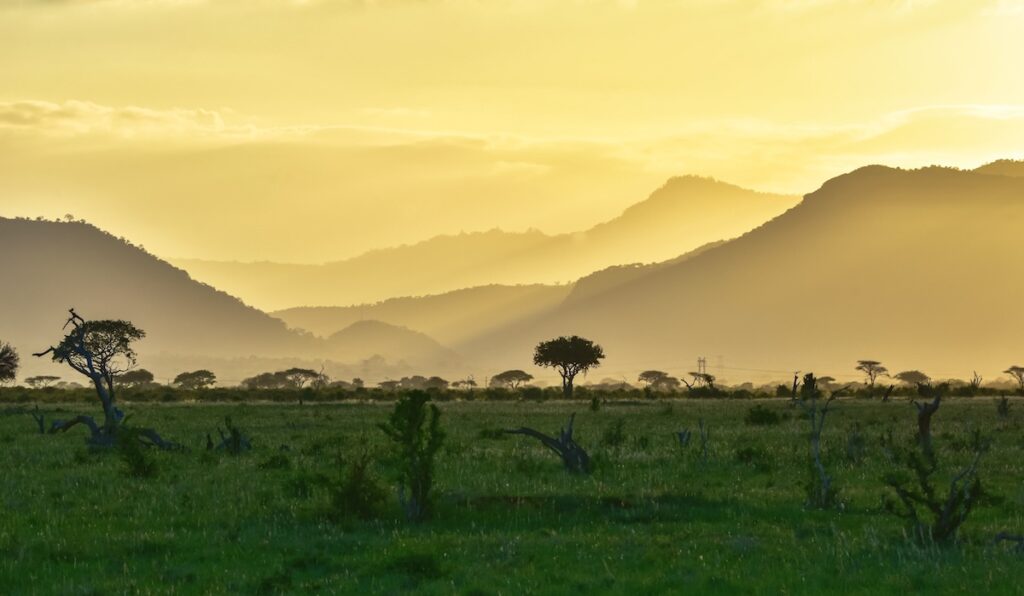
Tsavo East and Tsavo West together form Kenya's largest national park — a vast, dramatic wilderness of red dust, lava flows, rivers lined with doum palms, and a landscape whose scale and emptiness produce an atmosphere unlike any other park in the country. The red elephants of Tsavo — their hides stained by the park's distinctive volcanic soil — are among Kenya's most iconic wildlife images, and the park's low visitor density relative to its extraordinary wildlife makes it one of the country's best choices for the visitor who wants the full savannah experience without crowds.
Wildlife & National Parks
Kenya's essential parks & reserves
Kenya's 23 national parks and reserves, supplemented by a growing network of private conservancies, cover approximately 8% of the country's total land area. Five anchor virtually every serious Kenya itinerary — each offering a distinct ecological experience and wildlife community that complements rather than duplicates the others.
Maasai Mara National Reserve
The Maasai Mara is Kenya's most celebrated wildlife destination — a 1,510 square kilometre national reserve that forms the northern extension of Tanzania's Serengeti ecosystem, sharing an unfenced border across which wildlife moves freely between the two countries. The Mara's permanent grass plains, seasonal riverine forest and the Mara and Talek rivers support one of the highest densities of lion, leopard, cheetah and African wild dog in East Africa, alongside permanent populations of elephants, buffalo, giraffes, zebras and dozens of antelope species.
The Great Migration — approximately 1.5 million wildebeest and 250,000 zebra moving from the Serengeti north into the Mara between July and October — transforms the reserve into the site of the world's most dramatic wildlife spectacle. The river crossings at the Mara River, where wildebeest plunge into crocodile-filled water in panicked surges that can involve thousands of animals simultaneously, are the defining wildlife event of any Africa safari calendar.
The private conservancies surrounding the Mara — Olare Motorogi, Naboisho, Ol Kinyei, and others — offer game viewing in areas with far lower visitor density than the national reserve, with the added option of walking safaris and night game drives not permitted inside the reserve itself.
Key Highlights
- The Great Migration river crossings — July to October; the world's greatest wildlife spectacle
- Big cat encounters — lions, leopards and cheetahs at a density unmatched anywhere in East Africa
- Hot air balloon safaris — dawn flights over the Mara plains with champagne bush breakfast
- Private conservancies — walking safaris, night drives and dramatically fewer vehicles than the reserve
- Maasai cultural visits — authentic village visits with Maasai communities on the reserve boundary
- Year-round game drives — excellent wildlife even outside the migration period
- 600+ bird species recorded in the ecosystem
Amboseli National Park
Amboseli National Park occupies the basin below Mount Kilimanjaro — Africa's highest peak — whose snow-capped summit dominates the southern horizon from every point in the park, rising to 5,895 metres above the flat Amboseli plain in a juxtaposition of scale and drama that has produced some of the most iconic wildlife photographs ever taken. The park's name derives from a Maasai word meaning "salty and dusty" — Amboseli's dry season landscape is exactly that, a pale expanse of cracked lakebed ringed by yellow grass, with the mountain floating above it all.
Amboseli is above all an elephant park — home to one of East Africa's most studied and best-known elephant populations, large-tusked families whose social dynamics have been documented by researchers for over 50 years. The park's open terrain and well-known elephant families allow a quality of elephant observation — watching the complexity of matriarchal family structure, inter-family relationships, and mother-calf interaction at close range — that few parks anywhere in Africa can match.
Key Highlights
- Kilimanjaro backdrop — the world's most photographed mountain-wildlife combination
- Large-tusked elephants — large, well-studied families; exceptional quality of elephant observation
- Swamp observation — Amboseli's permanent swamps support hippos and extraordinary waterbirds
- Lions, cheetahs and wild dogs — all present; open terrain makes for excellent predator viewing
- Maasai culture — deep Maasai community integration across the Amboseli ecosystem
- Dawn and dusk photography — Kilimanjaro revealed in morning light above the plains
Samburu National Reserve
Samburu National Reserve in northern Kenya occupies a different ecological world from the southern parks — a semi-arid landscape of dry acacia scrub, rocky hills and the life-giving Ewaso Nyiro River, which sustains an extraordinary concentration of wildlife in an otherwise arid environment. Samburu is famous for its endemic northern species — the "Samburu Special Five" — found nowhere else in Kenya's major parks: Grevy's zebra, reticulated giraffe, gerenuk (the long-necked antelope that feeds standing on its hind legs), Beisa oryx, and the Somali ostrich. The combination of these uniquely northern animals with a full cast of savannah predators and the dramatic river setting makes Samburu one of Kenya's most distinctive and rewarding park experiences.
The Samburu people themselves — semi-nomadic pastoralists closely related to the Maasai — add a compelling cultural dimension to the northern experience. Their relationship with wildlife is complex and genuine, rooted in generations of coexistence with the same elephants, lions and leopards that visitors come from around the world to see.
Key Highlights
- Samburu Special Five — Grevy's zebra, reticulated giraffe, gerenuk, Beisa oryx, Somali ostrich
- Ewaso Nyiro River game drives — crocodiles, elephants and leopards along the riverbank
- Lions and leopards — both species reliably seen; leopards particularly well-known in this reserve
- Samburu cultural experiences — visits to manyatta homesteads and interaction with Samburu elders
- Elephant Research Project — Save the Elephants operates from Samburu; guided research visits available
- Laikipia Plateau connections — Samburu connects to the private conservancy ecosystem of Laikipia
Lake Nakuru National Park
Lake Nakuru National Park centres on a shallow alkaline lake in the floor of the Rift Valley — one of the world's most famous flamingo habitats, where population conditions can support hundreds of thousands of lesser and greater flamingos coating the lake's margins in a band of pink that is visible from the escarpment viewpoints above. The lake's flamingo numbers fluctuate significantly with water level and algae productivity, but even in reduced years the spectacle remains one of Kenya's most dramatic natural displays.
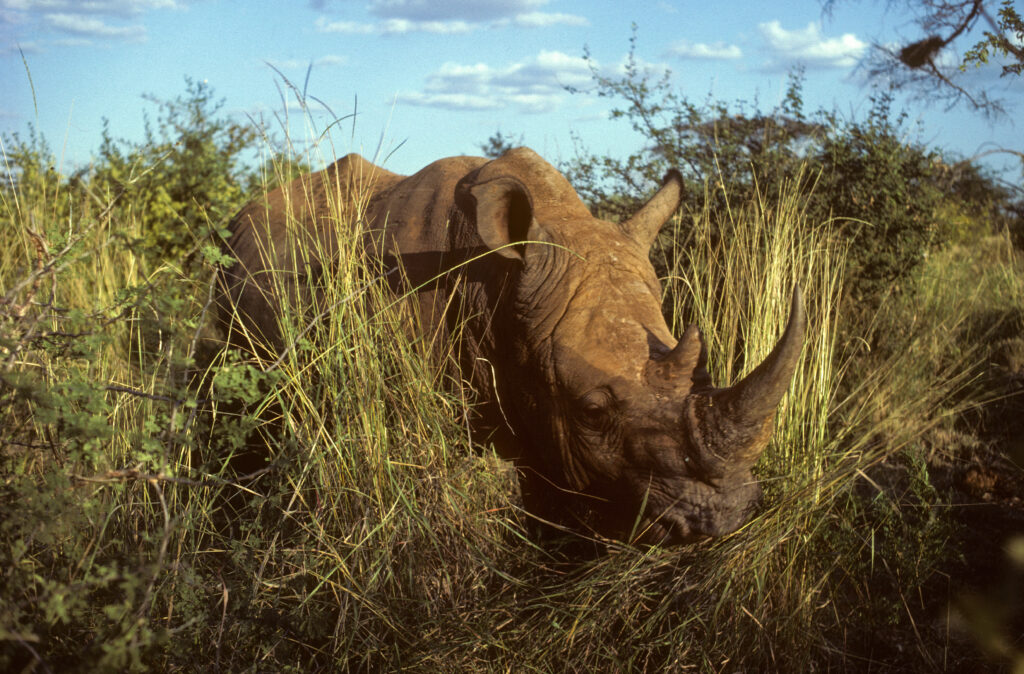
Beyond the flamingos, Nakuru has been developed as one of Kenya's most important rhino sanctuaries — both black and white rhinos are reliably present and frequently seen on game drives, making this one of the best parks in Kenya for rhino sightings. Lions, leopards, buffalos, waterbucks, impalas and giraffes complete a game-viewing menu that makes Nakuru a rewarding half-day addition to any Rift Valley itinerary.
Key Highlights
- Flamingos — lesser and greater flamingos coating Lake Nakuru's shoreline when conditions allow
- Black and white rhinos — one of Kenya's most reliable rhino viewing destinations
- Lions and leopards — both species present and regularly sighted on game drives
- Baboon Cliff & Lion Hill viewpoints — panoramic views across the lake and the Rift Valley floor
- Rothschild's giraffe — a small population of this endangered subspecies lives within the park
- Waterbirds — pelicans, cormorants and a rich diversity of waterbirds beyond the flamingos
Tsavo East & Tsavo West National Parks
Tsavo East and Tsavo West together constitute Kenya's largest national park — over 21,000 square kilometres of wilderness bisected by the Nairobi–Mombasa highway and the Tsavo River. Tsavo East is flat, open and vast — a landscape of red laterite soil, scattered commiphora thornbush, the Galana River running through it and an elephant population numbering in the thousands whose hides are stained the same distinctive red as the park's earth. Tsavo West is more varied and visually dramatic — volcanic hills, lava flows, the Mzima Springs where crystal-clear water erupts from the lava rock supporting hippos and crocodiles in extraordinary clarity.
Tsavo's defining characteristic is its scale and relative emptiness — visitor numbers per square kilometre are dramatically lower than in the Mara or Amboseli, and the sense of wilderness, of being genuinely in one of Africa's great unmanaged spaces, is correspondingly stronger. For visitors who find the vehicle density at Kenya's more popular parks distracting, Tsavo delivers a quality of safari experience that is both outstanding and genuinely wild.
Key Highlights
- Red elephants of Tsavo — large herds stained by the park's distinctive red volcanic soil
- Mzima Springs — crystal-clear hippo pool fed by lava-filtered water; underwater viewing chamber
- Galana River drives — riverine forest along the Galana supporting crocodiles and diverse birdlife
- Low vehicle density — outstanding game viewing without the crowds of the Mara or Amboseli
- Lions, leopards, cheetahs, wild dogs — all present across both parks
- Ngulia Rhino Sanctuary — black rhino conservation area within Tsavo West
- Lumo Community Wildlife Sanctuary — community-managed area adjacent to Tsavo West
Kenya's conservation legacy & future
Kenya was the first African country to ban trophy hunting (1977) and has led the continent in conservation innovation ever since — from community conservancy models that give wildlife economic value to local landowners, to the dramatic wildlife recoveries in Amboseli's elephants and Nakuru's rhinos. The growth of private conservancies bordering the Mara and in Laikipia has created some of Africa's most sophisticated models of conservation finance, where tourism revenue directly funds wildlife protection and community benefit in the same transaction.
Culture & History
A country of deep cultural layers
Kenya's cultural landscape is as varied as its geography — over 40 ethnic groups, each with its own language, traditions and material culture, layered over a colonial history that left complex legacies in land, language and urban form, and anchored by two of Africa's most internationally recognised cultural traditions: the Maasai and the Swahili coast.
The Maasai
The Maasai are Kenya's most internationally recognised cultural community — semi-nomadic pastoralists whose traditional territories span southern Kenya and northern Tanzania, whose distinctive red-checked shukas, elaborate beadwork jewellery, and warrior tradition have made them icons of African cultural identity worldwide. Maasai communities live alongside the wildlife of the Mara and Amboseli ecosystems in a relationship that is complex, evolving, and increasingly mediated by tourism revenue. A well-conducted Maasai village visit — facilitated by community-benefit cultural programmes rather than tourist-trap performances — is one of the most genuinely engaging cultural experiences in East Africa.
The Swahili Coast
Kenya's Indian Ocean coast is home to one of Africa's most distinctive civilisations — the Swahili, a culture born from centuries of trade between the African interior, the Arabian peninsula, India and Persia. The Swahili language, the lingua franca of East Africa, emerged from this exchange. Lamu Old Town — a UNESCO World Heritage Site — is the finest surviving medieval Swahili settlement in existence: a labyrinthine island city of coral-stone houses, carved wooden doorways, narrow donkey lanes, and a way of life that has changed less in four centuries than anywhere else on the Kenyan coast. Mombasa's Old Town, Fort Jesus, and the ruins at Gede and Malindi complete a Swahili heritage trail of extraordinary depth.
Nairobi — East Africa's Capital
Nairobi is East Africa's most cosmopolitan and rapidly evolving city — a hub of technology, finance, creative industries and diplomatic activity that consistently surprises visitors expecting a difficult African city and finding instead a dynamic, culturally rich, and increasingly well-serviced urban environment. The Westlands and Kilimani neighbourhoods have developed a restaurant, café and arts scene of genuine quality. The Karen suburb — named for Karen Blixen, who farmed here in the 1920s — provides a leafy, historically layered contrast to the city centre. The Nairobi National Park, where lions walk within sight of the city skyline, is one of the world's most extraordinary urban wildlife paradoxes.
The Nairobi National Museum is one of East Africa's finest — housing Kenya's most comprehensive collections of natural history, cultural artefacts, and contemporary Kenyan art. A two-hour visit before or after a safari provides invaluable context for everything encountered in the parks. The adjacent Snake Park and the city's proximity to the Karen Blixen Museum make a Nairobi cultural half-day genuinely rewarding.
Adventures & Activities
Beyond the game drive
Kenya's mature tourism infrastructure means that activities beyond the standard game drive are available at a level of quality and variety unmatched by most other African safari countries. From dawn balloon flights over the Mara to snorkelling Kenya's coral reefs, the country's experiential range is exceptional.
Great Migration River Crossings — Mara
The wildebeest river crossings at the Mara River between July and October are the single most dramatic wildlife event on Earth — thousands of animals plunging into crocodile-filled water in panicked surges. Position yourself on the bank before dawn and wait; patience is rewarded.
Hot Air Balloon Safari — Maasai Mara
A dawn balloon flight over the Mara plains, watching the landscape and its wildlife from above as the light changes, followed by a champagne bush breakfast in the field. One of Africa's most celebrated safari experiences — and justifiably so.
Walking Safaris — Private Conservancies
Walking safaris — on foot, with armed ranger escort, in genuine wildlife country — are available in Kenya's private conservancies surrounding the Mara and in Laikipia. The experience of reading sign, tracking animals and moving quietly through the bush at ground level is transformatively different from a vehicle game drive.
Giraffe Centre — Nairobi
The African Fund for Endangered Wildlife's Giraffe Centre in Karen allows visitors to hand-feed and interact with Rothschild's giraffes — one of the world's most endangered giraffe subspecies — at close range. An unexpectedly moving encounter, particularly for families. Pairs well with the Karen Blixen Museum nearby.
Mount Kenya Trekking
Africa's second-highest peak offers trekking routes ranging from the non-technical Point Lenana (4,985m, accessible without mountaineering equipment) to the technical summit climbs of Batian and Nelion. The afro-alpine moorlands, giant lobelia and senecio, and the mountain's extraordinary wildlife make this a rewarding high-altitude adventure.
Lamu — Swahili Heritage & Dhow Sailing
Lamu Old Town is one of East Africa's most extraordinary cultural destinations — a UNESCO World Heritage Site reachable by a short flight from Nairobi, where donkeys are the only transport, carved wooden doors line narrow coral-stone lanes, and traditional dhow sailing remains a living practice on the surrounding archipelago.
Marine Safari — Watamu & Malindi
Kenya's marine national parks at Watamu and Malindi protect coral reefs of exceptional richness. Snorkelling and diving reveal a reef community of tropical fish, sea turtles, and — in season — whale sharks. Glass-bottomed boat excursions and dolphin watching complete the marine activity menu.
Night Game Drives — Private Conservancies
Night drives — permitted in private conservancies but not inside national parks — reveal Kenya's nocturnal wildlife community: caracal, serval, porcupine, honey badger, bush babies, and the predators who do their most serious work after dark. A dramatically different safari experience from the daytime game drive.
Cuisine
Kenyan food & flavour
Kenyan cuisine reflects the country's ethnic diversity and its position at the crossroads of African, Arab, Indian and colonial culinary traditions. Safari lodge dining has developed alongside tourism into a high-quality, often exceptional experience; simultaneously, the country's street food and local restaurant culture offers genuine, inexpensive flavour that rewards exploration.
Nyama Choma
Dry-roasted goat or beef — Kenya's national dish in every meaningful sense. Cooked over charcoal until the exterior chars and the inside stays juicy, served with kachumbari (fresh tomato and onion salsa) and ugali. Found everywhere from roadside nyama choma joints to upmarket Nairobi restaurants.
Ugali
Stiff maize porridge — Kenya's foundational starch, eaten at virtually every meal in every part of the country. Torn off in pieces and used to scoop stews, vegetables and sauces, ugali is the Kenyan equivalent of bread: understated, essential, and deeply satisfying in its simplicity.
Pilau & Biryani
The Indian Ocean coast's long trading history with Arabia and India left a deep culinary inheritance — aromatic rice dishes spiced with cardamom, cinnamon, cumin and cloves that are among the most flavourful preparations in the Kenyan repertoire. Particularly celebrated on the coast and in Mombasa's Old Town restaurants.
Sukuma Wiki
Collard greens (or kale) sautéed with onions, tomatoes and spices — Kenya's most consumed vegetable dish, its name meaning "push the week" in Swahili, a reference to its role as an affordable staple that stretches food budgets. Simple, nutritious, and genuinely delicious with ugali.
Swahili Seafood
Fresh crab, lobster, prawns and reef fish prepared with coconut milk, lime and spiced sauces in the Swahili coastal tradition — one of Africa's finest seafood cuisines, available at its best in the beach restaurants of Diani, Watamu, and Lamu's waterfront.
Kenyan Tea & Coffee
Kenya produces some of the world's finest black tea — the Kenyan highlands' volcanic soil and altitude produce a bold, bright, copper-coloured brew that is the foundation of chai: tea boiled with milk, sugar and spices. Kenya's Arabica coffee, grown in the central highlands, is equally world-class and increasingly showcased in Nairobi's growing specialty coffee scene.
Nairobi's restaurant scene has transformed over the past decade into one of East Africa's most sophisticated — contemporary Kenyan cuisine restaurants in Westlands and Kilimani reinterpret traditional ingredients and techniques through a modern lens, while the city's Indian community has maintained a chain of exceptionally good South Asian restaurants that reflect over a century of Indian presence in Kenya. Budget at least one serious Nairobi dinner into any itinerary that passes through the capital.
Travel Information
Planning your Kenya trip
Kenya is one of Africa's most visitor-ready safari destinations — with well-developed entry systems, good internal connectivity, and a tourism infrastructure built across decades of international experience. The following covers the practical essentials. Sankofa Africa Tours manages all logistics and documentation guidance for clients on our Kenya safari programmes.
Best time to visit
July to October & January to February
Kenya's primary dry season (July–October) coincides precisely with the Great Migration in the Maasai Mara — making it the most sought-after safari period in Africa. Game viewing across all parks is excellent as vegetation thins and wildlife concentrates around permanent water sources. January–February is Kenya's second, shorter dry season — excellent for the Mara and for Amboseli before the long rains begin in March.
- July–October: Great Migration in the Mara; peak game viewing across all parks
- River crossings peak between August and September — book camps early for the best river positions
- January–February: dry, clear, excellent for Amboseli with Kilimanjaro views
- Highest demand for lodges and camps — book 9–12 months ahead for peak Mara season
November to December & March to June
Kenya's two wet seasons bring lush, green landscapes and lower visitor numbers. Game viewing remains excellent — wildlife is present year-round — and the combination of lower lodge rates and fewer vehicles at popular parks makes the green season an increasingly attractive choice for experienced safari travellers.
- November–December: short rains; good birding; wildebeest calving season begins in the Serengeti
- March–June: long rains; the Mara is dramatically green; good cat sightings continue
- Significantly lower lodge rates; better permit and accommodation availability
- Exceptional birding — migratory species and breeding plumage across all ecosystems
Entry requirements, health & getting there
| Category | What You Need to Know |
|---|---|
| Visa | Kenya operates an Electronic Travel Authorisation (eTA) system — most nationalities must apply online before travel at etakenya.go.ke. The eTA is typically processed within 72 hours and costs USD $30 for most nationalities. Kenya also participates in the East Africa Tourist Visa (USD $100), valid for multiple entries across Kenya, Uganda and Rwanda for 90 days. Always verify current requirements for your specific passport before booking international flights — Kenya's entry systems have undergone recent changes and policies can shift. Passports should be valid for at least six months beyond your intended departure date from Kenya. |
| Getting There | Jomo Kenyatta International Airport (NBO) in Nairobi is East Africa's largest and busiest international hub, with direct or one-stop connections from virtually every major city in the world. Kenya Airways, Ethiopian Airlines, KLM, British Airways, Qatar Airways, Turkish Airlines, Emirates and many others serve Nairobi. Mombasa's Moi International Airport (MBA) receives flights from Europe and the Middle East for visitors combining a safari with a coast stay. Wilson Airport, a 15-minute drive from JKIA, handles all domestic and charter flights to Kenya's parks. |
| Getting Around | Kenya has an excellent domestic light aircraft network connecting Nairobi's Wilson Airport with airstrips at all major parks — Maasai Mara, Amboseli, Samburu, Tsavo, Laikipia and beyond. Scheduled and charter flights are the most efficient and comfortable way to move between parks. Road transfers in 4WD safari vehicles are also available for all parks and are the standard option for Amboseli and closer destinations. Kenya drives on the left-hand side of the road. Sankofa Africa Tours provides private 4WD transfers and can arrange light aircraft connections for all itineraries. |
| Health | Yellow fever vaccination is required if arriving from a yellow fever endemic country — check requirements based on your travel history. Malaria prevention is strongly recommended for all park areas; consult a travel health clinic at least 4–6 weeks before departure to discuss anti-malarial options. The Nairobi Plateau (above 2,500m) and the coast have different malaria risk profiles from the park areas — discuss your specific itinerary with your travel health clinic. Typhoid and hepatitis A vaccination are also recommended. Bottled or filtered water is advised throughout the country. |
| Currency | Kenya's official currency is the Kenyan Shilling (KES). US Dollars are widely accepted at lodges, camps, tour operators and for park fees. ATMs are available in Nairobi, Mombasa and major towns — not reliably in park areas. Credit cards (Visa and Mastercard) are accepted at most upmarket lodges and restaurants. Carry sufficient USD cash in small denominations for tips, market purchases, and any park-area expenses. The best exchange rates for Kenyan Shillings are found at Nairobi's licensed foreign exchange bureaux. |
| Language | Kenya has two official languages — Swahili, the national language spoken by virtually the entire population, and English, the language of government, education, business and tourism. Both are used interchangeably across Kenya's tourism sector. Learning a few Swahili phrases — jambo (hello), asante (thank you), karibu (welcome) — is warmly received by Kenyans and adds genuine warmth to interactions throughout the country. |
| Electricity | 240V / 50Hz. Kenya uses Type G plugs (UK-style three-pin square) as standard — the same as Uganda and Tanzania. Bring a universal travel adaptor if your devices use European, American or other plug types. Nairobi and Mombasa have reliable grid power. Safari lodges and camps in and around the parks range from full generator power to solar with limited charging hours — confirm with your specific lodge and bring a power bank for camera and device charging in the field. |
| Park Fees | Kenya Wildlife Service (KWS) park fees vary by park and must be paid via the Msafiri online platform or at park gates — cash payment is no longer accepted at most parks. Fees are charged in USD for non-residents and are included in Sankofa Africa Tours' package pricing. Conservancy fees for private areas surrounding the Mara are charged separately and also included in our package pricing. Do not attempt to arrange park access independently without understanding the current fee structure, which changes periodically. |
Safety & Security
Travelling safely in Kenya
Kenya is a well-established international tourist destination visited safely by hundreds of thousands of international visitors annually. The major safari parks and the coast are generally secure and well-managed environments. As with all destinations, staying informed and following recommended precautions is important.
Always consult your own government's official travel advice before booking and before departure — travel advisories are updated frequently and reflect current conditions that no travel guide can fully anticipate. The UK Foreign Office (gov.uk/foreign-travel-advice/kenya), the US State Department (travel.state.gov) and equivalent national sources are the most reliable current references. Sankofa Africa Tours monitors official advisories continuously and communicates any relevant updates to clients ahead of their travel dates.
Nairobi requires standard big-city awareness — petty theft and opportunistic crime occur in busy public areas. Kenya's major tourist areas — the CBD, Westlands, Karen, and Gigiri — are well-managed and generally safe for visitors taking reasonable precautions. Avoid displaying valuables, use registered taxis or ride-hailing apps (Bolt and Uber operate reliably in Nairobi), and follow your hotel's security guidance.
In the parks: all game drives are conducted in vehicles with experienced, licensed Kenya Wildlife Service-accredited guides. Guests should remain in the vehicle at all times unless instructed otherwise by their guide. Do not approach wildlife on foot outside designated areas. Night drives are only available in private conservancies with armed ranger escort — never attempt them independently.
Northern Kenya border areas — particularly those adjacent to Somalia and South Sudan — carry significantly elevated risk profiles and are not part of any Sankofa Africa Tours itinerary. The major safari parks of southern and central Kenya, the coast, and Nairobi all have well-established security infrastructure and a long history of safe tourist operations.
Plan Your Kenya Safari
Ready to witness
the greatest show on Earth?
Sankofa Africa Tours designs bespoke Kenya itineraries — from intimate Mara conservancy safaris timed to the Great Migration, to extended journeys combining the northern specials of Samburu, the elephants of Amboseli and the Swahili coast. Every detail is managed by our team.
Start Planning My Kenya Safari