
Tanzania
Overview
Tanzania in general
Tanzania is a vast East African nation bordering Kenya and Uganda to the north, Rwanda, Burundi and the DRC to the west, Zambia, Malawi and Mozambique to the south, and the Indian Ocean to the east. Covering approximately 945,000 square kilometres — one of Africa's largest countries — Tanzania offers an extraordinary range of landscapes, ecosystems, and wildlife experiences that no other single destination on the continent can match in breadth or depth.
The country is home to some of the most globally recognisable natural landmarks on Earth: the Serengeti National Park, acclaimed as the world's finest wildlife destination; the Ngorongoro Crater, the largest intact volcanic caldera on the planet; Mount Kilimanjaro, Africa's highest peak at 5,895 metres; and the Zanzibar Archipelago, a string of Indian Ocean islands with a rich Swahili cultural history and pristine coral reef coastline. Together, these create a country that delivers the full spectrum of African safari experience within a single itinerary.
Tanzania's infrastructure for wildlife tourism is the most developed in East Africa. A well-established network of safari lodges, tented camps, and specialist guiding operations — particularly in the northern circuit — means that visitors at all budget levels can access extraordinary wildlife encounters. The country's vast protected area network, covering nearly 40% of total land area, is the largest such proportion of any country in Africa.
Official languages: Swahili (Kiswahili) is Tanzania's national language, spoken universally across the country and serving as the primary language of commerce, education, and daily life. English is the second official language and is widely used in tourism, business, and higher education. Visitors will encounter no significant language barrier in national parks, lodges, or the major tourist circuit — English is comfortably used throughout Tanzania's hospitality sector.
Geography & Landscapes
Five distinct environments
Tanzania's scale — nearly four times the size of the United Kingdom — means it encompasses ecological zones found nowhere else together on Earth. From snow-capped equatorial peaks to open savannah, ancient rainforest to Indian Ocean reef, each zone defines its own character and requires its own approach.
The Northern Serengeti Plains
The Serengeti ecosystem — spanning over 30,000 square kilometres including the adjoining Ngorongoro Conservation Area, Maswa Game Reserve, and Kenya's Maasai Mara — is the world's most celebrated savannah. Open grassland, acacia woodland, and kopje (granite outcrop) habitats support the planet's most intact large-mammal assemblage and host the annual Great Wildebeest Migration — the single largest movement of animals on Earth, involving over 1.5 million wildebeest and several hundred thousand zebra and gazelle.
Ngorongoro Highlands
The Ngorongoro Conservation Area in northern Tanzania contains the world's largest intact volcanic caldera — a collapsed ancient volcano whose 600-metre-deep walls enclose a self-contained ecosystem of 260 square kilometres. The crater floor supports extraordinary wildlife density: an estimated 25,000 large mammals in a bounded area, including one of Africa's last stable black rhino populations. The surrounding highland forests and crater rim provide a dramatically different habitat and spectacular views into the caldera below.
Mount Kilimanjaro
Rising abruptly from the surrounding plains to 5,895 metres above sea level, Kilimanjaro is Africa's highest peak and the world's highest free-standing volcano. Its five ecological zones — cultivated lower slopes, rainforest, heath and moorland, alpine desert, and arctic summit ice fields — make a Kilimanjaro ascent one of the world's great trekking experiences, achievable by non-technical climbers through several well-established routes of varying difficulty and duration.
Western Rainforests — Mahale & Gombe
Along the shores of Lake Tanganyika in western Tanzania, two national parks — Mahale Mountains and Gombe Stream — protect remote, pristine rainforest that is home to wild chimpanzee populations. Gombe is where Dr Jane Goodall began her landmark primate research in 1960. Both parks are reached by boat across the world's second deepest lake — an extraordinary approach that frames the remoteness and intensity of the experience before you even reach the forest.
Zanzibar & the Indian Ocean Coast
Tanzania's 800-kilometre Indian Ocean coastline, and the Zanzibar Archipelago in particular, form a world apart from the mainland safari circuit. Zanzibar's Stone Town is a UNESCO World Heritage site of deep Swahili-Arab cultural heritage. The island's northern and eastern beaches offer powdery coral sand, turquoise water, and some of East Africa's finest snorkelling and diving. Zanzibar pairs naturally with any mainland safari as a rest-and-recovery final chapter.
Southern Circuit — Ruaha & Nyerere
Tanzania's southern circuit — centred on Ruaha National Park and the vast Nyerere National Park (formerly the Selous Game Reserve, one of the largest protected areas in Africa) — offers a wilder, less-visited counterpart to the north. Ruaha, Tanzania's largest national park, holds huge elephant populations, wild dog packs, and exceptional lion density. Both parks allow walking safaris and boat safaris in addition to game drives — a more intimate wildlife experience unavailable in most northern circuit parks.
Wildlife & National Parks
Five parks, five entirely different worlds
Tanzania's 22 national parks and network of game reserves and conservation areas represent the most comprehensive wildlife protection system in Africa. We highlight five that form the backbone of the finest Tanzania itineraries — each a completely distinct experience, each irreplaceable.
Serengeti National Park
The Serengeti is the world's most celebrated national park — a 14,763-square-kilometre ecosystem of open grassland, acacia woodland, and ancient granite kopjes that hosts the largest intact assemblage of large mammals remaining on Earth. It is consistently voted the world's best national park by international travel organisations and has held UNESCO World Heritage status since 1981.
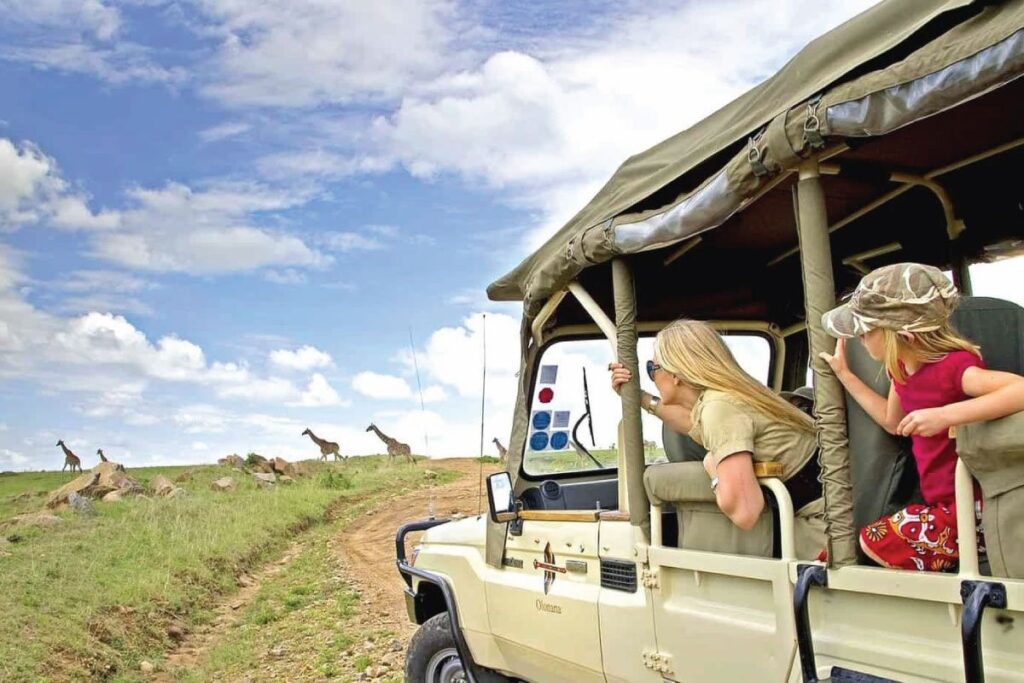
The park's defining event is the Great Wildebeest Migration — a year-round, cyclical movement of over 1.5 million wildebeest and several hundred thousand zebra and Thomson's gazelle that follows the rains across the Serengeti-Mara ecosystem. The river crossings of the Mara and Grumeti rivers — where enormous crocodiles ambush the crossing herds — are among the most dramatic wildlife spectacles on Earth. Game viewing outside migration season is equally extraordinary: the Serengeti hosts Africa's highest lion density, large cheetah populations, leopard, elephant, and enormous buffalo herds.
Key Highlights
- Great Wildebeest Migration — year-round movement; river crossings typically July–October in the north
- Africa's highest lion density — prides of up to 30 lions are regularly encountered
- Cheetah — the Serengeti's open plains are among the best places on Earth to watch cheetah hunts
- Leopard — concentrated in the Seronera valley's riverine acacia trees; reliably sighted
- Hot air balloon safari at dawn — one of Africa's most iconic and visually spectacular experiences
- Central, Western, and Northern Serengeti offer entirely different habitats — plan for multiple zones
- Voted Best National Park in the World — TripAdvisor Travellers' Choice 2021
Ngorongoro Conservation Area
The Ngorongoro Crater is the world's largest intact volcanic caldera — a collapsed ancient supervolcano whose 600-metre walls enclose 260 square kilometres of self-sustaining ecosystem. The crater floor supports an estimated 25,000 large mammals in a bounded area, creating one of the highest wildlife densities anywhere in Africa. Unlike the Serengeti, the crater's enclosed nature means most species remain year-round — making every game drive a near-guaranteed encounter with an exceptional variety of animals.
The Conservation Area is unique in Tanzania in that it is managed for both wildlife and the Maasai pastoralists who have grazed their cattle within its boundaries for generations — a genuinely complex and fascinating coexistence that adds human and cultural depth to the wildlife experience. The crater rim provides extraordinary panoramic views into the caldera and is itself a wildlife-rich habitat of highland forest.
Key Highlights
- Black rhino — one of Africa's last stable and regularly sighted wild black rhino populations
- Lions — large, well-studied crater prides; famously dark-maned males unique to the crater population
- Hippo pool — the crater's central Mandusi hippo pool is one of the most concentrated in Africa
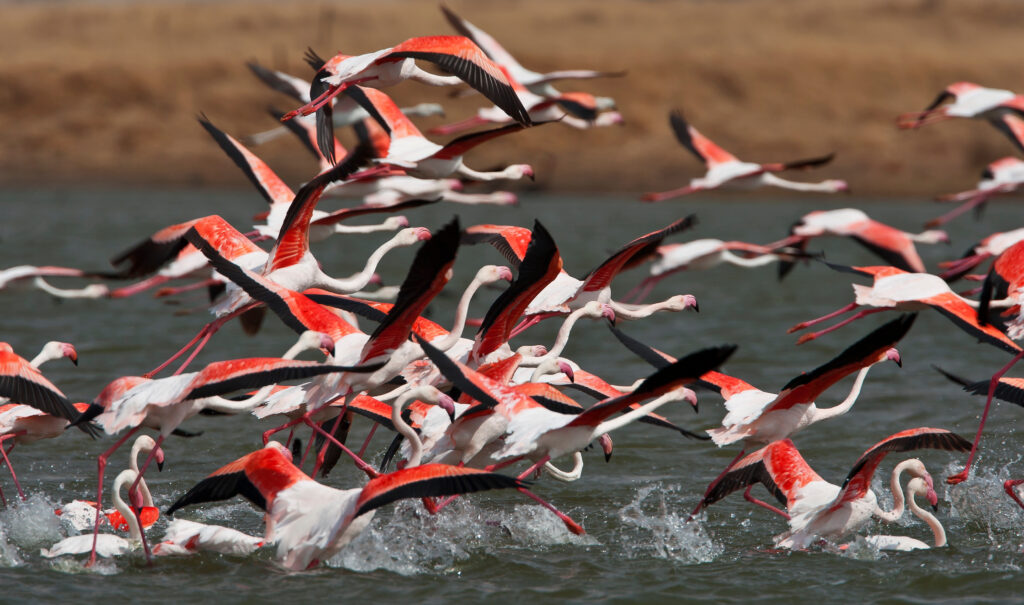
- Flamingos — vast flocks on the soda flats of Lake Magadi within the crater floor
- Olmoti and Empakaai craters — lesser-visited adjacent craters accessible by guided walking safari
- Olduvai Gorge — the "Cradle of Mankind" palaeontological site, accessible from the crater rim road
- Maasai cultural encounters — guided village visits to authentic Maasai bomas near the crater
Tarangire National Park
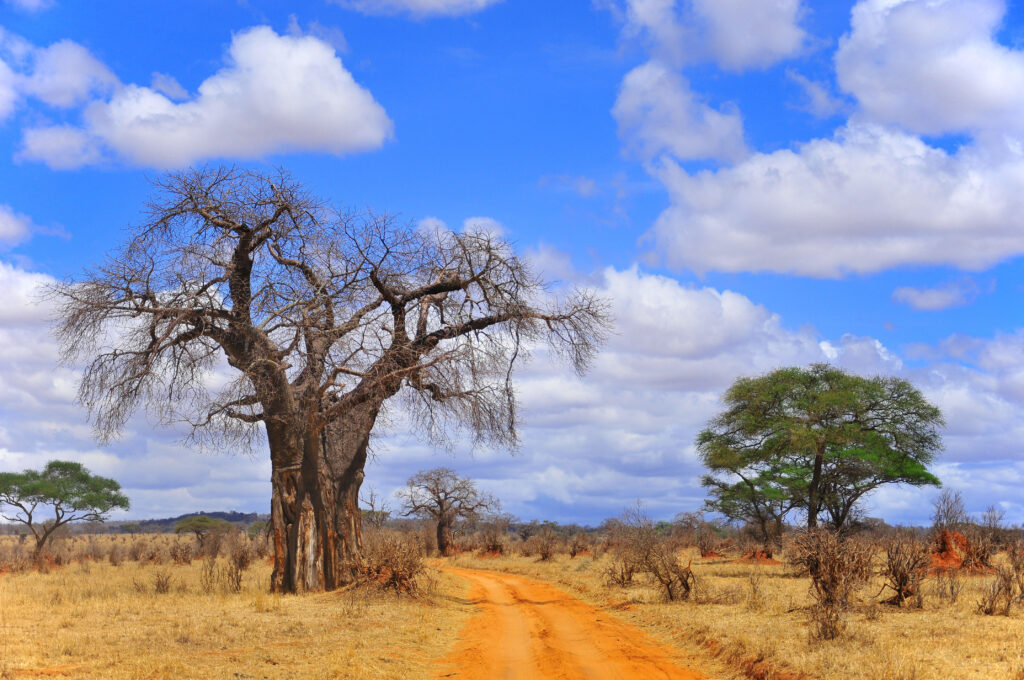
Tarangire is the essential companion to the Serengeti and Ngorongoro on Tanzania's northern circuit — a park of extraordinary character whose landscape of ancient baobab trees, dry riverbeds, and dense Acacia-Commiphora woodland is unlike anywhere else in East Africa. The Tarangire River is the only permanent water source for hundreds of kilometres during the dry season, drawing some of Tanzania's largest elephant herds to its banks from July through October.
Tarangire's dry season concentrations of wildlife — including enormous elephant family groups, large herds of buffalo, zebra, wildebeest, and fringe-eared oryx — rival and often exceed what is visible in the more famous parks to the north. The park also hosts the highest density of tree-climbing pythons in Tanzania, and the northern swamp areas hold significant populations of aquatic species including hippos and crocodiles.
Key Highlights
- Elephant — Tarangire holds some of Tanzania's largest dry-season elephant concentrations; herds of 200+ are regularly encountered
- Ancient baobabs — the park's monumental baobab trees, some over 1,000 years old, create one of Africa's most distinctive safari landscapes
- Lion and leopard — both regularly sighted; the park's resident prides are well-habituated to vehicles
- Night game drives — available in Tarangire; offering access to nocturnal species unavailable in most parks
- Walking safaris — available with licensed guides; the dry river bed provides extraordinary tracking experiences
- Birding — over 550 recorded species, including yellow-collared lovebirds and the Ashy Starling, endemic to the Maasai Steppe
Ruaha National Park
Ruaha is Tanzania's largest national park — a vast, remote wilderness of over 20,000 square kilometres centred on the Great Ruaha River and characterised by a dramatic landscape of rocky outcrops, open grassland, baobab-studded plains, and dense riverine forest. It is consistently recommended by safari professionals as one of Africa's finest and most under-visited wildlife destinations — a park where predator viewing rivals anything the Serengeti offers, with a fraction of the visitor numbers.
Ruaha's lion population is one of Africa's largest, and the park holds an exceptional density of leopard, cheetah, and wild dog — the endangered African wild dog is regularly encountered here, making Ruaha one of the most reliable wild dog destinations in East Africa. Walking safaris along the river and night drives add dimensions of wildlife encounter unavailable in Tanzania's northern parks.
Key Highlights
- African wild dog — one of East Africa's most reliable destinations for encounters with this endangered species
- Lion — one of Africa's largest lion populations; exceptional pride density throughout the park
- Elephant — huge herds gather along the Great Ruaha River; Tanzania's second-largest elephant population
- Walking safari — guided walks along the river offer the most immersive bush experience in Tanzania
- Night drives — access to nocturnal predators and species unavailable to daylight game drives
- Virtually no crowds — a typical game drive in Ruaha encounters fewer than five other vehicles all day
Mahale Mountains & Gombe Stream
Mahale Mountains National Park and Gombe Stream National Park — two small, remote, and extraordinarily special parks on the eastern shore of Lake Tanganyika — offer Tanzania's chimpanzee trekking experiences. Mahale is home to over 800 wild chimpanzees across its forested mountain slopes and protects one of the largest habituated chimp communities in Africa. Gombe is where Dr Jane Goodall began her pioneering research in 1960 — the longest continuous wildlife research project in history — and the park carries profound scientific and emotional significance.
Both parks are accessible only by boat across Lake Tanganyika — one of the world's deepest and most ancient lakes. The combination of the lake crossing, the dense forest trekking, and the intimacy of the chimpanzee encounter creates an experience entirely different in character from any other primate safari in Africa. The crystal-clear lake also offers excellent snorkelling directly from the camp beach at Mahale.
Key Highlights
- Chimpanzee trekking — habituated groups in dense tropical rainforest; one of Africa's most intimate primate encounters
- Mahale holds 800+ wild chimpanzees — the largest habituated community accessible to visitors in Africa
- Gombe Stream — Jane Goodall's original research site; the world's longest continuous wildlife study
- Lake Tanganyika — second deepest lake in the world; snorkelling with endemic cichlid fish directly from camp
- Access by boat — the approach across Lake Tanganyika frames the remoteness from the moment you depart
- No vehicle access — all activities on foot; a completely different safari experience from any other Tanzania park
Tanzania's wildlife & conservation scale
Tanzania protects more land in national parks and conservation areas than any other country in Africa — nearly 40% of its total land area. This extraordinary commitment to wildlife conservation, combined with a robust tourism sector, has created an ecosystem of protection and community benefit that is the model for African safari conservation worldwide.
Culture & History
A country of extraordinary cultural depth
Tanzania's cultural landscape is as rich and diverse as its wildlife. With over 120 tribal groups — including the Maasai, Chagga, Hadzabe, and the Swahili coast communities — and a Swahili heritage shaped by centuries of Indian Ocean trade, Tanzania offers cultural encounters that add a profound human dimension to any wildlife safari.
The Maasai
The Maasai are Tanzania's most recognised indigenous community — semi-nomadic pastoralists who have grazed cattle across the Serengeti and Ngorongoro highlands for centuries. Distinctive in their red shuka robes, beaded jewellery and ochre-dyed hair, the Maasai maintain a proud cultural identity in close coexistence with the country's greatest wildlife areas. Guided visits to authentic Maasai bomas near Ngorongoro and Tarangire offer genuine cultural engagement — including traditional jumping dances, fire-making demonstrations, and medicinal plant knowledge.
Zanzibar Swahili Heritage
Zanzibar's Stone Town is a UNESCO World Heritage Site of extraordinary layered history — an ancient trading port shaped by Arab, Persian, Indian, Portuguese, and British influences across more than a thousand years of Indian Ocean commerce. Stone Town's narrow alleys, intricately carved wooden doors, old coral-stone buildings, and spice market create a sensory environment unlike anything on the African mainland. The island's Swahili culture — its music, cuisine, architecture, and Islamic traditions — is one of the most distinctive on the continent.
Hadzabe Bushmen & Cultural Diversity
Tanzania's 120+ distinct ethnic groups include the Hadzabe — one of the world's last remaining hunter-gatherer communities, living near Lake Eyasi in the shadow of the Ngorongoro highlands and practicing a lifestyle directly continuous with the earliest human cultures. Guided Hadzabe encounters near Karatu include witnessing early-morning hunting expeditions, berry-gathering, and the clicking language that linguists consider one of humanity's oldest surviving tongues. A deeply humbling and unforgettable cultural experience available as an extension to northern circuit safaris.
Olduvai Gorge — located within the Ngorongoro Conservation Area — is one of the most important palaeontological sites in the world. Often called the "Cradle of Mankind," this 90-metre-deep gorge has yielded fossil remains of early hominids dating back 1.8 million years, fundamentally reshaping our understanding of human evolution. A visit to the Olduvai Gorge Museum, accessible on the rim road between the crater and the Serengeti, adds remarkable historical depth to any northern circuit Tanzania itinerary.
Adventures & Activities
Beyond the game drive
Tanzania's range of environments — savannah, rainforest, volcanic highland, alpine desert, ocean reef — means that the country's activity offering goes far beyond a standard game drive safari. A well-constructed Tanzania itinerary can incorporate mountain trekking, chimpanzee encounters, island snorkelling, walking safaris, and cultural immersion within a single journey.
Great Migration Game Drives
Following the wildebeest migration across the Serengeti — and timing your visit for the Mara or Grumeti river crossings — is one of the defining wildlife experiences available anywhere on the planet. Year-round, with peak drama from July to October in the Northern Serengeti.
Hot Air Balloon Safari — Serengeti
Dawn balloon flights above the Serengeti plains — with champagne breakfast on landing — offer a perspective on the landscape and the migration that no vehicle can match. One of Africa's most iconic and expensive single experiences, worth every dollar for the right visitor.
Mount Kilimanjaro Trek
Africa's highest peak is climbed via several routes of varying duration (5–9 days) and difficulty. The Machame and Lemosho routes are most recommended by experienced operators. No technical climbing required — Kilimanjaro is the world's highest walkable volcano, accessible to fit, acclimatised trekkers.
Chimpanzee Trekking — Mahale & Gombe
Tracking wild chimpanzees in the dense forests above Lake Tanganyika is one of East Africa's most remote and emotionally powerful wildlife experiences. Accessible by boat only — the approach across the world's second-deepest lake adds drama from the first moment.
Ngorongoro Crater Game Drive
The floor of the world's largest intact caldera, visited on a full-day game drive of incomparable wildlife density. Black rhino, lions, hippos, and flamingos in one bounded ecosystem — a completely different experience from open-savannah game drives and one that virtually guarantees exceptional encounters.
Walking Safari — Ruaha & Nyerere
Guided walking safaris along the Great Ruaha River or through the Nyerere wilderness provide an entirely different relationship with the African bush — tracking, observation, and the heightened senses that come from experiencing wildlife at ground level without a vehicle.
Zanzibar — Beaches, Reefs & Stone Town
The Zanzibar Archipelago provides the perfect end-of-safari transition from bush to beach — UNESCO-listed Stone Town's alleys and spice markets, pristine northern beaches, and exceptional Indian Ocean snorkelling and diving over intact coral reefs.
Hadzabe Cultural Encounter — Lake Eyasi
A guided visit with the Hadzabe bushmen near Lake Eyasi — one of the world's last hunter-gatherer communities — provides a deeply personal and humbling cultural encounter that complements the natural history themes of any northern Tanzania safari.
Cuisine
Tanzanian food & flavour
Tanzanian cuisine reflects the country's remarkable cultural diversity — Swahili spice-trading heritage, Arab and Indian influences on the coast, and the straightforward, nourishing staple-based cooking of the mainland interior. Safari lodge dining across the northern and southern circuits has also developed into an internationally sophisticated offering, with several camps producing food of genuine excellence.
Ugali
Tanzania's national staple — a dense, smooth porridge of ground maize cooked to a firm consistency and eaten with the hands, used to scoop stews, beans, and grilled meats. The everyday foundation of almost every Tanzanian meal from the simplest roadside stall to a home kitchen.
Nyama Choma
Grilled meat — typically goat or beef, sometimes chicken — slow-cooked over charcoal and served in large pieces with kachumbari (a sharp fresh tomato and onion salsa). Tanzania's most social food: nyama choma joints are gathering places, celebrations, and hospitality all at once.
Zanzibar Pilau & Biryani
The Swahili coast's Arab and Indian heritage lives most vividly in its rice dishes — pilau spiced with cardamom, cinnamon, cumin, and cloves cooked with meat or seafood; and richly layered biryani perfumed with saffron, fried onions, and a complexity of spice that reflects centuries of Indian Ocean trade routes.
Zanzibar Seafood
The Zanzibar Archipelago's seafood is exceptional — freshly caught lobster, giant prawns, red snapper, octopus, and squid, grilled simply over coconut-husk charcoal at the famous Forodhani Night Market in Stone Town or at upmarket beach restaurants along the northern coast.
Chipsi Mayai
Tanzania's beloved street food — a thick omelette embedded with fried chips cooked in a large pan and served cut into wedges. Simple, filling, and ubiquitous: found from Arusha to Dar es Salaam, from petrol stations to market stalls, and adored by Tanzanians of every background.
Safari Lodge Dining
Tanzania's premier safari camps and lodges — particularly in the Serengeti, Ruaha, and Zanzibar — have elevated bush dining into genuine culinary experiences: candlelit dinners under acacia trees, sundowner cocktails on the kopje, and breakfast watching elephants at the water hole.
Zanzibar spices — cloves, cardamom, cinnamon, nutmeg, and black pepper — were once among the most valuable commodities in the world, and Zanzibar was the global centre of the clove trade. A guided spice farm tour near Stone Town remains one of the island's most vivid and enjoyable half-day experiences: tasting, smelling, and learning to identify the raw spices that shaped global culinary history, many growing wild along the path.
Travel Information
Planning your Tanzania safari
Tanzania is a well-organised safari destination with good infrastructure on the main tourism circuits. The following covers the key practical information every visitor needs before arrival. Sankofa Africa Tours handles all pre-travel documentation guidance, permit booking, and logistics for clients on our Tanzania programmes.
Best time to visit
Dry Seasons — June to October & January to February
Tanzania's long dry season from June to October is the prime safari period across all circuits. Wildlife concentrates around water sources, vegetation is lower for easier sightings, and the Mara River crossings in the northern Serengeti peak from July to October.
- June–October: best overall game viewing across all parks; Mara crossings July–October
- January–February: short dry season; calving season in southern Serengeti (vast newborn wildebeest herds)
- Peak demand for lodges and camps — book 9–12 months ahead for peak season
- Kilimanjaro: best climbing conditions January–February and June–October
- Zanzibar: June–October offers dry, comfortable beach weather
Wet Seasons — March to May & November to December
Tanzania's "long rains" (March–May) bring heavy daily rainfall and significantly lower visitor numbers. Some camps close during this period, but those that remain open offer exceptional value, lush green landscapes, and outstanding birding.
- Safari continues year-round — rain does not cancel game drives
- Lower visitor numbers; significantly reduced lodge rates; a more exclusive experience
- Outstanding birdwatching — migratory species present in large numbers
- Green season calving in January–February makes southern Serengeti exceptional
- Some remote roads and smaller camps may be inaccessible in heavy rain — confirm with your operator
Entry requirements, health & getting there
| Category | What You Need to Know |
|---|---|
| Visa | As of January 2025, Tanzania has phased out visa-on-arrival for most nationalities. An eVisa must be obtained before travel via Tanzania's official immigration portal (visa.immigration.go.tz). The tourist eVisa costs USD $50 for most nationalities and USD $100 for US citizens (multiple-entry). Validity is 90 days. The East African Tourist Visa (USD $100) covers multiple entries to Tanzania, Kenya, and Uganda for 90 days — excellent value for combined itineraries. Passports must be valid for at least six months beyond your date of entry. |
| Getting There | Julius Nyerere International Airport in Dar es Salaam (DAR) is Tanzania's main international gateway. Kilimanjaro International Airport (JRO), located between Arusha and Moshi, is the preferred entry point for northern circuit safaris. Zanzibar International Airport (ZNZ) receives direct regional flights from Nairobi and Dar es Salaam. Carriers serving Tanzania include KLM, Ethiopian Airlines, Qatar Airways, Kenya Airways, RwandAir, Turkish Airlines, and Condor. |
| Getting Around | The northern safari circuit is best accessed by private 4WD safari vehicle on well-maintained roads. Domestic charter flights connect the major airstrips within the Serengeti and offer critical time-saving on longer itineraries. The southern circuit parks are typically reached by charter flight from Dar es Salaam. Tanzania drives on the left-hand side of the road. Sankofa Africa Tours provides all ground transfers in private 4WD vehicles. |
| Health | Malaria prevention is essential — Tanzania is malaria-endemic, including in all national park areas. Consult a travel health clinic at least 4–6 weeks before departure to select the appropriate anti-malarial. Use DEET-based insect repellent and sleep under treated nets provided by lodges. Yellow fever vaccination may be required if arriving from or transiting through a yellow fever-endemic country. Drink only bottled or lodge-purified water throughout Tanzania. |
| Currency | Tanzania's official currency is the Tanzanian Shilling (TZS). US Dollars are widely accepted at lodges, camps, and for all major safari costs — most safari pricing is quoted in USD. ATMs are available in Arusha and Dar es Salaam but are often unreliable. Bring sufficient USD cash for tips, market purchases, and activities not included in your package. Dollar bills must be post-2006 and in good condition — torn or older notes are frequently refused. |
| Language | Kiswahili is Tanzania's national language, spoken universally as the mother tongue across all 120+ ethnic groups. English is the second official language and is widely used throughout the tourism and hospitality sector. Learning a few basic Swahili greetings — Jambo (hello), Asante (thank you), Karibu (welcome) — is warmly appreciated and will open genuine smiles wherever you go. |
| Electricity | 230V / 50Hz. Tanzania uses Type G plugs (the standard UK three-pin square plug) — the same used in Kenya, Uganda, and across much of East Africa. Bring a universal travel adaptor if your devices use other plug types. Lodges and camps on the main safari circuits have reliable power; remote camps operate on generator or solar power with designated charging hours. |
| Photography | Tanzania's national parks are among the world's finest photography destinations. There are no additional photography fees in most parks for standard camera equipment. Drone use requires a permit from the Tanzania Civil Aviation Authority and separate authorisation from TANAPA — a complex process; confirm requirements well in advance. Bring sufficient memory cards and a good dust-proof camera bag for dry-season game drive conditions. |
Safety & Security
Travelling safely in Tanzania
Tanzania's national park circuits and Zanzibar are well-established, safe, and visited by hundreds of thousands of international tourists every year without incident. That said, Tanzania is a large country with areas of varying security profile, and informed preparation is always advisable.
Before travelling, always consult your own government's official travel advice for Tanzania — including the separate advice typically issued for Zanzibar and mainland Tanzania — as advisories are updated regularly and reflect real-time conditions. Sankofa Africa Tours monitors travel advisories on an ongoing basis and communicates developments to clients ahead of their travel dates.
The main safari circuits — Arusha, Serengeti, Ngorongoro, Tarangire, Zanzibar, and Kilimanjaro — are well-managed for visitor safety with a long-established tourism infrastructure. Petty crime (pickpocketing, bag-snatching) can occur in Arusha and Dar es Salaam city centres; standard urban vigilance applies. Zanzibar Stone Town requires awareness after dark in unfamiliar alleys — use reputable transport and stay on known routes.
In the national parks: all game drives are conducted from closed vehicles with experienced licensed guides. Walking safaris are conducted with armed rangers. Always follow your guide's instructions regarding wildlife distances and behaviour. Tanzania's TANAPA rangers and lodge staff take visitor safety very seriously — incidents in the parks are extremely rare.
Plan Your Tanzania Safari
Ready to witness
the greatest show on Earth?
Sankofa Africa Tours designs bespoke Tanzania itineraries — from intimate northern circuit journeys to remote southern wild dog safaris, Kilimanjaro ascents, western chimpanzee expeditions, and Zanzibar beach finales. Every permit, transfer, camp, and experience is selected and managed by our team.
Start Planning My Tanzania Safari