
Uganda

Uganda — Sankofa Africa Safaris
48M+ Population
10 National Parks
~459 Mountain Gorillas in Bwindi
Kampala Capital City

Uganda in general

Uganda is a landlocked country in East-Central Africa, bordered by South Sudan to the north, Kenya to the east, Tanzania and Rwanda to the south, and the Democratic Republic of Congo to the west. Despite sitting entirely on the equator, Uganda's high elevation — most of the country lies above 1,000 metres — gives it a remarkably temperate and green character, with a landscape of extraordinary geographic and ecological variety compressed into an area roughly the size of the United Kingdom.

Winston Churchill travelled through Uganda in 1907 and called it "the Pearl of Africa" — a description that has endured for over a century and continues to be justified by every serious visitor to the country. Uganda contains the source of the Nile, the world's largest tropical lake by area, the highest mountain range in Africa, and more primate species — 20 — than any other country on Earth. Its national parks span Albertine Rift rainforest, open savannah, papyrus wetland, and montane volcanic highland.

Uganda also offers something increasingly rare in African safari travel: genuine depth of experience at accessible price points. The gorilla trekking permit — at USD $800 per person — is half the price of Rwanda's, and the country's primate tourism infrastructure has developed substantially over the past decade to deliver a trekking experience that rivals any in the world. For travellers who want the full East African safari range — primates, savannah big game, water birds, cultural immersion — within a single, compact country, Uganda is unmatched.

Official languages: English is Uganda's official language and is spoken widely across the country's tourism, business and government sectors. Luganda is the most widely spoken Bantu language and the dominant tongue in Kampala and the central region. Swahili is increasingly understood, particularly in border areas. Visitors encounter no significant language barrier anywhere in Uganda's tourism sector.

Five distinct environments

Uganda's position at the junction of East and Central Africa's ecological zones — the Albertine Rift to the west, the East African Plateau to the east, the Congo basin rainforest influence from the southwest — creates a biodiversity that is genuinely without parallel. The country's five major landscape zones each have a distinct character, ecology and wildlife community.

Bwindi Impenetrable Forest

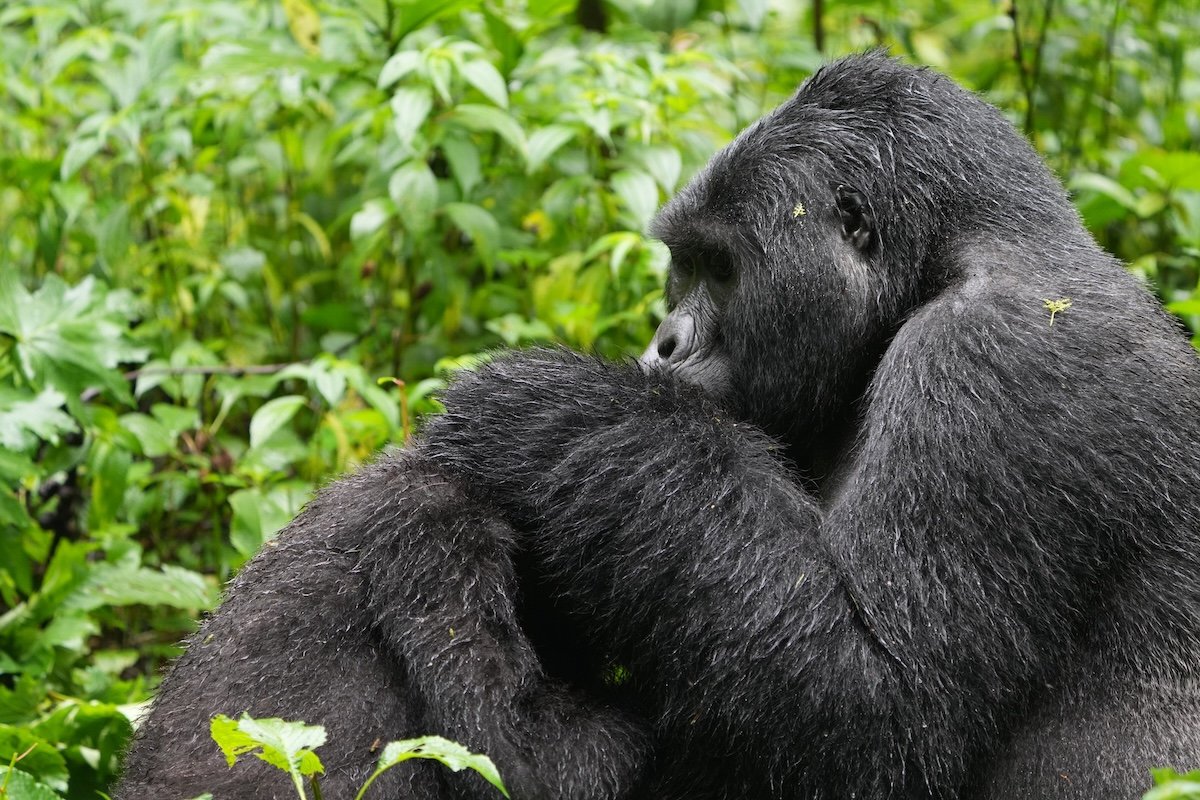
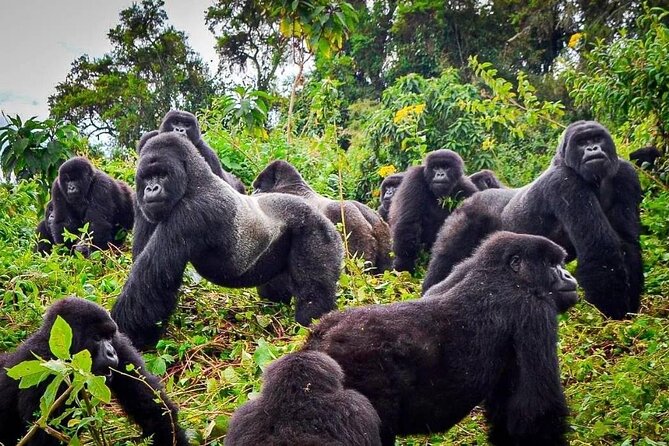
In Uganda's far southwest, Bwindi Impenetrable National Park protects over 400 square kilometres of ancient montane rainforest — one of the most biodiverse habitats in Africa and a UNESCO World Heritage Site. The forest is home to approximately half the world's remaining mountain gorilla population, distributed across multiple habituated gorilla families across four sectors. The name "impenetrable" reflects the dense, multi-layered nature of this forest: a place where light barely reaches the forest floor and the vegetation is a living wall of fern, liana and ancient hardwood.

Queen Elizabeth National Park

Uganda's most visited park occupies the floor of the Albertine Rift valley in the west, framed by the Rwenzori Mountains to the north. It is a landscape of extraordinary ecological transition — open savannah, acacia woodland, papyrus swamps, crater lakes and the shores of Lake Edward and Lake George — supporting one of Uganda's most diverse wildlife communities. The Kazinga Channel, connecting the two lakes, is one of Africa's finest boat safari waterways.

Murchison Falls — The Nile

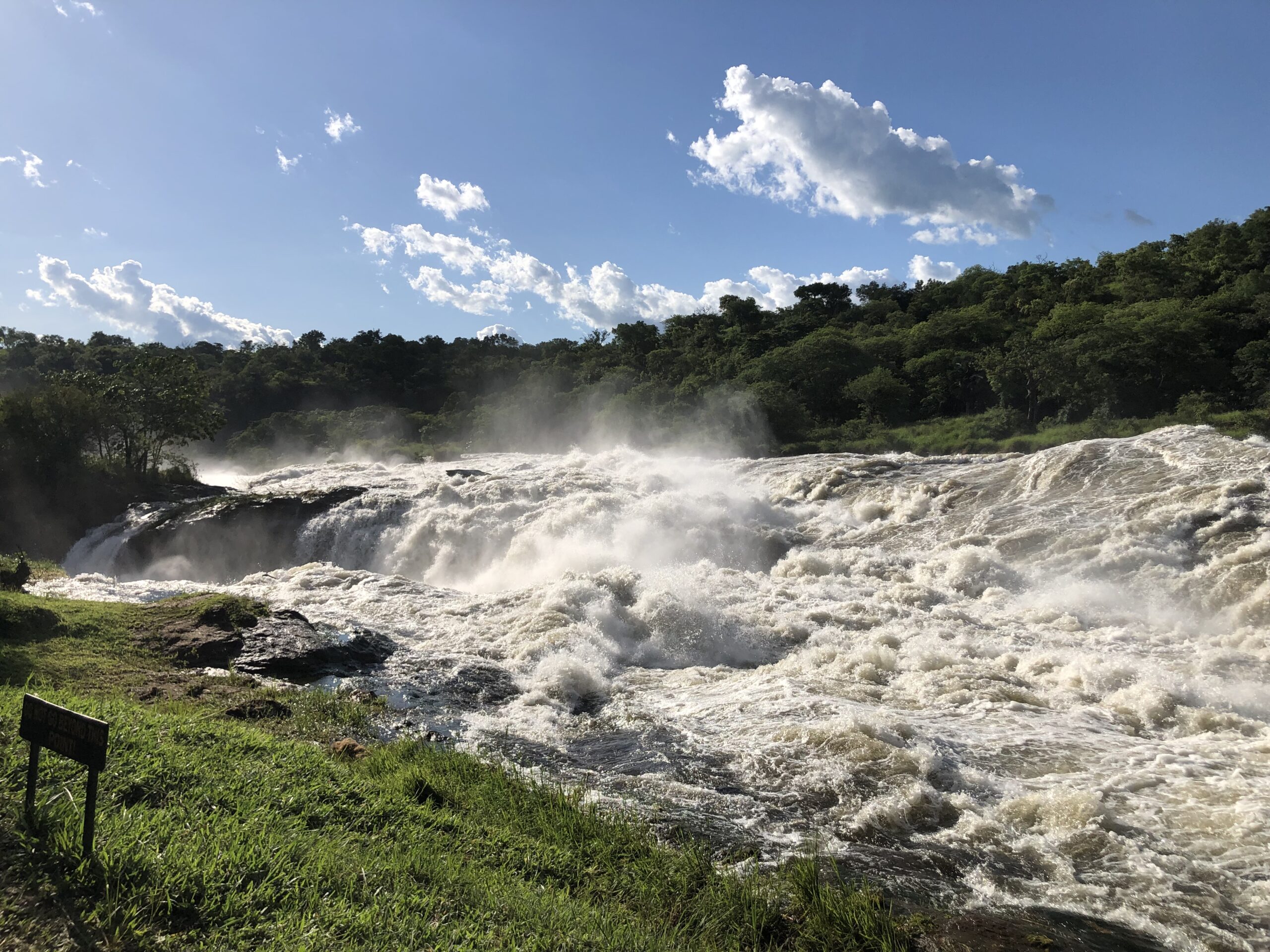
In Uganda's northwest, Murchison Falls National Park is Uganda's largest, centred on the point where the Victoria Nile forces itself through a 7-metre gap in the rocks in a display of raw hydrological power that is one of the most spectacular natural sights in East Africa. The park's savannah north of the Nile supports the full savannah fauna — lions, elephants, giraffes, buffalo — while the Nile itself sustains enormous hippo and Nile crocodile populations observable on boat safaris from Albert Nile launch trips.

Kibale Forest & Lake Victoria

Kibale Forest National Park in western Uganda protects one of East Africa's finest remaining tropical forests and is home to the highest density of primates of any habitat in Africa — 13 species, including habituated chimpanzees, red colobus, grey-cheeked mangabeys and L'Hoest's monkeys. To the south, Lake Victoria — the world's largest tropical lake and the source of the Nile — anchors Uganda's southeastern region with its islands, fishing communities, and extraordinary waterbird life.

Ten parks, the full African spectrum

Uganda's ten national parks span the full range of African ecosystems — from dense equatorial rainforest to open savannah, volcanic highland to papyrus wetland. Four parks anchor any serious Uganda itinerary, each delivering a wildlife experience that is both distinctive and outstanding in its category.

Southwest Uganda — Albertine Rift Rainforest

Bwindi Impenetrable National Park

Uganda's Flagship Park

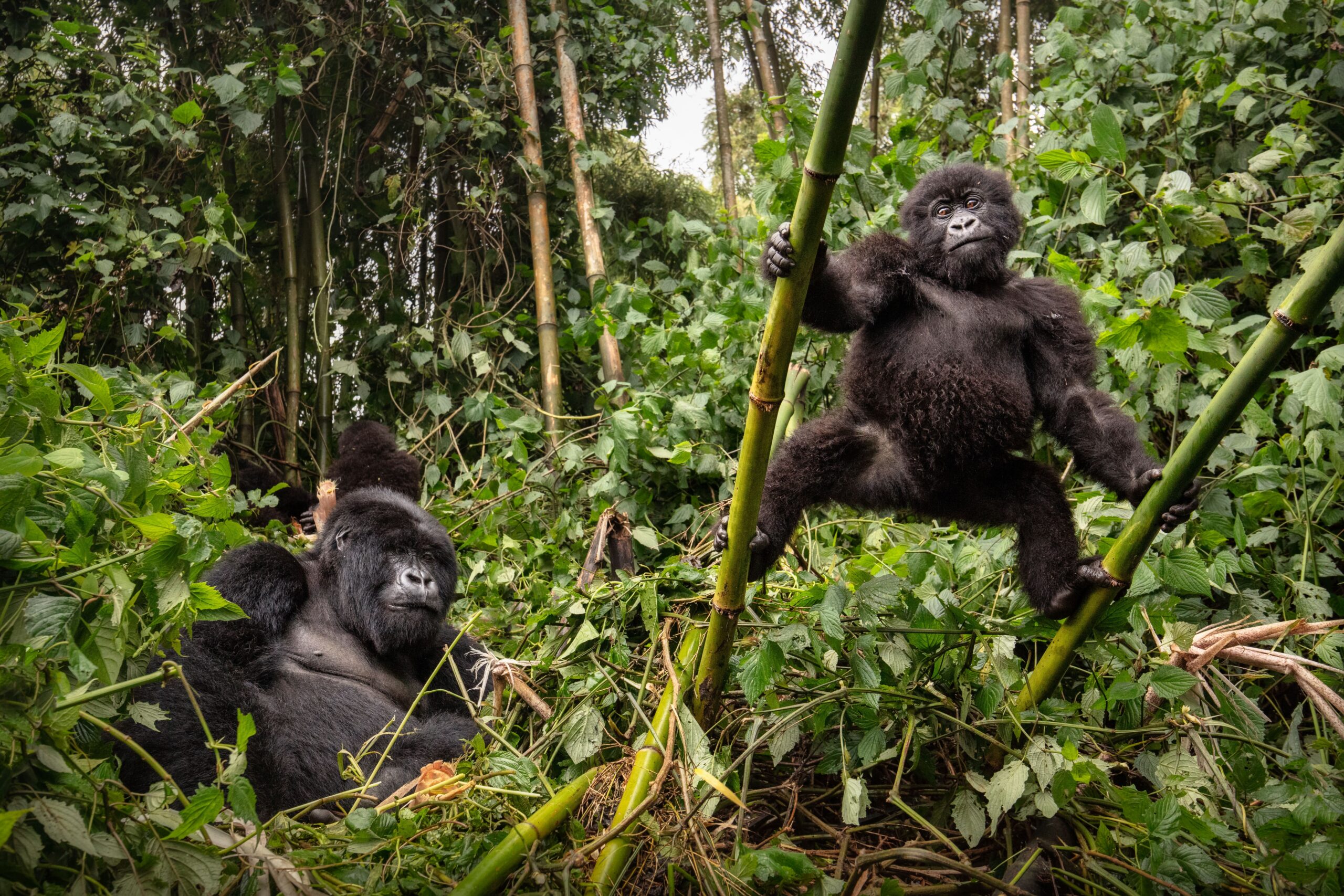
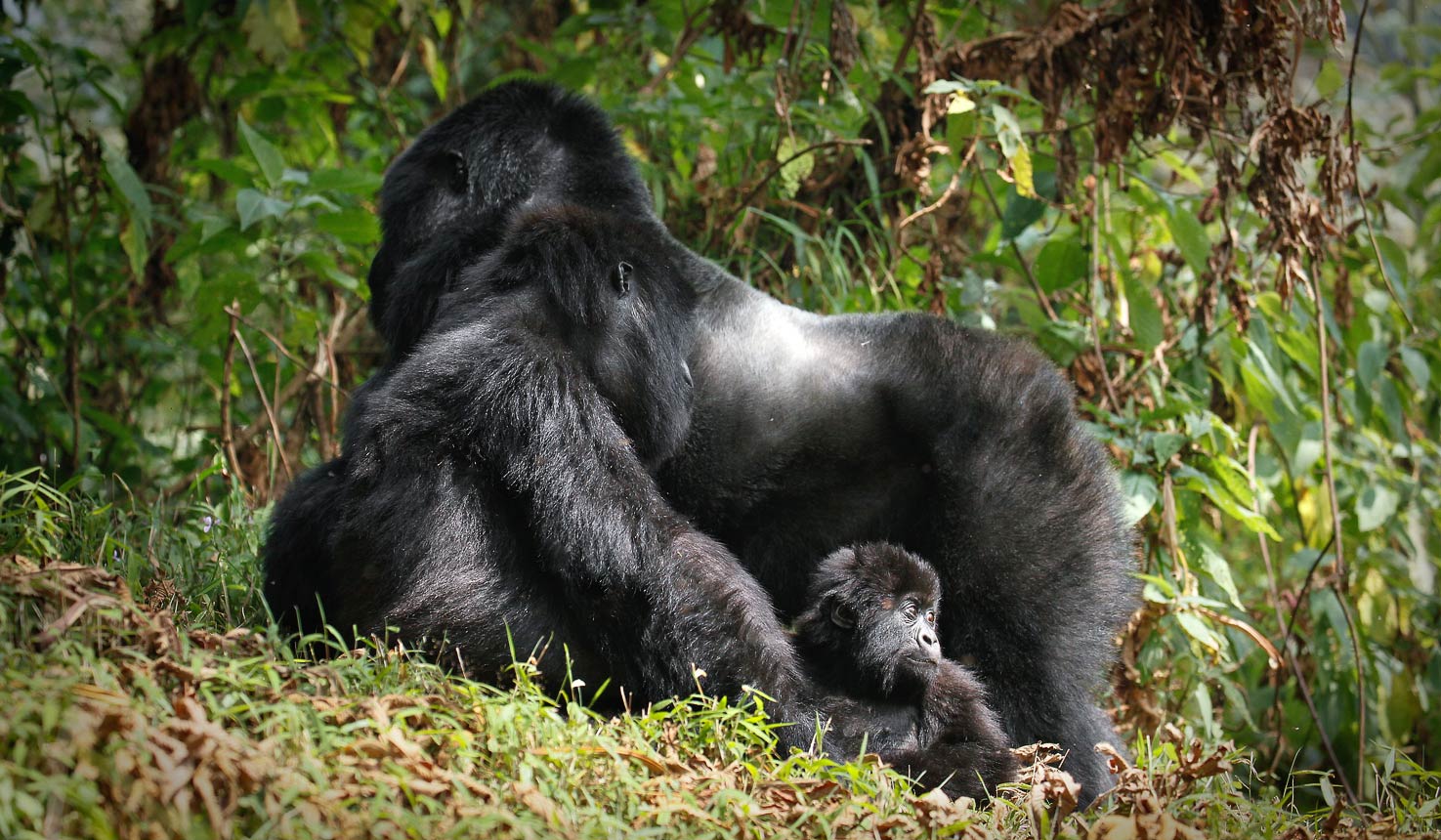
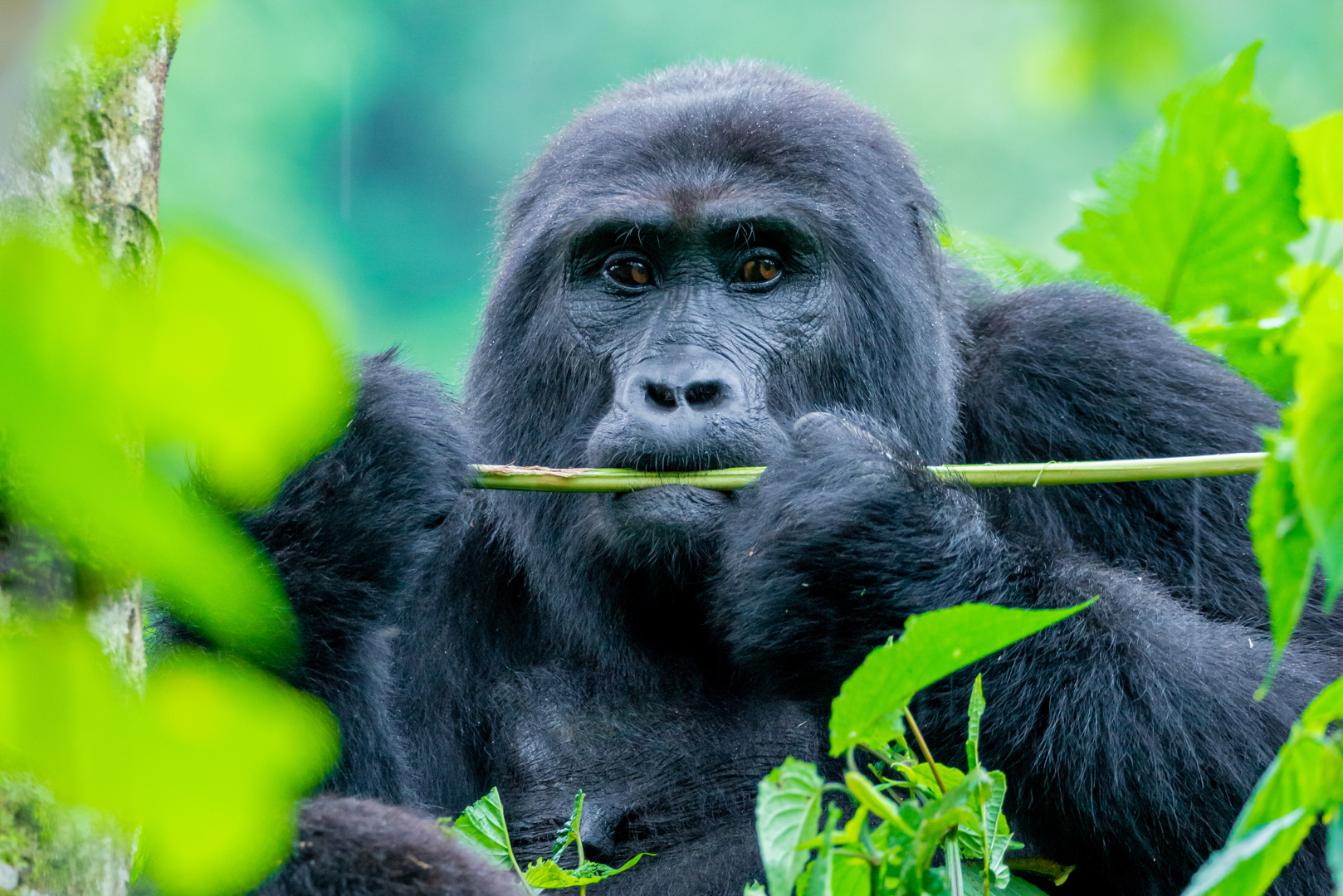
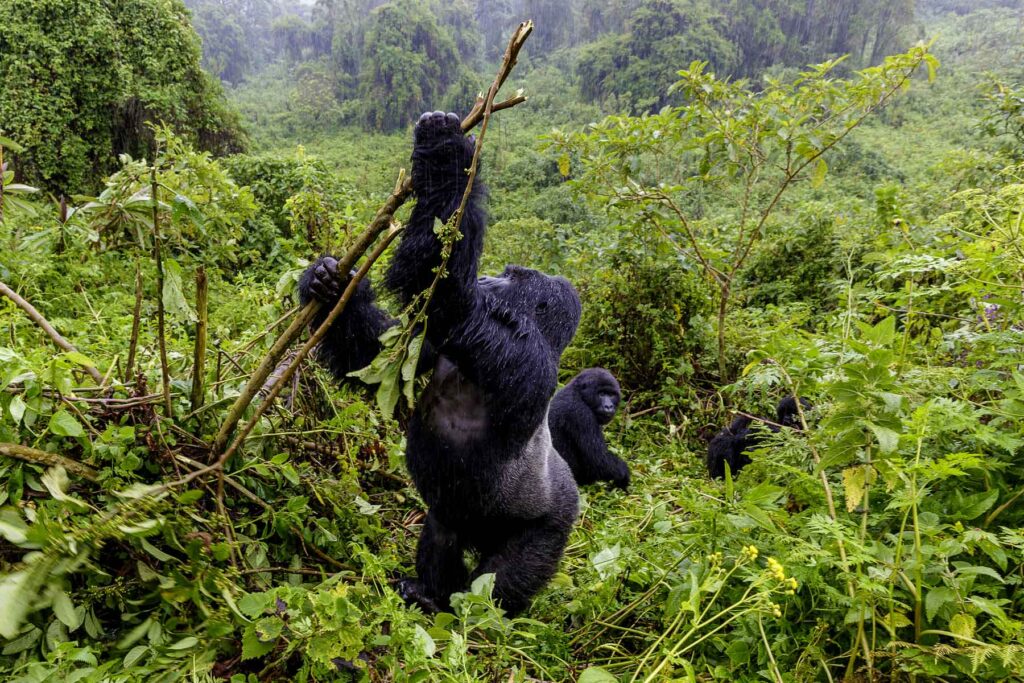
Bwindi Impenetrable National Park is Uganda's most celebrated conservation landmark — a UNESCO World Heritage Site protecting one of Africa's most ancient and intact montane forests, and home to approximately 459 mountain gorillas across multiple habituated families. The park's gorilla trekking experience is organised across four sectors — Buhoma, Ruhija, Rushaga, and Nkuringo — each offering access to habituated families and a different character of terrain and forest. Trekking durations vary from under an hour to a full day, depending on where the family has moved since the tracking team's dawn positioning.

Beyond the gorillas, Bwindi supports an exceptional biodiversity: over 350 bird species including 23 Albertine Rift endemics, ten primate species, forest elephants and a flora of extraordinary richness. The forest itself — dense, ancient, layered — has an atmosphere unlike any other African park environment: intimate, enclosed, primordially green.

The communities surrounding Bwindi are predominantly Bakiga and Batwa, and cultural engagement with these communities — particularly the Batwa Trail experience with the Batwa Pygmies, the forest's original inhabitants — provides a human and historical depth to the Bwindi visit that no amount of gorilla encounters alone can deliver.

Key Highlights
  • Mountain gorilla trekking — multiple habituated families across 4 sectors; permit USD $800 pp
  • Gorilla habituation experience — a full day with a gorilla family being habituated; permit USD $1,500 pp
  • Batwa Trail — a guided cultural experience with the Batwa Pygmies, the forest's original inhabitants
  • Night forest walks — guided nocturnal walks for bush babies, tree hyrax and nightjars
  • Birding — 23 Albertine Rift endemic bird species; one of Uganda's premier birding destinations
  • Waterfall trails — multiple forest hiking trails to scenic waterfalls through primary rainforest
  • Community village walks — guided walks through the communities surrounding the park boundary
Western Uganda — Albertine Rift Valley

Queen Elizabeth National Park

Big Game & Tree-Climbing Lions

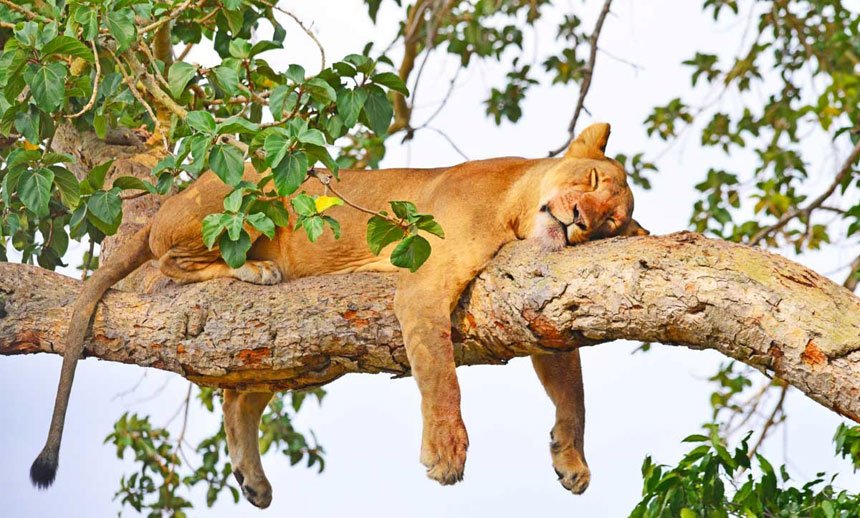
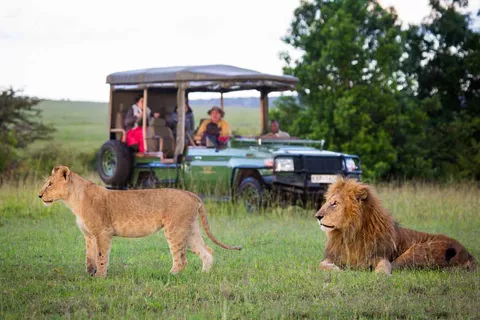
Queen Elizabeth National Park is Uganda's most ecologically diverse wildlife park — a mosaic of savannah, woodland, crater lakes, wetland and lakeshore that supports over 95 mammal species and 600 bird species, making it one of the most biodiverse parks in Africa by count. The park is home to one of Uganda's largest elephant populations, a healthy population of lions, leopards, buffalo and hippos, and the famous tree-climbing lions of the Ishasha sector — a behaviour unique to this population and to the Maasai Mara's lions in Kenya.

The Kazinga Channel boat safari — a two-hour launch trip along the natural waterway connecting Lake George and Lake Edward — is one of Uganda's finest wildlife experiences: hippos and crocodiles at close range from the water surface, waterbirds in extraordinary diversity, and the backdrop of the Rwenzori Mountains. The Kyambura Gorge, a forest-lined chasm within the park, offers chimpanzee trekking in a dramatic and intimate setting.

Key Highlights
  • Kazinga Channel boat safari — hippos, crocodiles, and waterbirds at close range from the water
  • Ishasha sector — tree-climbing lions resting in fig trees; a globally unique wildlife behaviour
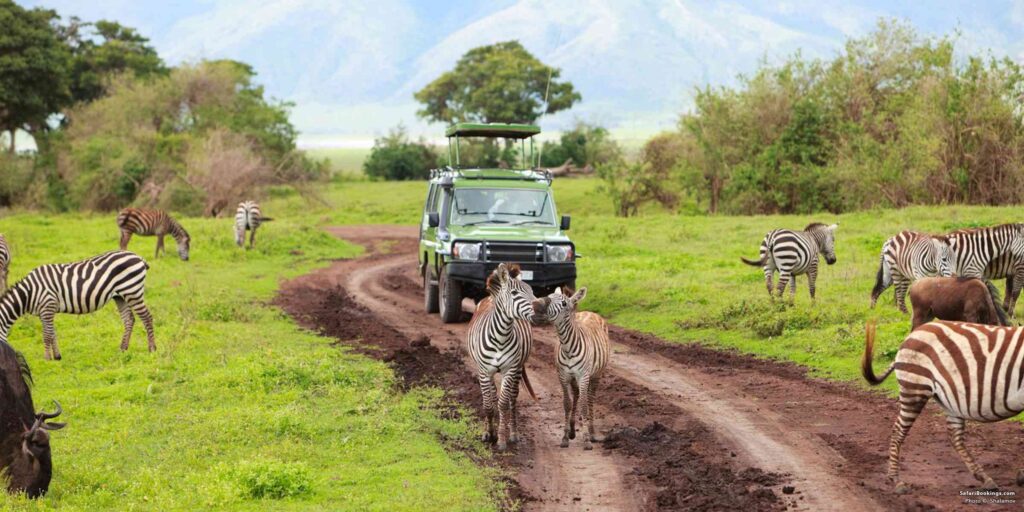
  • Game drives — elephants, buffalo, topi, Uganda kob, waterbuck and warthog across the savannah
  • Kyambura Gorge chimpanzee tracking — forest chimps in a spectacular gorge setting
  • Birding — 600+ species; one of Uganda's most celebrated birding destinations
  • Mweya Peninsula — the park's main accommodation hub, with game views from lodge terraces
Western Uganda — Tropical Rainforest

Kibale National Park

Primate Capital of the World

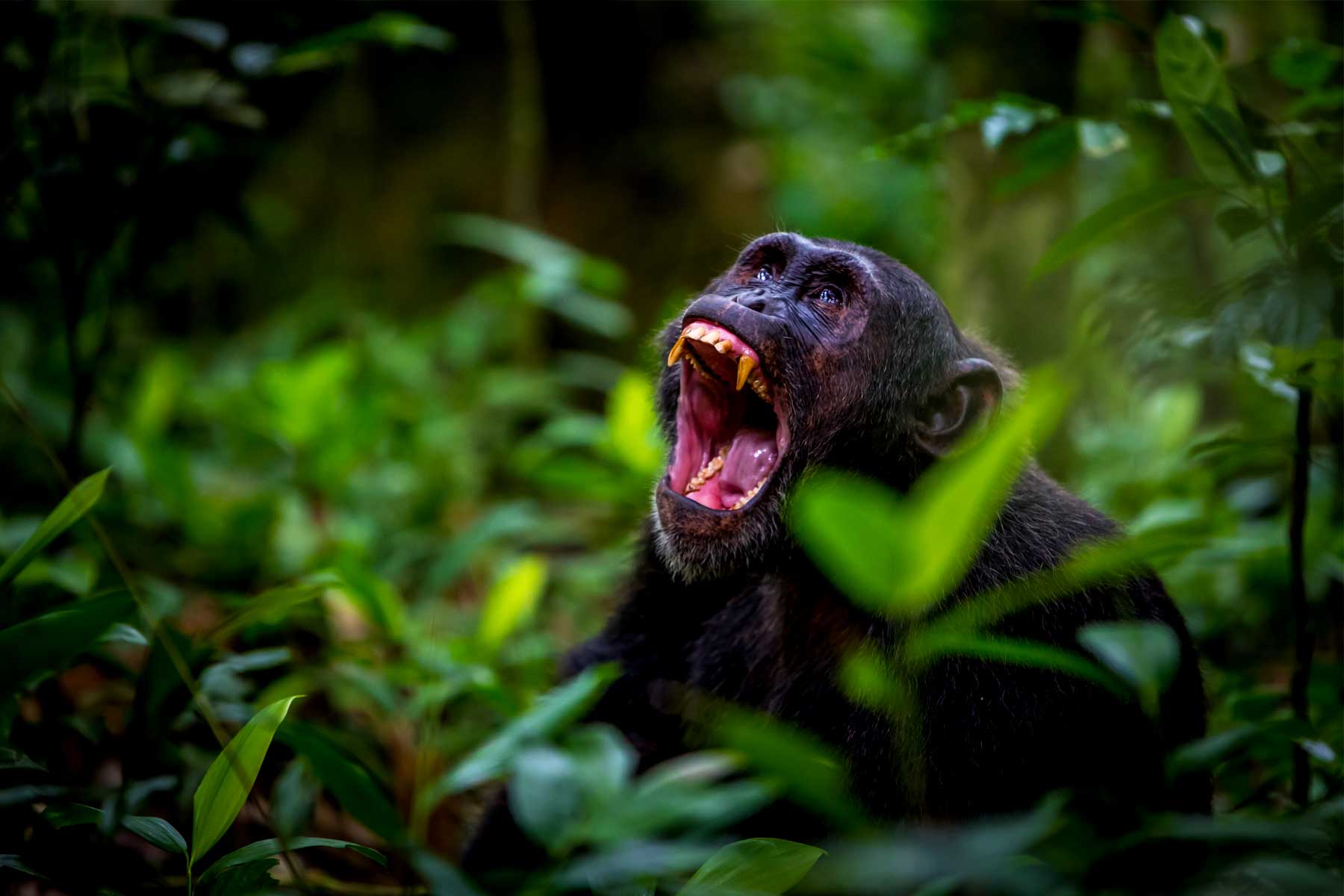
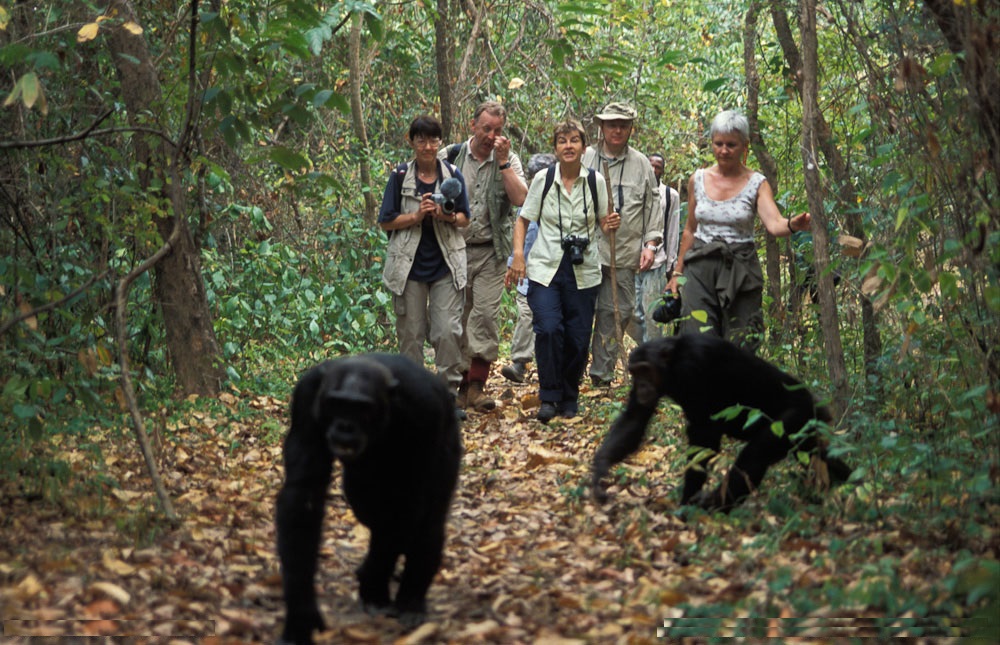
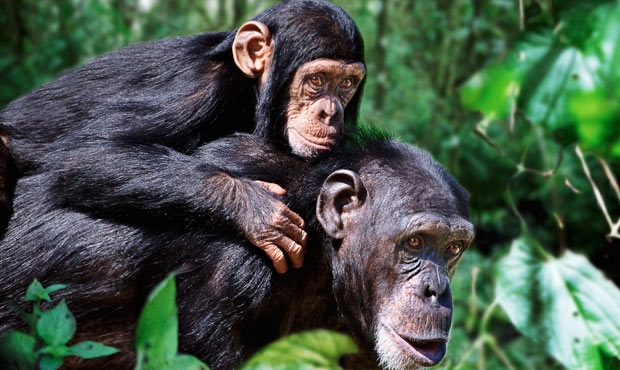
Kibale National Park is home to the highest density of primates of any habitat in Africa — 13 species, including habituated chimpanzees that are tracked daily by visitors in small groups on guided treks through the forest. The chimps of Kibale's Kanyanchu sector are among the most thoroughly habituated in East Africa, allowing extremely close and prolonged observation of their complex social behaviour: grooming, territorial calling, tool use and the extraordinary physicality of their forest movement.

Beyond chimpanzees, Kibale contains red-tailed monkeys, grey-cheeked mangabeys, L'Hoest's monkeys, olive baboons, black-and-white colobus, and the red colobus — a species that the chimps actively hunt. The Bigodi Wetland Sanctuary on the park boundary, managed by a community tourism initiative, adds waterbirds and wetland primates to a Kibale itinerary in a genuinely community-benefit setting.

Key Highlights
  • Chimpanzee trekking — habituated troops at Kanyanchu; 1-hour supervised encounter
  • Chimpanzee habituation experience — a full day with chimps; an extraordinary level of access
  • 13 primate species — the richest primate community of any forest in Africa
  • Bigodi Wetland Sanctuary — community-managed wetland walk; birds, primates and papyrus
  • Night walks — bush babies, porcupines and nocturnal forest life with ranger guides
  • Birding — 375+ species including multiple Albertine Rift endemics
Northwest Uganda — Victoria Nile

Murchison Falls National Park

Uganda's Largest Park

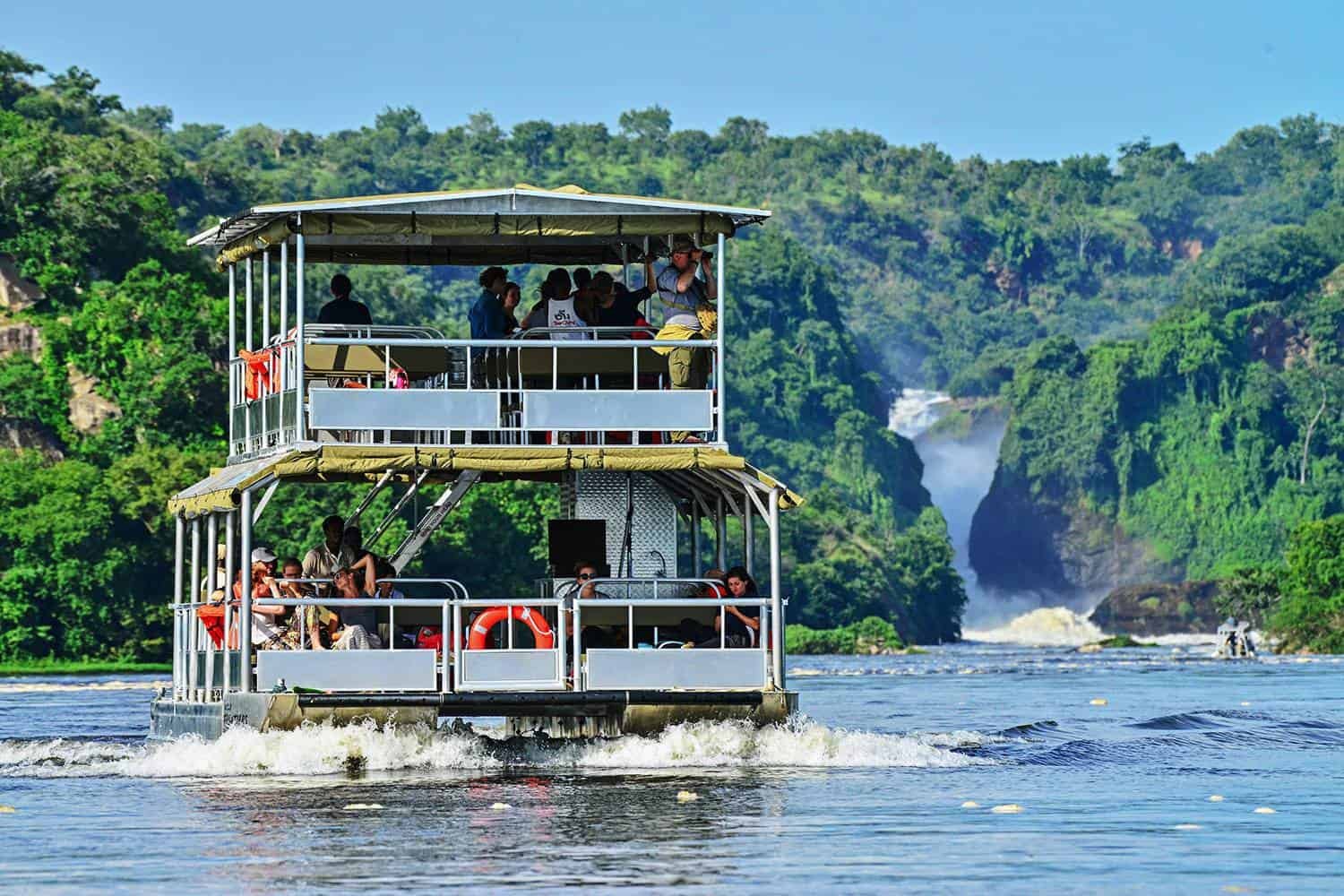
Murchison Falls National Park is Uganda's largest protected area, spanning 3,893 square kilometres of savannah, woodland and riverine forest on both sides of the Victoria Nile. The park takes its name from the falls — where the entire Nile forces itself through a 7-metre gap in the rocks, dropping 43 metres in a display of raw hydraulic power that is one of the most viscerally dramatic natural sights in East Africa. A boat safari from Paraa to the base of the falls is the park's definitive activity: the Nile here is one of Africa's great wildlife waterways, lined with hippos, Nile crocodiles, African fish eagles and a spectacular waterbird community.

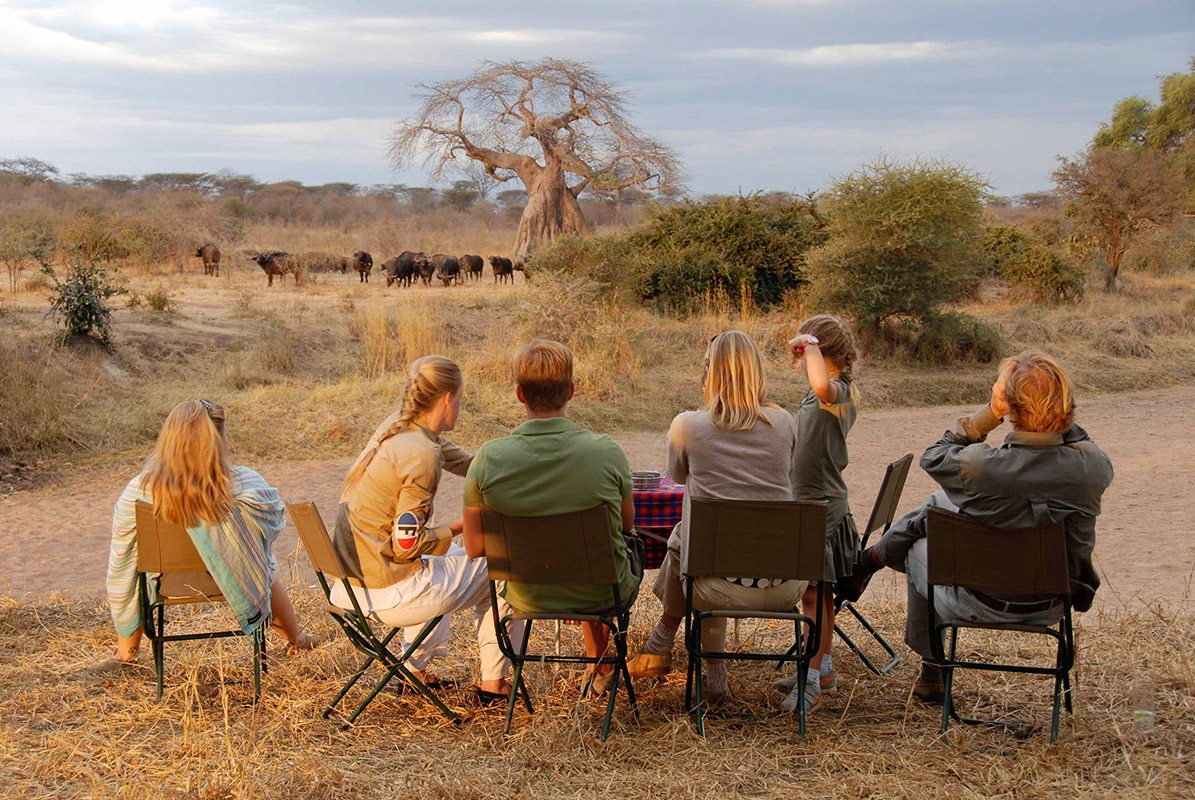
The savannah north of the Nile supports Uganda's finest open-country wildlife: lions, leopards, elephants, Rothschild's giraffes (Uganda's most endangered large mammal), buffalo, oribi, and Jackson's hartebeest. The Kaniyo Pabidi forest sector in the southeast corner adds chimpanzee trekking to the Murchison menu — making this a genuinely versatile park that can anchor both a primate and a big-game safari within a single destination.

Key Highlights
  • Murchison Falls — boat safari to the base; the Nile at its most dramatic and spectacular
  • Game drives — lions, elephants, Rothschild's giraffes, buffalo and hippos north of the Nile
  • Nile boat safaris — hippos, crocodiles, fish eagles and waterbirds from launch boats
  • Rothschild's giraffe — one of the world's most endangered giraffe subspecies; reliably seen here
  • Chimpanzee trekking — Kaniyo Pabidi forest sector; habituated chimp community
  • Shoebill stork — the Nile delta and papyrus zones support one of Africa's most sought-after birds

Uganda's conservation & community model

Uganda Wildlife Authority manages Uganda's national parks with an increasing emphasis on community benefit and sustainable tourism revenue. The gorilla permit system, ranger-based tracking programmes, and community tourism initiatives around all major parks represent a conservation model that has demonstrably stabilised and grown primate populations across two decades of managed trekking — with the mountain gorilla population growing steadily in Bwindi while the ecosystem surrounding the park continues to support millions of people.

~459 Mountain gorillas in Bwindi — approximately half the world's total remaining population
20 Primate species — more than any other country on Earth; Uganda's defining ecological distinction
1,060+ Bird species recorded — more than in all of North America; Uganda is one of the world's premier birding destinations
20% Of gorilla permit revenue shared with communities surrounding Bwindi and Mgahinga national parks

A country of remarkable cultural depth

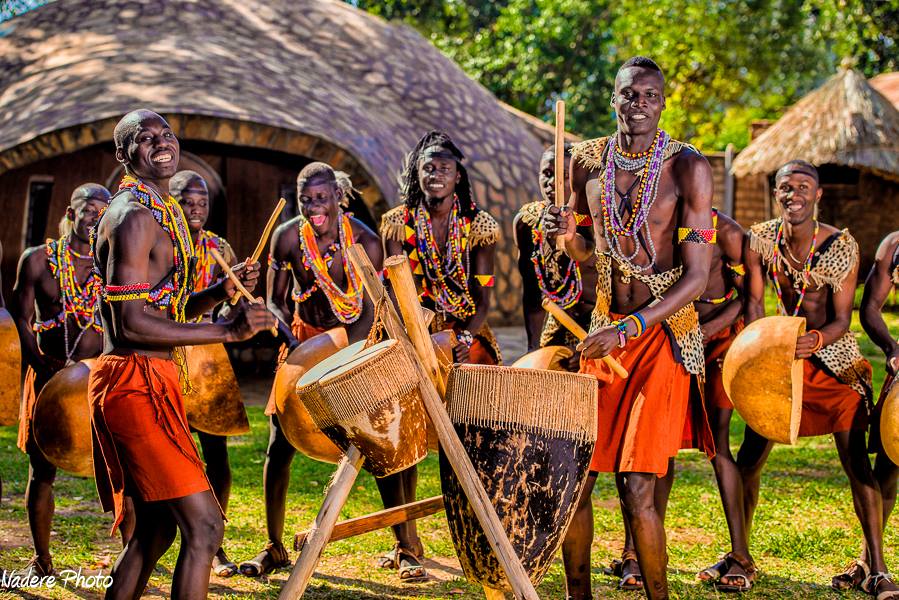
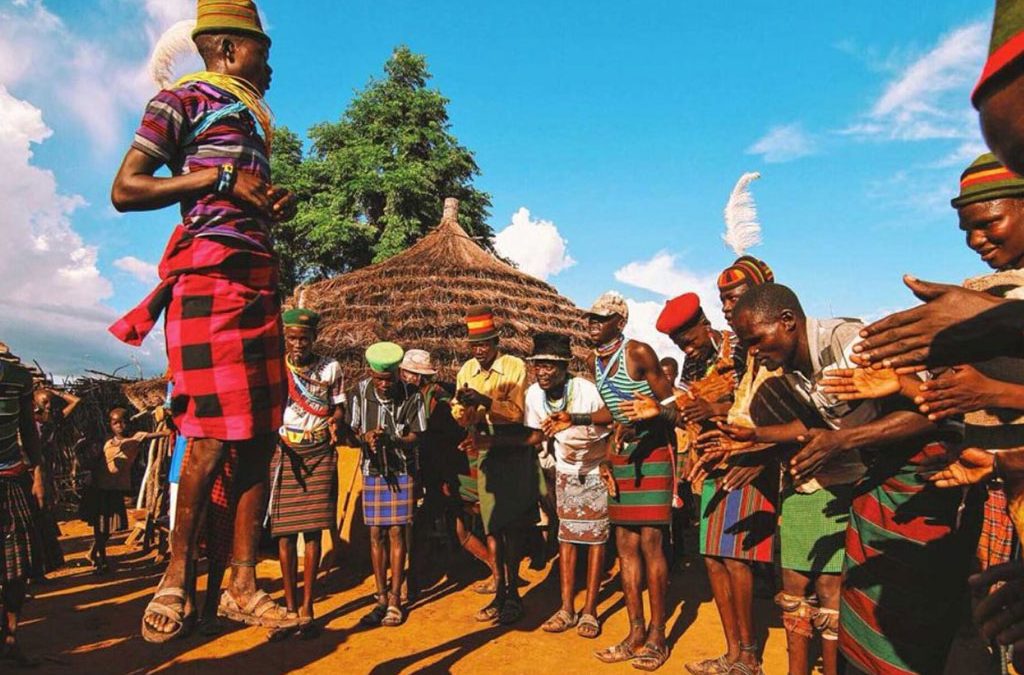
Uganda is home to over 65 distinct ethnic groups, each with its own language, traditions, music and material culture — a diversity that makes the country one of the most culturally rich destinations in East Africa. The Baganda kingdom, centred on Kampala, is the largest traditional kingdom in the region and has maintained a living royal court and ceremonial culture for centuries.

Music & Dance

Uganda's musical traditions are among East Africa's most diverse — each ethnic group maintains its own distinctive song, dance and instrumental tradition. Buganda court music features the amadinda xylophone, one of Africa's most sophisticated traditional instruments. The Acholi of northern Uganda are known for their energetic bwola royal dance. The Batwa Pygmies, original inhabitants of Uganda's southwestern forests, maintain a musical tradition rooted in the forest itself — polyphonic vocal music of extraordinary complexity that has been recognised internationally as a form of intangible cultural heritage.

Kingdom & Heritage

Uganda has four traditional kingdoms — Buganda, Bunyoro, Toro, and Ankole — each with a living royal court, ceremonial traditions and cultural institutions. The Kasubi Tombs in Kampala, burial site of the Buganda kings and a UNESCO World Heritage Site, is the most significant cultural monument in Uganda. The Uganda Museum in Kampala houses a comprehensive collection of the country's material cultural heritage across all major ethnic groups — an excellent orientation for any visitor wanting to understand Uganda's cultural complexity before heading into the parks.

Modern Kampala

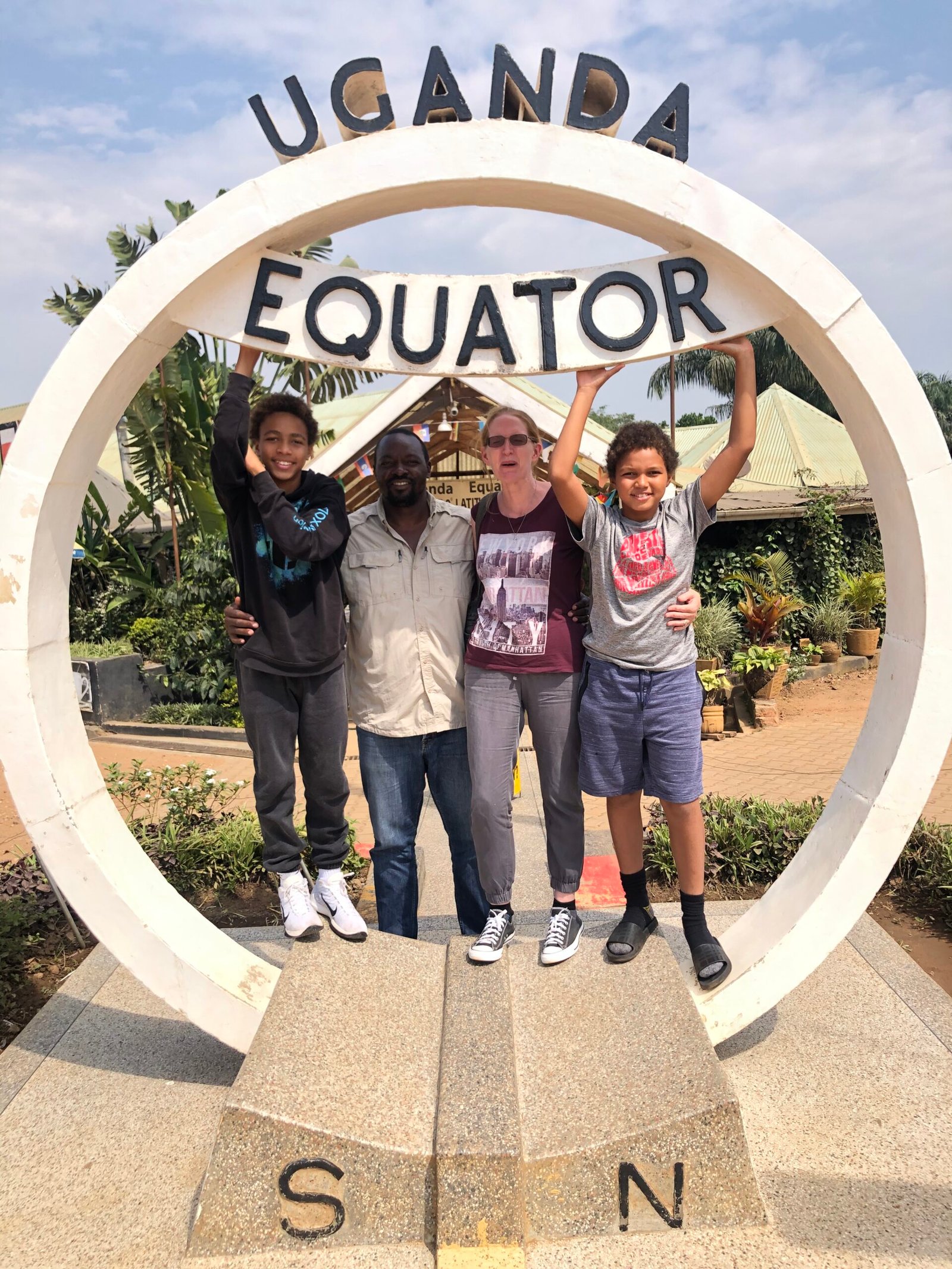
Kampala is a sprawling, energetic, rapidly growing city built across seven hills — a genuinely African metropolis with a creative scene that has expanded rapidly over the past decade. Rooftop restaurants with city and lake views, contemporary art galleries, vibrant craft markets at Owino and Nakasero, and a nightlife rooted in Afrobeats, Afropop and the distinctively Ugandan genre of kadongo kamu all await the visitor who builds time in the capital into their itinerary. The Equator crossing south of Kampala on the Masaka road is a tourist ritual that is more fun than it sounds.

The Batwa Trail at Bwindi offers one of the most moving cultural encounters in East Africa — a guided experience led by Batwa elders who share the forest knowledge, hunting techniques, honey gathering practices and oral traditions of a community whose people lived inside what is now Bwindi National Park for millennia before their resettlement. This experience is included in Sankofa Africa Tours' Bwindi itineraries and is among the most consistently memorable components of any Uganda safari.

Beyond the gorilla trek

Uganda's ecological and geographical variety means that a well-constructed itinerary can incorporate an extraordinary range of experiences within a compact travel footprint. The country's relatively short internal distances — most park-to-park transfers take two to four hours — make combination itineraries genuinely practical.

1
Mountain Gorilla Trekking — Bwindi

The defining Uganda experience. Multiple habituated families across four sectors in Bwindi's ancient rainforest. Permit: USD $800 per person — the most accessible gorilla trekking permit in the world. Maximum 8 visitors per family per day.

2
Gorilla Habituation Experience

A full day — from dawn — with a gorilla family in the process of habituation to human presence. Available in Bwindi's Rushaga sector. Permit: USD $1,500 pp. The most immersive gorilla experience anywhere in the world.

3
Chimpanzee Trekking — Kibale or Kyambura

Kibale Forest's Kanyanchu sector offers East Africa's finest chimpanzee trekking. The Kyambura Gorge in Queen Elizabeth NP offers the same experience in a dramatically different landscape. Both are exceptional.

4
Murchison Falls Boat Safari

A launch trip along the Victoria Nile to the base of Murchison Falls — hippos, crocodiles, fish eagles and an unforgettable encounter with one of Africa's most powerful waterfalls seen from directly below.

5
Tree-Climbing Lions — Ishasha

Queen Elizabeth NP's Ishasha sector in the far south supports a population of lions that rest in the branches of massive fig trees — a behaviour seen in very few lion populations globally. A genuinely unusual and memorable wildlife encounter.

6
Kazinga Channel Boat Safari

Queen Elizabeth NP's Kazinga Channel connects Lakes George and Edward through a waterway lined with one of Africa's densest hippo populations, enormous crocodiles, and extraordinary waterbird diversity — all at close range from a launch boat.

7
Shoebill Stork Search — Mabamba Swamp

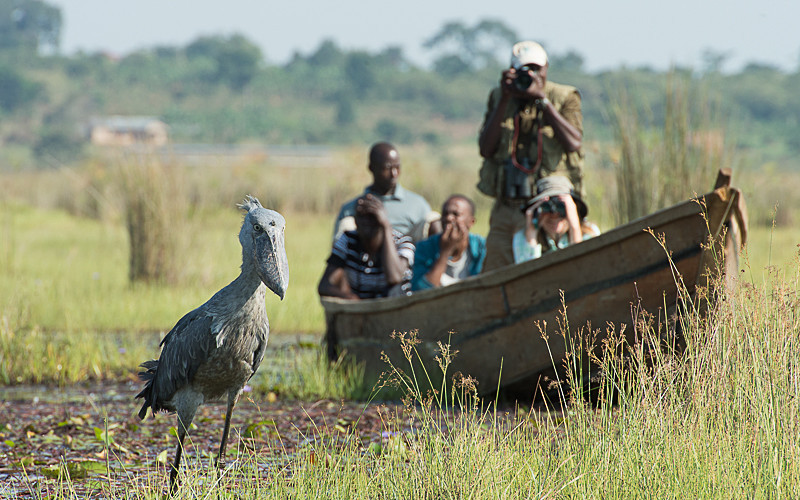
Mabamba Swamp on Lake Victoria's northwestern shore is one of Africa's most reliable locations for the shoebill — one of the world's most sought-after birds, a prehistoric-looking waterbird of extraordinary character. Accessible by canoe from Entebbe.

8
Rwenzori Mountains Trekking

The "Mountains of the Moon" — the Rwenzori Range on Uganda's western border with the DRC — offers multi-day trekking through afro-alpine moorland to glaciated peaks above 5,000 metres. The most demanding and spectacular highland experience in Uganda.

Ugandan food & flavour

Ugandan cuisine is rooted in the country's agricultural abundance — generous with starchy staples, fresh vegetables, legumes, and grilled proteins, and flavoured with simplicity and warmth. The national dish, rolex — a chapati rolled around eggs and vegetables — is eaten for breakfast, lunch and dinner across the country. Kampala's restaurant scene has developed rapidly, with options ranging from Ugandan roadside kitchens to contemporary East African fine dining.

Matoke

Steamed green bananas — Uganda's most iconic staple, served mashed or whole with groundnut stew, beef or beans. A deeply comforting, filling dish that appears on every table from roadside canteen to lodge dinner.

Rolex

Uganda's beloved street food — a chapati (flat wheat bread) rolled around scrambled eggs and vegetables, quick-fried on a griddle. The name is a Ugandan portmanteau of "rolled eggs." Found everywhere, inexpensive, and genuinely delicious.

Groundnut Stew

A rich, deeply flavoured peanut-based stew, typically made with chicken or beef and slow-cooked with tomatoes and spices. Uganda's most beloved everyday dish — eaten with matoke, rice, or posho (maize porridge).

Tilapia & Nile Perch

Fresh fish from Lake Victoria — tilapia and the enormous Nile perch — grilled, fried or steamed and served with ugali (maize porridge) and fresh vegetable sides. Particularly excellent in Entebbe's lakeshore restaurants.

Luwombo

A traditional Buganda feast dish — meat, fish or mushrooms slow-steamed in banana leaves with groundnut sauce, producing a tender, aromatic dish of exceptional flavour. Typically reserved for celebrations; available at cultural restaurants in Kampala.

Ugandan Coffee

Uganda grows some of East Africa's finest Arabica coffee in the slopes of Mount Elgon and the western highlands. Kampala's growing café scene showcases single-origin Ugandan beans alongside the robusta varieties that dominate production — an underappreciated origin well worth exploring.

Fresh tropical fruit is one of Uganda's greatest culinary pleasures — pineapples, passion fruit, jackfruit, papaya, and dozens of banana varieties grown across the country's fertile soils and available in markets nationwide. A fresh pineapple purchased from a roadside stall between parks, eaten immediately, is one of those simple travelling pleasures that tends to be remembered long after more elaborate meals have been forgotten.

Planning your Uganda trip

Uganda is well-organised for international visitors, with a clear visa system, good internal road infrastructure, and a tourism sector that has matured considerably over the past decade. The following covers the practical essentials. Sankofa Africa Tours handles all pre-travel documentation guidance and in-country logistics for clients on our Uganda safari programmes.

Best time to visit

Peak Season

Dry Seasons — June to August & December to February

Uganda's two dry seasons offer the most comfortable trekking and game drive conditions across all parks. Trails are firmer, forest visibility improves, and savannah wildlife concentrates around water sources. June to August is the main dry season and the most popular period for gorilla trekking.

  • Best gorilla trekking conditions — firmer trails, less mud in Bwindi's dense forest
  • Peak demand for permits and lodge accommodation — book 6+ months in advance
  • June–August: main dry season, ideal for combining all parks in a single itinerary
  • December–February: shorter dry window; excellent for Murchison Falls and Queen Elizabeth
Green Season

Wet Seasons — March to May & September to November

Uganda's wet seasons bring heavy rain — particularly March to May — but gorilla and chimp trekking continue year-round without seasonal closure. The parks are lush and dramatically atmospheric, permits are more available, and some lodges offer green-season rates.

  • Gorilla and chimp trekking operates year-round — rain does not cancel treks
  • Permits more available; shorter lead times; reduced-rate lodge availability
  • Exceptional birdwatching — migratory species and breeding plumage across all parks
  • Trails can be very muddy: waterproof boots and gaiters are essential in Bwindi and Kibale

Entry requirements, health & getting there

Category What You Need to Know
Visa Most nationalities require a visa to enter Uganda. The most practical option is the East Africa Tourist Visa (USD $100), valid for multiple entries across Uganda, Kenya and Rwanda for 90 days — excellent value for combined itineraries. Single-entry Uganda visas (USD $50) are also available. Both can be applied for online through the Directorate of Citizenship and Immigration Control (DCIC) e-visa portal before travel. Always verify current requirements for your specific passport before booking international flights, as visa policies can change. Passports should be valid for at least six months beyond your intended entry date.
Gorilla Permit The Uganda gorilla trekking permit costs USD $800 per person and is issued by the Uganda Wildlife Authority (UWA). Permits must be booked in advance — during peak season (June–August), permits sell out months ahead across all four Bwindi sectors. Sankofa Africa Tours secures all gorilla and chimpanzee permits on behalf of clients as part of your Uganda safari package. Never book international flights before confirming permit availability on your target dates.
Getting There Entebbe International Airport (EBB) is Uganda's main international gateway, located approximately 40 km south of Kampala on the shores of Lake Victoria. Ethiopian Airlines, Kenya Airways, RwandAir, KLM, Turkish Airlines and Emirates all serve Entebbe with good connectivity. The airport is modern and efficiently run. Flight connections from Europe typically route via Addis Ababa, Nairobi, Amsterdam, or Dubai. Transfer from Entebbe to Kampala takes approximately 45 minutes to 1.5 hours depending on traffic.
Getting Around 4WD vehicles are essential for national park visits — Bwindi and Kibale roads in particular are steep, unpaved and demanding in wet conditions. Uganda drives on the left-hand side of the road. Road transfers between Kampala, Bwindi, Kibale and Queen Elizabeth NP range from 4–8 hours. Murchison Falls is approximately 4–5 hours from Kampala. Internal charter flights are available to all major parks and significantly reduce travel time — Sankofa Africa Tours can include charter flight options for clients who prefer to minimise road travel. All client transfers are provided in private 4WD vehicles with experienced driver-guides.
Health Yellow fever vaccination is mandatory for entry to Uganda — proof of vaccination is required at the airport. Malaria prevention is essential for all Uganda visitors; consult a travel health clinic at least 4–6 weeks before departure to discuss anti-malarial medication. Typhoid and hepatitis A vaccination are also recommended. Bottled or treated water is advised throughout the country. Altitude is a factor at Bwindi (1,160–2,607m) and the Rwenzoris — acclimatise appropriately and discuss any concerns with your doctor before travel.
Currency Uganda's official currency is the Ugandan Shilling (UGX). US Dollars are accepted at lodges and tour operators, and gorilla permits are priced and paid in USD. ATMs are available in Kampala and major towns but unreliable in park areas. Carry sufficient USD cash for park purchases, tips, and rural expenses. Credit cards (Visa and Mastercard) are accepted at most upmarket hotels and lodges. Exchange rates at Kampala's bureau de change are generally better than at the airport.
Language English is Uganda's official language and is spoken widely across the tourism, business and government sectors. Luganda is the most widely spoken local language, dominant in Kampala and central Uganda. Visitors will encounter no significant language barrier in any of Uganda's major national parks, lodges, or tourism facilities.
Electricity 240V / 50Hz. Uganda uses Type G plugs (UK-style three-pin square), the same as the UK, Kenya and Tanzania. Bring a universal travel adaptor if your devices use other plug types. Kampala and larger towns have reliable grid power; lodges in and around the national parks may use generator or solar power with designated charging hours — confirm with your specific lodge.

Travelling safely in Uganda

Uganda is generally considered a safe destination for international tourists visiting the country's national parks and major tourist areas. Kampala's main tourist districts and Entebbe are well-established and routinely visited without incident. As with all travel in East Africa, staying informed and prepared is important.

Before travelling, always consult your own government's official travel advice and your national embassy or high commission for the most current information on Uganda. Travel advisories change frequently and reflect real-time conditions that no travel guide can fully anticipate. Sankofa Africa Tours monitors official travel advisories for all destinations continuously and communicates any relevant developments to clients ahead of their departure dates.

Western Uganda border areas — particularly those adjacent to the DRC — carry a different risk profile from the established tourist corridors around Bwindi, Kibale, Queen Elizabeth and Murchison Falls. All Sankofa Africa Tours Uganda itineraries are designed with current security assessments in mind, and all park visits are conducted with Uganda Wildlife Authority ranger escorts whose safety protocols meet the standards of the parks' operating authority.

In the parks: all gorilla trekking, chimpanzee trekking, and game drives are conducted under the supervision of trained Uganda Wildlife Authority ranger guides. Armed escort is standard on all primate treks. Always follow your guide's instructions without exception, maintain the required minimum distances from all wildlife, and do not approach animals independently under any circumstances.

Road safety: Uganda's road network includes sections where road quality and driving standards vary considerably from those visitors may be accustomed to at home. Sankofa Africa Tours uses only experienced, licensed driver-guides with excellent knowledge of all park approach roads, and we conduct all transfers in well-maintained 4WD vehicles appropriate for Uganda's road conditions.

Plan Your Uganda Safari

Ready to trek into
the Pearl of Africa?

Sankofa Africa Tours designs bespoke Uganda itineraries — from intimate gorilla safaris in Bwindi to extended multi-park journeys combining chimps, savannah big game, and the Nile. Every permit, transfer, lodge and cultural experience is selected and managed by our team.

Start Planning My Uganda Safari

Uganda

5 Days Uganda gorilla and chimpanzee tracking Safari

This 5-day itinerary connects Uganda’s two greatest primate destinations: Kibale Forest National Park

05 Days

From $200

6-days-karamoja-nomadic-heritage-journey

Uganda

6 Days Karamoja Nomadic Heritage Journey

Karamoja is Uganda’s remote northeastern frontier — an ancient landscape of golden savannah, granite inselbergs,

06 Days

From $200

Uganda

3 Days Kibale Chimpanzee Tracking & Bigodi Community Experience

This 3-day journey pairs the park’s world-class chimpanzee tracking experience with the community

03 Days

From $200

3-days-lake-mburo-wildlife-ankole-culture

Uganda

3 Days Lake Mburo Wildlife & Ankole Culture

This 3-day itinerary by Sankofa Africa Safaris combines walking safaris, lake boat trips,  game drives.

03 Days

From $200