The Great Migration in Tanzania and Kenya: Best Time to Visit, River Crossings, Costs and Safari Guide
Updated: 31 October 2026 | By Sankofa Afrika Safaris
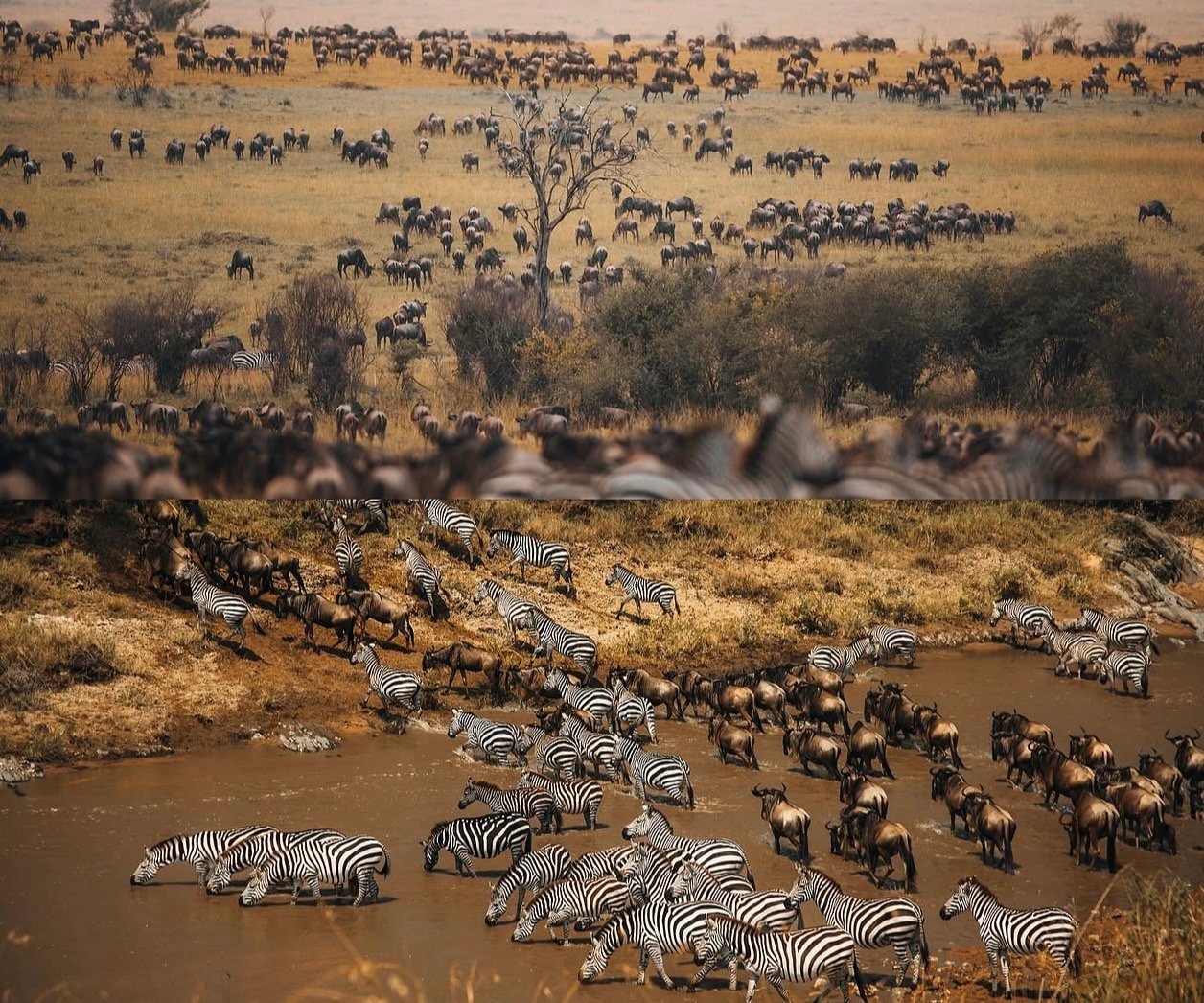
Imagine standing on the vast African savannah as thousands of wildebeest move across the horizon. Zebras travel alongside them, predators follow the herds, and the sound of hooves fills the open plains. At the edge of a river, an enormous herd gathers, hesitates and finally plunges into the water.
This is the Great Wildebeest Migration, one of Africa’s most extraordinary wildlife spectacles and one of the most sought-after experiences for safari travellers.
Every year, more than a million wildebeest, accompanied by zebras and other grazing animals, move through the greater Serengeti–Mara ecosystem shared by Tanzania and Kenya. Their journey follows seasonal rainfall, fresh grazing and water availability. It is a continuous natural cycle rather than a single event that happens on a fixed date.
For first-time safari buyers, however, planning the experience can raise many questions:
- When is the best time to see the Great Migration?
- Should you visit Tanzania’s Serengeti or Kenya’s Maasai Mara?
- Where and when do the famous Mara River crossings happen?
- Are river crossings guaranteed?
- How much does a Great Migration safari cost?
- How many days should you spend on safari?
- Can you see the Big Five during the migration?
- How far in advance should you book?
At Sankofa Afrika Safaris, we believe that understanding these details is the first step towards planning a rewarding African safari. This guide explains what to expect, when to travel and how to choose an itinerary that matches your interests, budget and available time.
1. What Is the Great Wildebeest Migration?
The Great Wildebeest Migration is the annual movement of large herds of wildebeest, zebras and gazelles across the Serengeti–Mara ecosystem of Tanzania and Kenya.
The animals move in search of fresh grass and water, responding primarily to seasonal rainfall and changing grazing conditions.
The migration is particularly famous for three experiences:
The massive herds: Vast numbers of wildebeest and zebras moving together across the open grasslands.
The calving season: Thousands of wildebeest calves are born on the southern Serengeti plains, attracting predators such as lions, cheetahs, hyenas and leopards.
The river crossings: Herds gather along rivers, especially the Grumeti and Mara, before attempting to cross. Crocodiles, strong currents and predators make these moments particularly dramatic.
The Convention on the Conservation of Migratory Species of Wild Animals identifies the Serengeti–Mara wildebeest population as approximately 1.3 million animals. The migration is a vital ecological process connecting grazing lands, predators and the wider ecosystem.
Read the CMS fact sheet on the wildebeest migration.
2. When Is the Best Time to See the Great Migration in Tanzania and Kenya?
This is one of the most important questions to answer before booking your safari.
The Great Migration takes place throughout the year, but different months offer different experiences. The best time depends on whether you want to witness newborn wildebeest calves, large herds moving across the plains, Grumeti River crossings or the famous Mara River crossings.
Here is a general seasonal guide.
January to March: Calving Season in Southern Serengeti, Tanzania
The beginning of the year is an exceptional time to visit the southern Serengeti and Ndutu region.
During this period, large herds gather around the nutrient-rich grasslands, where thousands of wildebeest calves are born.
The calving season offers:
- Opportunities to see newborn wildebeest.
- Large herds spread across the southern plains.
- Excellent opportunities to observe predators.
- Lion, cheetah, hyena and other predator activity.
- Beautiful green landscapes and excellent photography opportunities.
This season is particularly appealing to wildlife photographers and travellers interested in predator-prey interactions.
Recommended location: Southern Serengeti and Ndutu, Tanzania.
April to May: The Migration Moves West and North
As the seasonal rains change the availability of grazing, the herds gradually begin moving away from the southern plains.
They travel through central and western Serengeti, although their precise routes vary with rainfall.
During these months, travellers may experience:
- Large herds moving through different parts of the Serengeti.
- Green scenery and dramatic skies.
- Fewer safari vehicles in some areas.
- Excellent birdwatching opportunities.
- Potentially more challenging road conditions due to rain.
April and May are generally part of Tanzania’s long-rain season. Travellers should select accommodation and routes carefully, as some remote roads can become difficult.
June to July: Western Serengeti and Grumeti River
As the dry season develops, the herds move towards the Western Corridor of the Serengeti.
The Grumeti River becomes an important feature of the migration journey.
This period can provide opportunities to witness herds gathering near riverbanks, with some attempting to cross the river.
Safari highlights include:
- Large wildebeest and zebra concentrations.
- Possible Grumeti River crossings.
- Excellent general wildlife viewing.
- Opportunities to see crocodiles and predators.
- Beautiful Western Serengeti landscapes.
Recommended location: Western Corridor and Grumeti region, Tanzania.
July to October: Northern Serengeti and Maasai Mara River Crossings
For many travellers, this is the most anticipated part of the Great Migration.
As the herds move north, they reach the Mara River system, which connects the northern Serengeti with Kenya’s Maasai Mara ecosystem.
The river crossings can be dramatic, with thousands of animals sometimes gathering along the banks.
During this period, travellers may experience:
- Large herds moving through northern Serengeti.
- Potential Mara River crossings.
- Crocodiles waiting in the river.
- Excellent opportunities to observe lions and other predators.
- Wildlife viewing in both Tanzania and Kenya.
Recommended locations: Northern Serengeti, particularly the Kogatende area, and Kenya’s Maasai Mara.
November to December: The Herds Begin Returning South
As the short rains arrive, the herds gradually move back towards the Serengeti’s central and southern plains.
This is another rewarding period for travellers who prefer green landscapes and potentially fewer vehicles in some areas.
Wildlife experiences include:
- Large herds moving through central and eastern Serengeti.
- Changing grazing patterns.
- Excellent photography opportunities.
- Opportunities to observe resident wildlife and predators.
Great Migration Month-by-Month Summary
| Period | Main migration highlight | Recommended destination |
|---|---|---|
| January–March | Calving season | Southern Serengeti and Ndutu |
| April–May | Movement towards western areas | Central and Western Serengeti |
| June–July | Herd movement and possible Grumeti crossings | Western Serengeti |
| July–October | Potential Mara River crossings | Northern Serengeti and Maasai Mara |
| November–December | Return towards southern grazing areas | Central and eastern Serengeti |
Important: These are seasonal patterns, not fixed schedules. Rainfall determines the movement of the herds, and the timing can change from one year to another.
For more planning information, consult Tanzania National Parks, Tanzania Tourism’s seasonal travel guide and the Kenya Wildlife Service.
3. Where Can You See the Great Migration?
The Great Migration moves through several important wildlife areas in Tanzania and Kenya. Choosing the correct destination is essential because the herds do not remain in one location throughout the year.
Serengeti National Park, Tanzania
The Serengeti is the heart of the Great Migration and the main destination for travellers who want to follow the annual wildlife cycle.
Its different regions provide different experiences.
Southern Serengeti and Ndutu: Best known for the calving season between January and March.
Central Serengeti: Famous for year-round wildlife viewing, resident predators and access to different parts of the park.
Western Corridor: Important during the migration’s westward movement and the Grumeti River crossing period.
Northern Serengeti: Particularly important between July and October, when herds may gather around the Mara River.
Explore the official Serengeti National Park information.
Maasai Mara National Reserve, Kenya
The Maasai Mara is one of Africa’s most famous wildlife destinations and an important part of the Great Migration ecosystem.
During the northern phase of the migration, large herds move into the Mara region in search of fresh grazing.
The reserve offers opportunities to experience:
- Wildebeest and zebra herds.
- Potential Mara River crossings.
- Lions, leopards and cheetahs.
- Elephants, buffaloes and other wildlife.
- Beautiful open grasslands and photographic landscapes.
The Mara is particularly popular between July and October, although the timing and size of the herds vary.
Learn more through Kenya’s official tourism wildlife safari guide.
4. Serengeti vs Maasai Mara: Which Is Better for the Great Migration?
This is one of the most common decisions first-time safari travellers face.
Both destinations offer extraordinary wildlife experiences, but they provide different opportunities depending on the season and the type of safari you want.
| Comparison | Serengeti, Tanzania | Maasai Mara, Kenya |
|---|---|---|
| Migration experience | Covers most stages of the annual cycle | Particularly important during the northern phase |
| Calving season | Excellent in the south, especially January–March | Not the main calving destination |
| River crossings | Grumeti and Mara River opportunities | Mara River crossing opportunities |
| Big Five | Excellent wildlife opportunities | Excellent wildlife opportunities |
| Landscape | Vast plains, kopjes and varied habitats | Open grasslands, rolling hills and river systems |
| Best migration period | Depends on region and month | Generally July–October |
| Safari style | Suitable for longer migration-focused journeys | Suitable for shorter Mara-focused journeys and cross-border itineraries |
Why Choose Tanzania?
Tanzania is a strong choice if you want to experience different stages of the migration in one country.
You can combine the Serengeti with:
- Ngorongoro Conservation Area.
- Tarangire National Park.
- Lake Manyara National Park.
- Other northern Tanzania wildlife destinations.
It is especially attractive for travellers interested in calving season, extended wildlife journeys and exploring the wider Serengeti ecosystem.
Why Choose Kenya?
Kenya is an excellent choice for travellers whose priority is visiting the Maasai Mara during the northern migration season.
You can also combine the Mara with:
- Amboseli National Park.
- Lake Nakuru National Park.
- Nairobi National Park.
- Other Kenyan wildlife destinations.
Should You Visit Both Countries?
If you have enough time and budget, combining Tanzania and Kenya can create a more comprehensive Great Migration experience.
A cross-border itinerary allows you to explore the Serengeti and Maasai Mara as connected parts of one ecosystem rather than treating them as unrelated destinations.
However, you should choose your route based on the month of travel, border logistics, flight connections and the location of the herds.
5. What Happens During a Mara River Crossing?
The Mara River crossing is among the most famous wildlife experiences in Africa.
During the northern migration season, wildebeest and zebras may gather near the riverbanks. Some herds spend considerable time moving along the banks before deciding whether to cross.
When a crossing happens, large groups can enter the water almost simultaneously.
The crossing is dangerous because of:
- Strong currents.
- Uneven riverbanks.
- Nile crocodiles.
- Panic and crowding among the animals.
- Predators waiting near crossing points.
However, it is important to understand that river crossings are never guaranteed.
A herd may gather at the river and remain there for hours or days. It may approach the water, turn back or cross at a different location.
Some crossings happen quickly, while others involve long periods of waiting.
How Can You Improve Your Chances of Witnessing a Crossing?
There is no way to guarantee a crossing, but good planning can improve your opportunities.
- Visit the northern Serengeti or Maasai Mara during the appropriate season.
- Choose accommodation close to the relevant migration area.
- Allow several days for wildlife viewing.
- Travel with an experienced safari guide familiar with the local terrain.
- Remain flexible with game-drive schedules.
- Avoid itineraries that promise a guaranteed river crossing on a particular day.
A responsible safari operator should explain the uncertainty of wildlife movements rather than guarantee a natural event.
Visitors should also respect designated viewing areas and follow park rules. Tanzania National Parks provides a Mara River crossing visitor guideline.
6. Can You See the Big Five During the Great Migration?
Yes. Both the Serengeti and Maasai Mara offer opportunities to see the African Big Five:
- Lion.
- Leopard.
- Elephant.
- African buffalo.
- Rhinoceros.
The Great Migration also attracts many other predators and scavengers.
Depending on the location and season, you may encounter:
Cheetahs: Often seen across open grasslands, where they use their speed to hunt.
Hyenas: Important predators and scavengers that follow the herds.
Wild dogs: Sightings are possible in the wider region, although they are not guaranteed and are less predictable.
Crocodiles: Particularly important around river crossings.
Giraffes, zebras and antelopes: Frequently encountered during general game drives.
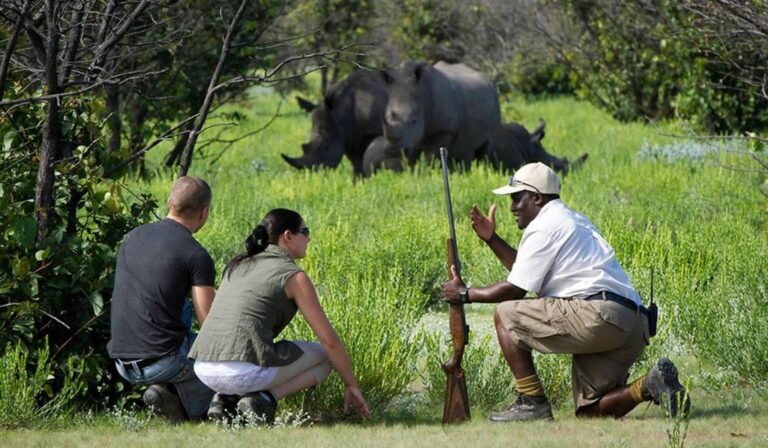
Although both countries offer excellent Big Five opportunities, sightings are never guaranteed. Rhinos, in particular, can be difficult to locate.
The Great Migration is not only about the wildebeest. It is also an opportunity to experience an entire ecosystem filled with predators, grazers, birds and other wildlife.
7. How Much Does a Great Migration Safari Cost?
The cost of a Great Migration safari depends on several factors. There is no single price that applies to every traveller.
Your final quotation will depend on:
- Number of safari days.
- Travel month and season.
- Number of travellers.
- Accommodation category.
- Private or shared safari arrangements.
- Domestic and international flights.
- Park and conservation fees.
- Vehicle type and guiding services.
- Whether you visit Tanzania only or combine Tanzania and Kenya.
What Are the Main Safari Budget Categories?
Budget safari: Usually involves simpler accommodation, camping or basic lodges and shared transport arrangements where available.
Mid-range safari: Offers comfortable lodges or tented camps, private or small-group arrangements depending on the itinerary, and a balance between comfort and price.
Luxury safari: Features premium lodges, luxury tented camps, personalised guiding, higher-end services and sometimes fly-in connections.
What Should Your Safari Quotation Include?
Before paying a deposit, ask your safari operator for a detailed breakdown covering:
- Accommodation and meal arrangements.
- Safari vehicle and professional guide.
- Park entry and applicable conservation fees.
- Game drives and planned activities.
- Airport transfers.
- Domestic flights, if applicable.
- Border transfers for multi-country itineraries.
- Excluded expenses, such as international flights, visas, tips and travel insurance.
The cheapest quotation is not always the best value. A lower-priced safari may involve accommodation far from the migration area, longer daily transfers or fewer game-drive opportunities.
At Sankofa Afrika Safaris, we recommend comparing the complete itinerary rather than judging a safari by its headline price alone.
Request a personalised quotation: Contact Sankofa Afrika Safaris.
8. How Many Days Do You Need for a Great Migration Safari?
The ideal duration depends on your chosen destination and the experience you want.
For travellers whose main objective is the migration, we generally recommend allowing enough time to explore the appropriate region rather than rushing between parks.
5–6 Days: A Short Migration-Focused Safari
A shorter itinerary can work if you concentrate on one destination.
Example:
- Day 1: Arrive in Tanzania or Kenya.
- Day 2: Transfer to the relevant migration region.
- Day 3: Full-day game drive.
- Day 4: Full-day wildlife exploration.
- Day 5: Additional game drive and departure.
- Day 6: Optional extension or onward travel.
This option is best for travellers with limited time.
7–9 Days: A More Comprehensive Safari
This duration allows more time for wildlife viewing and a better opportunity to explore multiple areas.
A Tanzania itinerary could include:
- Tarangire National Park.
- Ngorongoro Conservation Area.
- Central or Northern Serengeti.
The itinerary can be adjusted to match the migration season.
10–14 Days: Tanzania and Kenya Combined
For travellers who want a wider East African experience, a multi-country safari can combine the Serengeti and Maasai Mara.
This gives you more flexibility to explore different wildlife areas, enjoy longer game drives and experience the two countries’ safari landscapes.
Allow additional time for cross-border transfers or flights, as well as immigration formalities.
9. Sample 10-Day Tanzania and Kenya Great Migration Itinerary
The following is an illustrative itinerary for travellers interested in experiencing the northern migration season, particularly between July and October.
The exact routing should be confirmed against seasonal wildlife reports, available accommodation and transport arrangements.
| Day | Destination | Main experience |
|---|---|---|
| 1 | Arusha, Tanzania | Arrival, briefing and overnight stay |
| 2 | Ngorongoro Conservation Area | Scenic drive and crater-region wildlife |
| 3 | Central Serengeti | Game drives and exploration of the plains |
| 4 | Northern Serengeti | Travel towards the migration region |
| 5 | Northern Serengeti | Full-day migration-focused game drives |
| 6 | Northern Serengeti | Additional wildlife viewing and possible river-crossing opportunities |
| 7 | Kenya transfer | Travel to the Maasai Mara, subject to suitable connections and border arrangements |
| 8 | Maasai Mara | Game drives and wildlife exploration |
| 9 | Maasai Mara | Full-day safari and predator viewing |
| 10 | Departure | Transfer to the airport for onward travel |
Important itinerary note: Cross-border routing is not always as simple as driving directly between parks. Vehicle permissions, immigration procedures, border transfers and flight availability must be checked before confirming the itinerary. Some journeys may require a flight or a change of safari vehicle at an authorised border point.
Travellers should also verify visa requirements for both countries based on their nationality and travel documents.
10. How Far in Advance Should You Book a Great Migration Safari?
The Great Migration is one of East Africa’s most popular safari experiences, particularly during the northern migration season.
Accommodation in prime wildlife areas can be limited, especially in smaller camps and lodges positioned close to seasonal migration routes.
For peak-season travel, consider booking approximately 6–12 months in advance where possible. Popular luxury camps and specific travel dates may require even earlier planning.
Early booking helps you:
- Secure accommodation in the right migration region.
- Compare different lodge categories.
- Arrange domestic flights and transfers.
- Plan a suitable multi-country route.
- Organise permits and travel documentation.
- Avoid unnecessary last-minute compromises.
For lower-season travel, you may have more flexibility, but accommodation and route availability should still be confirmed before booking flights.
11. What Should You Pack for a Great Migration Safari?
A well-prepared traveller is more comfortable during long game drives and changing weather conditions.
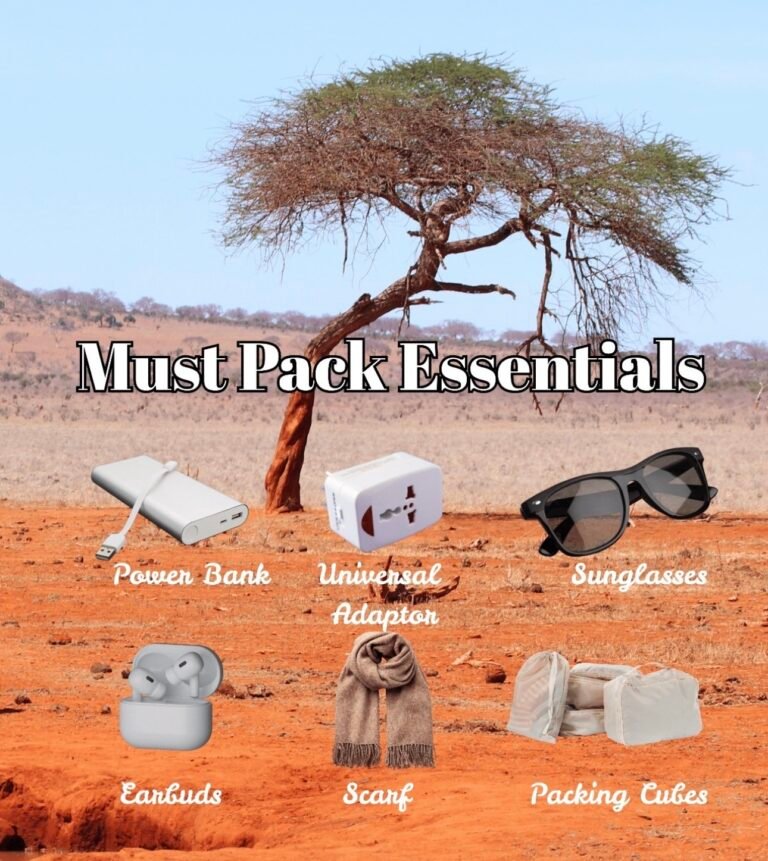
We recommend packing:
- Neutral-coloured safari clothing.
- Comfortable walking shoes.
- A warm jacket for early mornings.
- A wide-brimmed hat.
- Sunglasses.
- Sunscreen.
- Insect repellent.
- Binoculars.
- A camera with a suitable zoom lens.
- Extra batteries and memory cards.
- Personal medication.
- A small day bag.
- Travel documents and appropriate travel insurance.
A pair of binoculars is particularly useful for spotting animals at a distance and observing wildlife behaviour without disturbing the animals.
12. Responsible Great Migration Tourism: Protecting the Wildlife Experience
The Great Migration is a natural wonder that depends on healthy ecosystems, open wildlife corridors and responsible tourism practices.
Tourism should support conservation rather than interfere with the animals’ natural behaviour.
As a responsible safari traveller:
- Follow your guide’s instructions.
- Keep a respectful distance from wildlife.
- Never pressure your driver to chase animals.
- Avoid loud noise around wildlife.
- Do not litter in protected areas.
- Respect designated river-crossing viewing points.
- Support responsible accommodation and local communities.
- Avoid operators who promise guaranteed sightings or encourage unethical wildlife encounters.
The long-term survival of the migration depends on protecting the habitats and corridors that allow animals to move between Tanzania and Kenya.
13. Frequently Asked Questions About the Great Migration
1. What is the best month to see the Great Migration?
There is no single best month for every experience. January to March is excellent for calving in southern Serengeti, while July to October offers opportunities to see large herds in northern Serengeti and Maasai Mara, including possible Mara River crossings.
2. Where does the Great Migration start and end?
The migration is a continuous seasonal cycle across the Serengeti–Mara ecosystem. The herds generally gather in the southern Serengeti during the calving season, move west and north, reach the northern Serengeti and Maasai Mara during the dry season, and gradually return south as rainfall changes grazing conditions.
3. Is the Great Migration better in Tanzania or Kenya?
Both destinations offer exceptional experiences. Tanzania is important for the full annual migration cycle, including calving and the northern migration phase. Kenya’s Maasai Mara is particularly popular during the northern migration season. Your choice should depend on your travel dates and wildlife interests.
4. When do wildebeest cross the Mara River?
Mara River crossings are most commonly associated with the July–October period, but the exact timing changes annually. Herds may gather near the river without crossing immediately.
5. Are Mara River crossings guaranteed?
No. River crossings are unpredictable natural events. Even during the peak season, there is no guarantee that a herd will cross while you are visiting.
6. Can I see the Great Migration in December?
Yes. Herds generally begin moving back towards the southern Serengeti as the short rains return. The experience is different from the northern river-crossing season, but December can still be rewarding.
7. Is January a good time to visit the Serengeti?
Yes. January is part of the southern Serengeti calving season. It is an excellent period for seeing large herds, newborn calves and predators.
8. Can I see the Big Five during the Great Migration?
Yes. Both the Serengeti and Maasai Mara support populations of lions, leopards, elephants, buffaloes and rhinoceroses. However, sightings vary according to location, conditions and luck.
9. How many days are enough for the Great Migration?
A 5–6-day safari can provide a worthwhile experience in one destination. For a more comprehensive migration safari, consider 7–9 days. A Tanzania and Kenya combination may benefit from 10–14 days.
10. Is the Great Migration suitable for first-time safari travellers?
Absolutely. First-time visitors can enjoy the migration with a well-planned itinerary, comfortable accommodation and an experienced safari guide. The key is choosing the right destination for the month of travel.
11. Is it possible to visit Tanzania and Kenya on one safari?
Yes. Travellers can combine the Serengeti and Maasai Mara in a single itinerary. However, cross-border logistics, immigration requirements, vehicle arrangements and flights must be planned carefully.
12. Should I book a private or group safari?
A private safari offers greater flexibility, personalised guiding and more control over your game-drive schedule. A group safari can be more economical and is suitable for travellers comfortable sharing a vehicle and itinerary.
13. Can I see the migration without visiting during the river-crossing season?
Yes. The migration takes place throughout the year. The calving season in southern Serengeti, for example, offers a different but equally fascinating wildlife experience.
14. Plan Your Great Migration Safari with Sankofa Afrika Safaris
The Great Migration is more than a wildlife spectacle. It is an opportunity to experience the scale, diversity and beauty of East Africa’s natural heritage.
Whether you want to witness wildebeest calving in Tanzania, explore the open plains of the Serengeti, experience the excitement of the Mara River or combine Tanzania and Kenya into one unforgettable journey, choosing the right itinerary makes all the difference.
At Sankofa Afrika Safaris, we help travellers plan memorable African safari experiences through thoughtful itinerary planning, destination guidance and personalised travel arrangements.
We encourage you to choose your travel dates based on the experience you want, rather than relying on a fixed migration calendar. Our approach is to match your safari itinerary to the season, the destination and your expectations.
Ready to Experience the Great Migration?
Let Sankofa Afrika Safaris help you plan your journey through Tanzania and Kenya.
Contact us today:
- Website: https://sankofafrikatours.com/
- Email: info@sankofafrikatours.com
- Contact and safari enquiries: https://sankofafrikatours.com/contact-us/
Sankofa Afrika Safaris — Discover East Africa. Experience the Extraordinary.
Further Reading and Official Travel Resources
For additional information when planning your journey, explore these resources:
- Tanzania National Parks – Serengeti National Park
- Convention on Migratory Species – Wildebeest Migration Fact Sheet
- Tanzania Tourism – When to Travel
- Kenya Wildlife Service
- Kenya Tourism – Wildlife Safaris
- Tanzania National Parks – Mara River Crossing Guidelines
- Kenya Wildlife Service – Weather and Best Time to Visit Parks