

6-Day Pearls of the Pearl: Gorilla & Batwa Cultural Experience
Trek to see mountain gorillas in Bwindi, spend a day with Batwa guides in the forest and join community conservation work. The gorilla permit is included in the price.
Tour Overview
Bwindi Impenetrable National Park, in the highlands of south-western Uganda, is home to roughly half the world's surviving mountain gorillas. It is also the ancestral forest of the Batwa, who lived among these trees for generations. This six-day trip from Entebbe takes you to Bwindi for a gorilla trek, a day of Batwa cultural experiences and a day of community and conservation work. You travel by private 4x4 and stay in eco-friendly community lodges. The gorilla permit ($800 per person) is included, and it is arranged for you when you book.
Trip Highlights
Gorilla trek in Bwindi
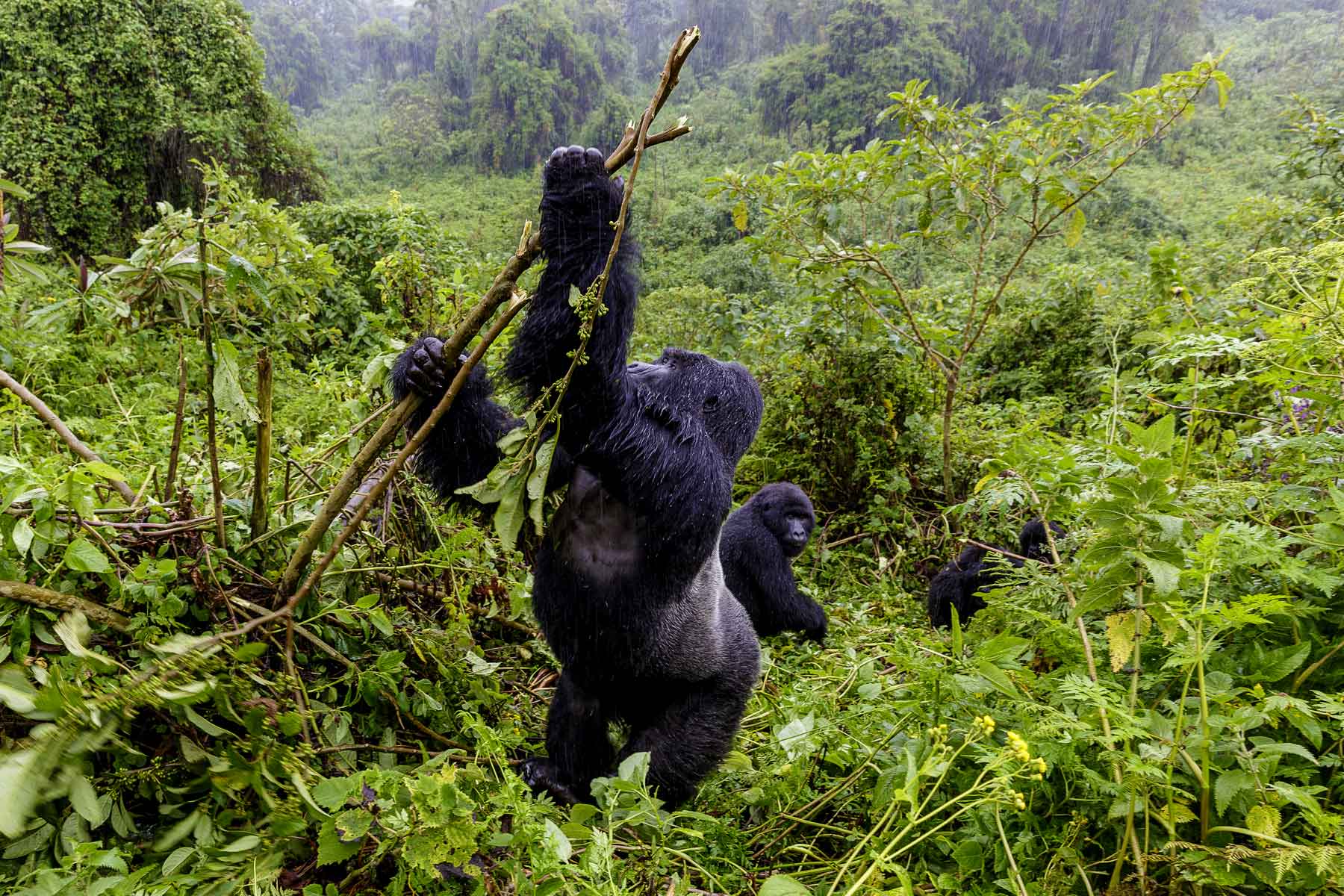
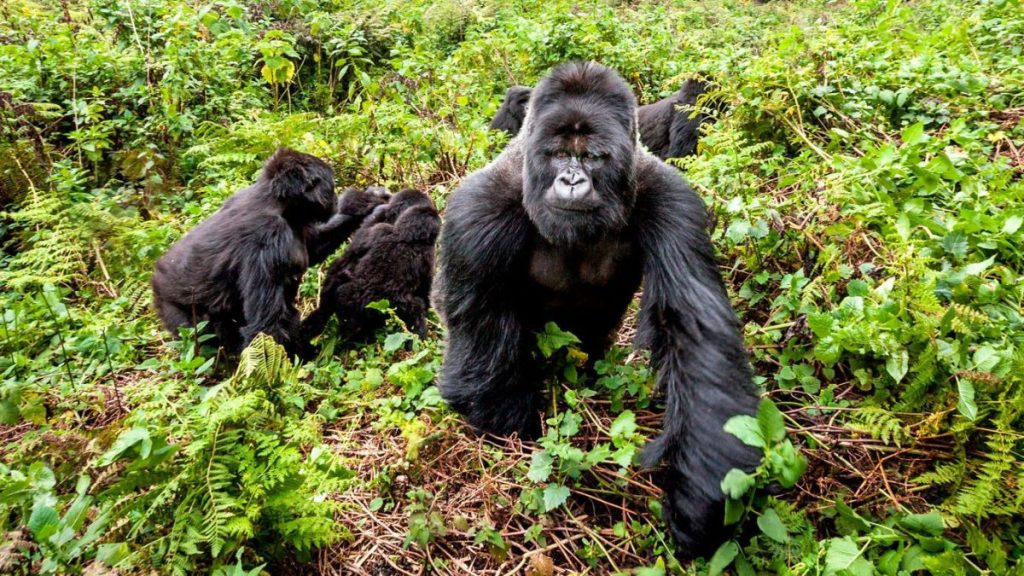
A guided trek with a Uganda Wildlife Authority ranger, then one hour with a habituated gorilla family in a UNESCO World Heritage Site.
A day with Batwa guides
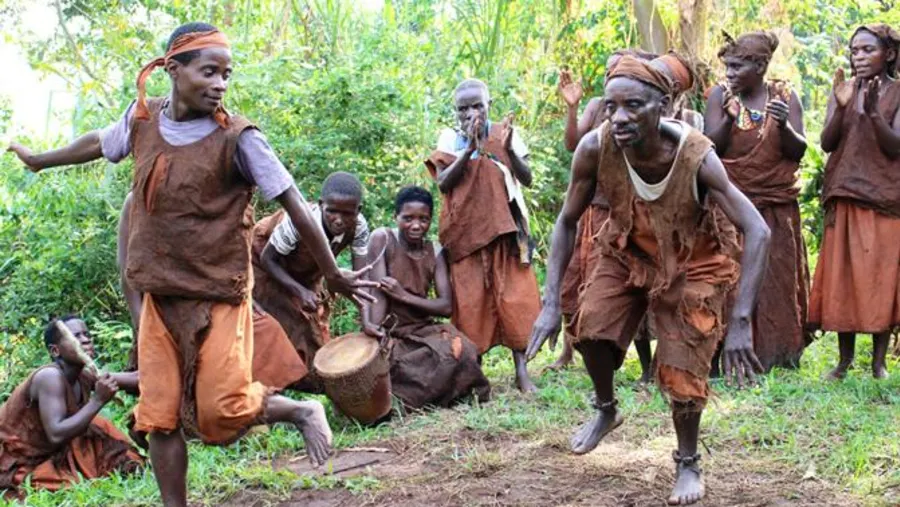
Walk the forest edge with Batwa guides, learn about medicinal plants and traditional hunting, and watch fire made by hand friction.
Community and conservation
Weave with a women's cooperative and plant trees in a monitored reforestation programme on Bwindi's buffer zone.
Highland drive
The road from Entebbe passes tea estates, rolling hills and Ankole cattle country on its way to the forest.
Plan Your Gorilla and Batwa Trip
Tell us your dates and group size. We'll confirm availability and send you a quote.
Day-by-Day Itinerary
Arrival in Entebbe
A Sankofa representative meets you at Entebbe International Airport and takes you to your lodge on the Entebbe peninsula, which juts into Lake Victoria. Depending on your arrival time, you can spend the afternoon in one of two ways. The first is a walk through the Entebbe Botanical Gardens, one of Uganda's best birdwatching spots, where African fish eagle and grey crowned crane are regularly seen. The second is a gentle sunset cruise on Lake Victoria, with the Ssese Islands fading on the western horizon.
Dinner at the lodge is Ugandan food: matoke, groundnut stew and fresh lake tilapia. Tomorrow's departure is early.
- Airport pick-up and transfer to the lodge
- Botanical gardens walk or sunset lake cruise
- Welcome dinner
Entebbe to Bwindi Impenetrable National Park
After an early breakfast you leave Entebbe in a private 4x4 Land Cruiser and drive south-west. The Entebbe to Mbarara highway crosses the old Buganda heartland and climbs into Ankole cattle country, where long-horned Ankole cattle graze broad, hazy ridgelines. You stop for lunch at a local restaurant on the way.
The road then drops into greener, forested hills, and the forest at Buhoma, on Bwindi's northern edge, appears as a wall of dense green. You check in at your community lodge. If you have the energy, there is a short orientation walk before dinner and an early night.
- Private drive through the highlands
- Lunch stop on the way
- Check-in at Buhoma
Gorilla Trekking in Bwindi
After an early breakfast you go to the park headquarters for a briefing with your Uganda Wildlife Authority ranger guide. They explain which habituated gorilla family you will visit, the rules for being near them and what the trek involves. How long the trek takes varies, because gorillas move freely and the forest is dense, but your ranger has tracked this family many times and knows where to look.
When you find them, you have one hour with the family. Mountain gorillas are among the animals most closely related to us, and being close to them changes how you think about wildlife. You may see a silverback at rest, juveniles playing in the canopy or a mother holding an infant. Each family can be visited by a maximum of seven people a day, and the rangers manage each visit carefully. Your guide advises you on photography.
You return to the lodge for lunch and a rest. In the evening, community members from the Buhoma area perform music, drumming and dance.
- Ranger briefing and gorilla family assignment
- Forest trek and one hour with the gorillas
- Evening cultural performance
Batwa Cultural Experience
The Batwa, also called the Twa, are one of central Africa's oldest indigenous peoples. They were hunter-gatherers in the forests of the Great Rift Valley region for thousands of years. When Bwindi became a national park in 1991, the Batwa who lived inside it were moved to the surrounding areas. That cut them off from the forest that sustained them, and it still shapes discussions about conservation, land rights and who benefits.
Batwa guides lead today's experience, and their forest knowledge is still very deep. On a walk along the forest edge and woodland approaches they show how people read tracks, build traps and understand animal behaviour. They identify medicinal plants, and some of their uses have contributed to formal pharmaceutical research. They also show you how to make fire by hand friction.
In the afternoon you visit a Batwa village, where dance, music and storytelling are shared. The day ends with a shared meal of local ingredients.
- Forest walk with Batwa guides
- Medicinal plants and fire-making demonstration
- Village visit and shared meal
Community Project Visit and Tree Planting
This day looks at how communities near the forest live, and how conservation can pay for itself locally. In the morning you visit a women's weaving cooperative that makes baskets, mats and textiles from locally harvested materials. The women explain what the enterprise has meant for household income and for the community's attitude towards the protected forest, which supports the tourism that supports the cooperative.
You join a hands-on workshop and learn the basic weaving patterns. You can also buy directly from the makers, with clear pricing. In the afternoon you plant trees as part of a buffer-zone restoration programme around Bwindi. The saplings are mapped and monitored. Your farewell dinner looks over the forest canopy.
- Visit a women's weaving cooperative
- Hands-on weaving workshop
- Reforestation tree planting and farewell dinner
Return to Entebbe and Departure
After breakfast you drive back to Entebbe. You stop at roadside craft markets, take photographs of the highlands and have lunch at a local restaurant.
Your arrival in Entebbe is timed to your flight. For an evening departure, we can arrange a day-use hotel room for a rest, shower and meal before you check in. For a morning flight, the drive is timed to match, and your guide takes you to the terminal.
- Return drive with craft market stops
- Lunch on the way
- Airport transfer, day-use room on request
What's Included
Included
- Gorilla trekking permit ($800 per person)
- 5 nights' accommodation, full board throughout
- Private 4x4 safari Land Cruiser and driver-guide
- Bwindi National Park entry fees
- Batwa cultural experience and community visit fees
- Women's cooperative workshop and reforestation activity
- Airport transfers on arrival and departure
- Bottled drinking water throughout
Excluded
- International flights to and from Uganda
- Uganda tourist visa ($50 at the port of entry)
- Travel, medical and evacuation insurance
- Tips for guides, lodge staff and community hosts
- Alcohol and premium drinks
- Souvenirs and purchases at the cooperatives
- Laundry and personal expenses
Price Per Person
| Group Size | Price per Person | Notes |
|---|---|---|
| 1 person | $2,950 | Solo traveller rate |
| 2 people | $2,350 | Per person |
| 3 people | $2,200 | Per person |
| 4 people | $2,050 | Per person |
| 5 people | $1,950 | Per person |
| 6 people | $1,850 | Best group value |
Before You Book
Where You Stay
- Night 1, Entebbe: Papyrus Guesthouse or 2Friends Beach Hotel, full board.
- Nights 2 to 5, Bwindi: Buhoma Community Haven Lodge, full board.
- Day 6: A day-use hotel room in Entebbe can be arranged on request if your flight is in the evening.
Good to Know
- The drive: Entebbe to Buhoma takes about 8 to 9 hours with lunch and rest stops. Leave at 6:30 to 7:00 AM on Day 2 to arrive before dark.
- The trek: You need reasonable fitness and comfort on uneven, often steep ground. A trek lasts 1 to 6 hours depending on where the family is. Wear long trousers and sturdy ankle-supporting boots, and bring gardening-style gloves. Rangers and optional porters make it accessible for most people. Tell us at booking about any mobility or fitness concerns.
- Permits: We buy your gorilla permit when your booking is confirmed. Permits are very limited, with only 96 people allowed per day across all habituated families. Book 3 to 6 months ahead for the dates you want.
- When to go: Bwindi is open all year. The dry months, June to September and December to February, give firmer trails and clearer skies. March to May and October to November are wetter, with lush forest and lower lodge rates.
- Photography: Flash is not allowed near gorillas. A 100 to 400 mm telephoto helps, though a standard 50 to 85 mm lens often works. The forest light is low, so bring fast glass or a camera that handles high ISO, and a rain cover.
- Health: A yellow fever vaccination is required for entry to Uganda. Malaria prophylaxis is recommended, though the risk is lower at Bwindi's altitude (1,160 to 2,607 m). Bring a warm layer for cool mornings and evenings. Travel and medical insurance is required for all travellers.
Ready for Bwindi?
Send us your dates and group size. We'll confirm availability and send a quote.