
12-Day Congo Adventure & River Safari
Track gorillas and forest elephants in Odzala-Kokoua National Park, then travel by motorised canoe through remote Congo Basin river communities.
Tour Overview
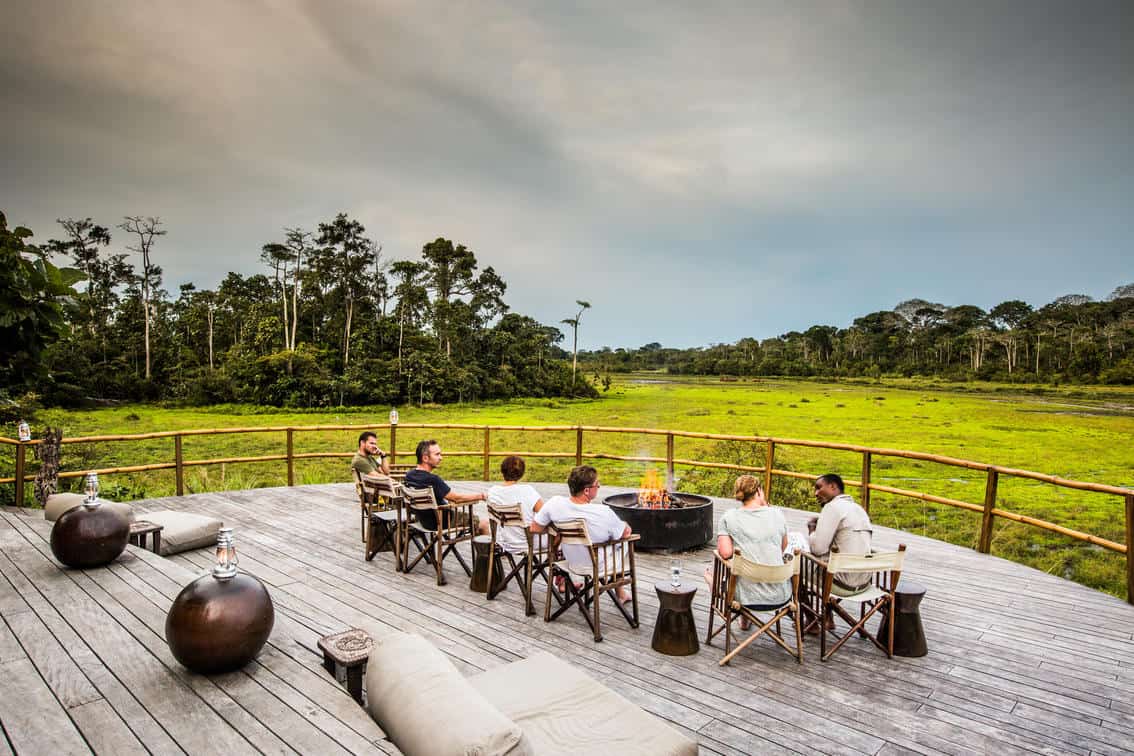
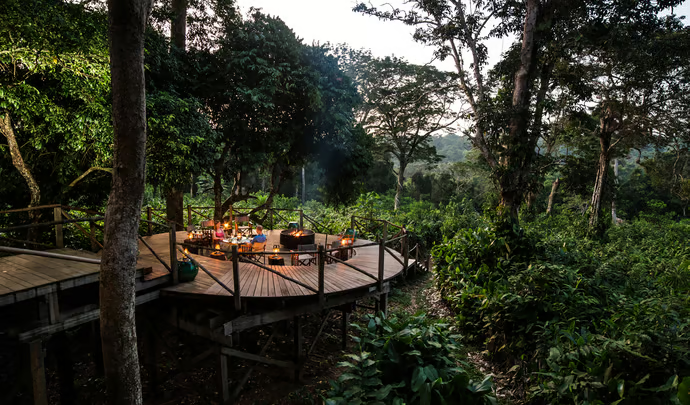
This is a 12-day expedition from Kinshasa into Odzala-Kokoua National Park, followed by a river journey through forest tributaries by motorised canoe. In Odzala you track western lowland gorillas and chimpanzees on foot and watch forest elephants at the forest clearings called bais. On the river you sleep in riverside tented camps and visit remote villages. The terrain is hot, wet and uneven, and the trip is rated moderate to challenging. It is a long way from a standard safari, and it suits travellers who are comfortable with rough conditions and want one of the least-visited wilderness areas in Africa.
Trip Highlights
Western lowland gorilla tracking
Track critically endangered gorillas on foot. The forest is dense and the gorillas are less habituated than in Uganda or Rwanda, so encounters are wilder.
Forest elephants at the bais
Watch elephants, buffalo, bongo and sitatunga gather in mineral-rich forest clearings.
Five days on the river
Travel by motorised canoe through forest tributaries, looking for hippos, giant otters, monitor lizards and kingfishers.
A remote village visit
Spend a morning with a riverside community that few visitors reach, with fishing demonstrations, weaving and storytelling.
Plan Your Congo Expedition
Tell us your dates and group size and we'll confirm availability and send you an estimate.
Day-by-Day Itinerary
Arrival in Kinshasa
Your Sankofa guide meets you in the arrivals hall at N'djili International Airport and takes you to your hotel. Kinshasa is home to more than 15 million people and sits on the southern bank of the Congo River, the world's deepest river. Brazzaville is visible as a low skyline on the opposite bank. The afternoon is yours.
In the evening a welcome dinner introduces Congolese food, such as moambe chicken cooked in palm oil, or saka saka, a stew of cassava leaves with smoked fish. Your guide then briefs you on the route to Odzala-Kokoua, safety rules, realistic wildlife expectations, and what to carry in the forest. There is time for questions.
- Airport meeting and hotel transfer
- Welcome dinner with Congolese dishes
- Full trip briefing and map walkthrough
Journey to Odzala-Kokoua National Park
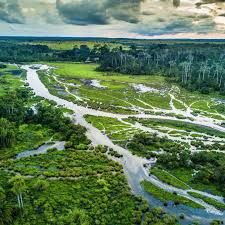
You leave Kinshasa early and cross into Congo-Brazzaville on the way to Odzala-Kokoua National Park, about 13,500 square kilometres of largely intact Congo Basin rainforest. You get there by charter flight, or by a mix of overland transport and small aircraft, depending on conditions and logistics. From the air you see unbroken forest canopy with rivers running through it.
Your eco-lodge or tented camp sits at the forest edge. After arrival you take a short orientation walk with a ranger guide along the park boundary. Colobus monkeys may be moving through the canopy. In the evening you get a briefing on forest safety, anti-poaching rules and responsible wildlife viewing.
- Charter flight or overland travel into Congo-Brazzaville
- Orientation walk along the park boundary
- Evening briefing on forest safety and park rules
First Forest Expedition
After an early breakfast you walk into the park's dense rainforest. The air is humid and heavy with the smell of damp earth and flowers. Your guide moves slowly and reads the signs: an elephant footprint in mud by a stream, bark stripped by a gorilla, birdsong that suddenly stops. You learn how the forest is layered, how bais concentrate wildlife, and how animal trails run through thick undergrowth. Typical sightings include forest duikers, putty-nosed monkeys, red-capped mangabeys, African grey parrots, hornbills and turacos.
In the afternoon you paddle a narrow forest tributary, where you may see hippos, Nile monitor lizards and kingfishers. By the campfire your guide talks about Congo Basin ecology and the conservation challenges facing Odzala.
- Morning forest trek with a ranger guide
- Afternoon canoe on a forest tributary
- Campfire talk on ecology and conservation
Gorilla & Primate Tracking
Today is spent tracking Odzala's western lowland gorillas, a critically endangered species. Tracking here is less structured than mountain gorilla trekking in Uganda or Rwanda. The forest is denser and the gorillas are less habituated, so encounters are wilder and less predictable. Trackers stay in radio contact as you follow knuckle prints, half-eaten fruit, bent saplings and nest platforms through tall primary forest.
You may also hear chimpanzee pant-hoots and drumming on tree buttresses, and see mangabeys and mona monkeys. Your guides explain gorilla and chimpanzee behaviour, and the community conservation programmes in which local BaAka and Mbati people help manage the park. Sightings cannot be guaranteed.
- Full-day gorilla tracking on foot
- Chimpanzee and monkey sightings possible
- Talks on community conservation
Full-Day Forest Exploration
Today focuses on Odzala's bais, the mineral-rich clearings where forest elephants, buffalo, bongo and sitatunga gather. Forest elephants are smaller and darker than savannah elephants, with straighter tusks. Your guide positions the group downwind so you can watch for a long time without disturbing the animals.
In the afternoon you visit a ranger research and conservation outpost. Rangers there use camera traps and GPS collar data, run anti-poaching patrols and keep up relations with local communities, and they explain their daily work. Late in the day you canoe side streams, with a chance to see river otters, kingfishers, dragonflies and butterflies.
- Full-day trek to the bais to watch forest elephants
- Visit to a ranger conservation outpost
- Late-afternoon canoe on side streams
River Expedition Begins
Today you leave the forest floor and board your motorised canoe for the river journey along the Congo Basin's tributaries. High forested banks drop to the water, with crocodiles and river birds on small sandbars. Hippos are common on this first river day, with just their ears and eyes above the surface.
At your first riverside village stop you see traditional fishing with basket traps and hand-woven nets. Through your guide-interpreter, elders talk about changes in fish numbers, river levels and wildlife over the decades. You sleep in a riverside tented camp.
- First day by motorised canoe
- Village stop and fishing demonstration
- Night in a riverside tented camp
Deeper into the Forested River
You leave the main channel for narrow blackwater streams, where the canopy closes overhead and the boat moves almost silently. On a stream ten metres wide, animals on the bank are close: red river hogs rooting in the mud, or a crocodile splashing in from a sunbathing spot. The motor is cut at times so the boat can drift.
Short hikes along the bank follow, led by your ranger guides. They show you how to read broken branches left by elephants, buffalo scent marks on trees, and half-eaten fruit pods left by gorillas. You spend another night in the riverside camp.
- Canoe through narrow forest streams
- Short hikes along the bank
- Tracking lessons from your ranger guides
Remote Village Visit
You spend the morning with a remote riverside community that receives few visitors. The village can only be reached by water and sits on a raised bank above the flood line, with smoked fish drying on racks. You watch fishing demonstrations with basket traps and hand-woven nets, while your guide interprets the fishermen's comments on reading the water and on fish behaviour.
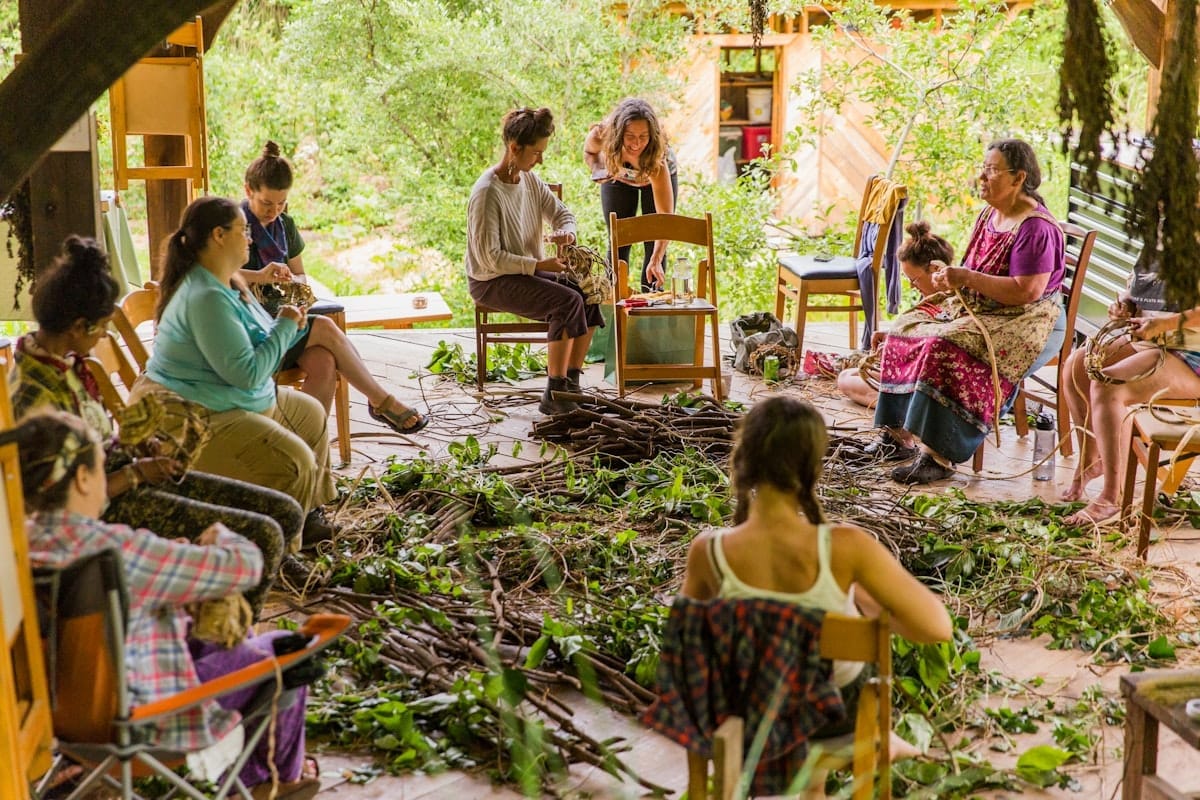
Village elders tell oral histories of the forest and river spirits and explain why some forest areas are left untouched. In the weaving demonstration you can buy hats, baskets and fishing gear made from forest materials. In the afternoon you continue on the river and watch the sun set through the river mist before another night in camp.
- Fishing demonstration at a remote village
- Elders' stories and a weaving demonstration
- Sunset on the river
Jungle Trek & Elusive Species
Today you leave the canoe for a longer forest trek aimed at elusive species. Forest buffalo, a smaller and redder Congo Basin buffalo, are often found near bais and waterholes. The red river hog, rufous and black with white face markings, is most active in the early morning, in clearings and on trails. The forest has eight or more duiker species, from the tiny blue duiker to the bay and yellow-backed duikers.
The trek is physically demanding, with thick undergrowth, slippery stream crossings and long periods of concentration to spot shy animals. Lunch is a picnic in a natural clearing. Then you trek back to the river and camp.
- Long forest trek for buffalo, red river hog and duikers
- Picnic lunch in a forest clearing
- Trek back to the river camp
Canoe Safari & Scenic Exploration
Day 10 is the longest day on the river. Family groups of giant river otters are the morning's target, and you often hear their calls before you see them. Nile monitor lizards, which can reach two metres, bask on sandbanks and roots. Kingfishers are plentiful, including malachite, giant, pied, half-collared and African dwarf. Where the river drops slightly, a few small rapids may allow a swim in clear water above them, conditions permitting.
At the campfire, your local guides tell Congo Basin folklore. You hear about the Mokele-mbembe, the river creature of Congolese tradition, the role of forest spirits in controlling hunting grounds, and ranger stories from decades in the forest.
- Full day by canoe
- Giant otters, monitor lizards and kingfishers
- Campfire folklore
Return to Kinshasa
After an unhurried last breakfast and a final short walk or paddle, you transfer to the nearest airstrip by canoe or vehicle, depending on where the journey ends. A short flight takes you back to Kinshasa, with a last view of unbroken forest canopy and rivers below.
In the afternoon you visit a local craft market, where sculptors, weavers and painters sell work from across the DRC. The farewell dinner is Congolese food: grilled tilapia from the Congo River, goat stew, plantain and tropical fruit.
- Transfer to the airstrip and flight to Kinshasa
- Craft market visit
- Farewell dinner
Departure
A morning transfer takes you to N'djili International Airport for your onward flight. Your Sankofa guide goes with you to the departure hall.
- Morning transfer to the airport
- Guide sees you off at departures
What's Included
Included
- All guided forest and river excursions
- Charter and internal flights, canoe hire and boat crew for the river section
- Park entrance fees and ranger escorts
- 11 nights of accommodation: Kinshasa hotel (Days 1 and 11), eco-lodge, and riverside tented camp
- All meals during safari days
- Village visit arrangements and interpreter
- Expert English-speaking guide throughout
- Bottled drinking water throughout
Excluded
- International airfare to and from Kinshasa
- DRC and Congo-Brazzaville visas and border fees
- Travel, medical and evacuation insurance
- Vaccinations and prescribed malaria prophylaxis
- Tips for guides, rangers and camp staff
- Alcohol and premium drinks
- Souvenirs and personal purchases, including at craft markets
- Costs from itinerary changes caused by weather, security or wildlife tracking conditions
Estimated Price Per Person
| Group Size | Estimated Price per Person | What Affects the Price |
|---|---|---|
| 1 person | $6,000 to $8,500 | Single supplement, charter flights, exclusive guide |
| 2 people | $4,800 to $6,800 | Shared guiding and charter costs |
| 4 people | $4,200 to $6,000 | Lower cost per person |
| 6 people | $3,900 to $5,500 | Lowest cost per person |
Before You Book
Good to Know
- Fitness: Forest and river travel means sustained activity on uneven, wet ground in high humidity. You need moderate fitness, and you should be comfortable walking for long periods on rough terrain and travelling in small boats on moving water.
- Rangers: Armed park rangers go with you on all forest treks and river excursions. Follow your guide's and rangers' instructions at all times.
- Cash: Bring US dollars in cash for remote lodges, camp fees, tips and extras. Cards are rarely accepted outside Kinshasa, so withdraw enough before you leave the capital.
- Health: A yellow fever vaccination is required for entry to both the DRC and Congo-Brazzaville. Malaria prevention is strongly recommended, so see a travel clinic at least 4 to 6 weeks before you leave. Travel and medical evacuation insurance is essential for this trip.
- Visas: Entry requirements for the DRC and Congo-Brazzaville change often. Confirm them with the embassies for your nationality before you book international flights. We give current visa guidance to all confirmed clients.
Ready for the Congo Basin?
Send us your dates and group size. We'll confirm availability and send an estimate.