The forest won’t follow your forecast. A clear morning in Bwindi can give way to rain, wet vegetation, and uneven ground. So deciding what to pack for gorilla trekking means balancing comfort and protection against the weight of your day bag.
You don’t need an elaborate kit. A few well-chosen layers and practical essentials can help you adapt to changing conditions and focus on the walk through Uganda’s forest. This guide covers what to carry, what to wear for protection and grip, and which optional extras may be worth packing. Use the checklist to choose boots, rain protection, gloves, water, and small comforts while leaving unnecessary weight behind. If you’re preparing for Bwindi, thoughtful packing is one part of a considered journey, including the 3 Days Bwindi Gorilla Trekking & Batwa Cultural Trail.
Key Takeaways
- Plan what to pack for gorilla trekking around changeable forest conditions, rather than relying on a fixed weather forecast.
- Choose clothing that allows comfortable movement and helps protect you on wet, uneven trails.
- Keep your day pack compact, with water, a light snack, rain protection, and personal necessities.
- Choose optional gear for a clear purpose, and follow current official guidance for health and hygiene requirements.
- Test your essentials before travel, pack them to protect against moisture, and keep lodge or evening clothes separate.
What to Pack for Gorilla Trekking When Forest Conditions Can Change
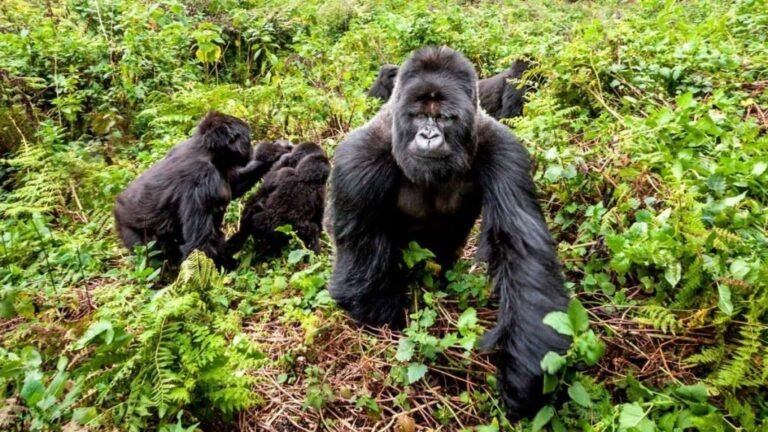
A close encounter with mountain gorillas can become a defining travel memory. The trek itself is an active walk through forest, where rain, mud, and uneven ground may shape the experience. The route and time spent walking can vary, too. Pack to adapt to changing conditions without turning your day bag into a heavy load.
That flexibility matters in Bwindi, a forest habitat for the Mountain gorilla. A seasonal forecast can help you plan, but it can’t guarantee what the trail will feel like on your trek. Rather than packing for one predicted kind of day, prioritize protection, comfort, and items you’ll be glad to carry if conditions change.
A gorilla-trekking day bag is a small pack for the essentials you may need during the walk, while keeping your hands free. Treat it as a practical reserve, not a place to store everything you might possibly use.
Why a gorilla trek needs a flexible packing plan
Forest conditions and walking demands can shift along the route. A damp or muddy stretch calls for secure footing and practical protection, while a longer trek can make unnecessary weight more noticeable. Build your list around what will help you stay comfortable in different conditions. Don’t treat a dry-season forecast as a promise of dry ground, or assume one kind of weather will define the whole day.
Essentials, useful extras, and personal choices
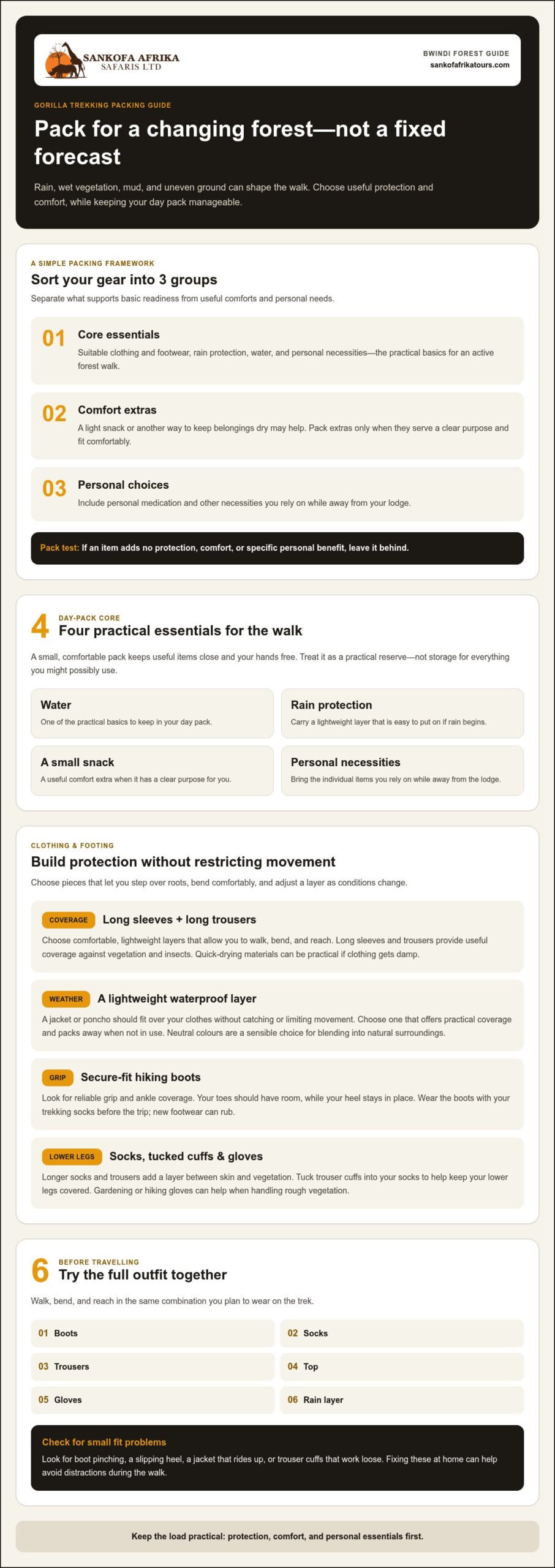
To decide what to pack for gorilla trekking, sort items into three groups. This makes it easier to distinguish what supports basic readiness from what is simply a personal convenience.
- Core essentials: The practical basics for an active forest walk, including suitable clothing and footwear, rain protection, water, and personal necessities.
- Comfort extras: Small additions that may make the day easier, such as a light snack or an extra way to keep belongings dry. Pack them if they serve a clear purpose and fit comfortably in your bag.
- Personal choices: Items based on your own needs and preferences. Personal medication belongs here, along with any necessities you rely on while away from your lodge.
When choosing between two items, ask whether each one adds protection, comfort, or a specific personal benefit. If it does none of these, leave it behind. A manageable load helps you focus on the walk instead of repeatedly adjusting your pack.
Use this framework to choose clothing and day-pack essentials. Keep permit rules and fitness preparation separate from your gear list, and follow current official guidance for health or hygiene requirements. Packing thoughtfully is one part of a considered Bwindi journey, including Sankofa Afrika Safaris’ 3 Days Bwindi Gorilla Trekking & Batwa Cultural Trail.
Gorilla Trekking Clothes and Boots for Wet, Uneven Trails
Clothing for Bwindi should protect you from brush and changeable weather without restricting your stride. Choose pieces that let you step over roots, bend comfortably, and adjust a layer as the day unfolds. Practical clothing you can move in is more useful than several bulky alternatives.
For a forest trek, prioritize comfortable coverage, easy movement, and layers you can adapt as conditions change.
Choosing layers and rain protection
Start with a comfortable, long-sleeved top and long trousers. They provide useful coverage against vegetation and insects while protecting your arms and legs. Choose lightweight layers that feel comfortable against your skin and let you reach, bend, and walk freely. Quick-drying materials can be practical if clothing gets damp, but no fabric can guarantee you’ll stay completely dry.
Carry a lightweight waterproof jacket or poncho that’s easy to put on when rain begins. It should fit over your clothes without catching or limiting movement. A bulky coat can take up room and feel cumbersome, so choose an outer layer that offers practical coverage and packs away when not in use. Neutral colours are a sensible choice for blending into the natural surroundings.
Boots, socks, gloves, and leg protection
Choose hiking boots with a secure fit, reliable grip, and ankle coverage. Stable footing is useful on uneven ground, and a supportive fit can help reduce rubbing as you walk. Wear the boots with the socks you plan to trek in. Your toes should have room, but your heel shouldn’t slip. New footwear can rub, so wear it on walks before your trip rather than breaking it in on the trek.
Longer socks and trousers add a layer between your skin and vegetation. Tuck trouser cuffs into your socks to help keep your lower legs covered as you move through undergrowth. Gardening or hiking gloves can also help when handling rough vegetation. They’re a practical option, not a substitute for clothing that protects your arms.
Before travelling, try the full outfit together: boots, socks, trousers, top, gloves, and rain layer. Walk, bend, and reach in it. Check for pinching at the boot, a slipping heel, a jacket that rides up, or trouser cuffs that work loose. A small fit issue at home can become distracting during a longer walk.
These choices form the clothing and footwear foundation of what to pack for gorilla trekking. Sankofa Afrika Safaris’ 3 Days Bwindi Gorilla Trekking & Batwa Cultural Trail brings together a forest journey and an opportunity to experience Bwindi’s cultural heritage.
What to Carry in Your Gorilla Trekking Day Pack
A well-organized day pack keeps useful items close without asking you to carry your whole travel kit through the forest. Choose a comfortable pack that sits securely, then make each item earn its place. Water, rain protection, a small snack, and personal necessities form the practical core. Add other items to suit your needs, not just to fill spare space.
A lighter, organized pack can make walking more comfortable by reducing the weight you carry and keeping essentials easy to reach.
- Water: Bring drinking water for the trek and pack it where you can reach it without unpacking everything.
- Light snack: Choose something simple that’s easy to carry and eat when you need it.
- Rain protection: Keep your rain layer near the top or in an accessible pocket, so you can reach it promptly if conditions change.
- Personal necessities: Add tissues and any personal medication you may need during the day.
- Protection for belongings: Use a waterproof cover for your pack or a protective bag inside it to help limit moisture reaching your contents.
Water, snacks, and small personal essentials
Keep frequently used items in an accessible pocket, but don’t fill every compartment with things you may not need. Choose a snack that’s easy to handle, and keep personal medication within reach instead of burying it beneath spare clothing. Tissues can be useful for personal comfort. Organize the bag at home, then check that you can retrieve essentials without taking everything out.
There isn’t one fixed amount of water or food that suits every trek. Your needs and the demands of the day can differ. Pack for yourself and leave enough room for the bag to remain manageable rather than tightly stuffed.
Protecting a camera and other valuables
If you’re taking a camera, place it and any spare batteries in a protective pouch or waterproof bag inside your pack. A rain cover can help shield the outer bag, while an inner barrier adds protection for sensitive items. Keep valuables secure, and leave accessories that add weight without serving a clear purpose.
Before setting out, check your camera settings and battery, and pack any spare battery safely. Keep the flash turned off when photographing gorillas. Return the camera to its protective pouch between uses instead of leaving it exposed to moisture or knocks.
For a final check, lift the packed bag and adjust anything that shifts or feels awkward. Keep essentials easy to find, protect items that could be damaged by moisture, and leave nonessential belongings behind. This compact approach makes what to pack for gorilla trekking easier to manage and keeps your attention on the forest experience.
Optional Gorilla Trekking Gear and What You Can Leave Behind
Once you’ve packed core clothing and day-pack essentials, assess optional gear with one question: will it solve a need you expect to have, or add weight without much benefit? The best choices depend on your comfort, walking style, and personal needs. You don’t need every item that appears on a packing list.
For a balanced approach, sort extras into useful aids, personal comforts, and items to leave behind. Keep core needs separate from optional conveniences, and don’t pack a second version of something you already have covered.
- Useful aid: Trekking poles may help with balance on uneven ground, especially if you’re accustomed to using them. They’re a personal aid, not a universal requirement.
- Personal comfort: Insect repellent may suit your preferences. If you bring it, follow the product label directions.
- Situational hygiene items: Masks and sanitizer should reflect current official health and hygiene guidance, not assumptions based on an older checklist.
- Leave behind: Bulky extras, duplicates, and anything you’re unlikely to use can make your day bag harder to carry without adding practical value.
Trekking poles, insect repellent, and hygiene items
Choose poles if they support your balance and you’re comfortable using them. Repellent is optional, so pack it if it contributes to your comfort and use it as directed. For masks, sanitizer, and other hygiene items, follow the latest official guidance for the trek. Requirements can change, so confirm current instructions before travel instead of relying on old packing advice.
Choosing a porter and keeping luggage manageable
A porter may help carry a trekker’s belongings, reducing the load on your back during the walk. If you use this assistance, keep your own essentials organized and accessible. Don’t pack extra simply because someone else may carry it. A compact bag is easier to manage and keeps your personal necessities close at hand.
Think about each item’s purpose: if it supports balance, comfort, or a personal need, it may earn its place. If it’s only a “just in case” extra with no clear use, leave it behind. This guide focuses on gear choices. Permit requirements, gorilla encounter rules, and fitness preparation are separate topics, each with its own guidance.
For a thoughtfully planned Bwindi experience, explore Sankofa Afrika Safaris’ 3 Days Bwindi Gorilla Trekking & Batwa Cultural Trail as a way to shape your forest journey.
Your Final Gorilla Trekking Packing Checklist for a Bwindi Journey
A final review can turn a collection of gear into a calm, practical plan for your trekking day. Focus on the items you’ve chosen for comfort and protection, then check that each is ready to use. This last pass isn’t about adding more. It’s about making sure your essentials fit, stay protected, and are easy to find.
A simple pre-trek packing review
Follow this sequence before departure. It can help you catch small problems, such as a boot that rubs or a rain layer buried at the bottom of your bag, while there’s still time to adjust.
- Test: Put on your trekking clothes and boots together. Walk around, bend, and reach to make sure your footwear feels secure and nothing restricts your movement.
- Pack: Place water, a light snack, rain protection, personal necessities, and any personal medication in your day bag. Keep frequently needed items accessible.
- Protect: Put electronics and other moisture-sensitive belongings in a protective pouch or bag, and arrange your rain cover so you can reach it easily.
- Review: Lift the pack and adjust its contents if anything shifts or feels awkward. Remove duplicate or bulky items that don’t serve a clear purpose.
Before leaving, check that your water and personal essentials are in the bag, your footwear is comfortable, and your rain layer is easy to reach. A short review can provide reassurance without adding unnecessary gear to your load.
Lodge and evening clothing: Pack a separate change of comfortable clothes for time away from the trail. Keep it in your main luggage rather than your trekking day bag.
Preparing for a considered Bwindi journey
Thoughtful preparation makes room for more than the practical details of a forest walk. Bwindi is also a place to encounter stories, heritage, and living culture with care. If you’re planning the wider experience, explore this guide to a Bwindi gorilla trekking package and learn about respectful visits through the Batwa cultural trail tour. The Batwa cultural experience deserves attention in its own right, approached with respect for the people and their heritage.
With your final review complete, you can set aside the question of what to pack for gorilla trekking and turn your attention to the journey ahead. Explore Sankofa Afrika Safaris’ 3 Days Bwindi Gorilla Trekking & Batwa Cultural Trail to experience the forest and its cultural heritage.
Take the Next Step Toward Bwindi
Preparation can make the day feel more settled, leaving you freer to meet the forest with patience and attention. Keep your needs in mind, choose essentials you trust, and leave room for the journey to unfold without trying to plan for every possibility. That’s the heart of deciding what to pack for gorilla trekking: being ready while keeping space for the experience itself.
A Bwindi journey can also hold meaning beyond the forest walk. Sankofa Afrika Safaris brings together gorilla trekking and the Batwa cultural trail in a personal, curated itinerary, with space to appreciate the landscape and cultural heritage with care.
Explore the 3 Days Bwindi Gorilla Trekking & Batwa Cultural Trail and start shaping a considered journey. May your preparations be simple, your pace unhurried, and your time in Bwindi memorable.
Frequently Asked Questions
What shoes should I wear for gorilla trekking?
Wear broken-in hiking boots that feel secure and provide grip and ankle coverage. Try them with the socks you’ll wear on the trek, then test them on a walk that includes slopes or steps. Notice whether your heel lifts or your toes press against the front when walking downhill. Sorting out the fit before travel helps you avoid discovering a rubbing spot during the forest walk.
Do I need waterproof clothing for gorilla trekking?
Bring rain protection, particularly a lightweight waterproof outer layer you can put on over your trekking clothes. A full waterproof outfit isn’t necessary for every trek, and no clothing can promise you’ll stay dry in all conditions. Keep your outer layer somewhere easy to reach, rather than beneath other belongings, so you can respond if rain starts during the walk.
Can I hire a porter for gorilla trekking?
A porter may be able to help carry your belongings, which can make a day pack feel less burdensome. Keep essentials you may need during the walk, such as personal medication, within your own reach. Treat assistance as support, not as a reason to bring more than you need. A carefully edited pack is easier to organize and carry either way.
How much water should I carry on a gorilla trek?
There isn’t one amount that suits every trekker, so plan according to your personal hydration needs and the demands of your day. Choose a bottle or container you can open and drink from easily while walking, and make sure it fits securely in your pack. If you’re deciding what to pack for gorilla trekking, water should take priority over optional extras.
Can I take a camera gorilla trekking?
Yes, you can bring a camera. Choose equipment you’re comfortable carrying and operating without a lengthy setup, and keep it protected when not in use. Turn the flash off before photographing gorillas, and avoid letting camera accessories crowd out your day’s necessities. If you’re bringing a spare battery, store it securely so it doesn’t get lost among other small items.
Are trekking poles necessary for gorilla trekking?
No, trekking poles aren’t essential for everyone. They may be useful if you already rely on them for balance, but they can feel unfamiliar if you haven’t practised using them. Try your poles on a walk before travelling and see whether they help you move with confidence. If they feel awkward or become something else to manage, leave them out of your day bag.