
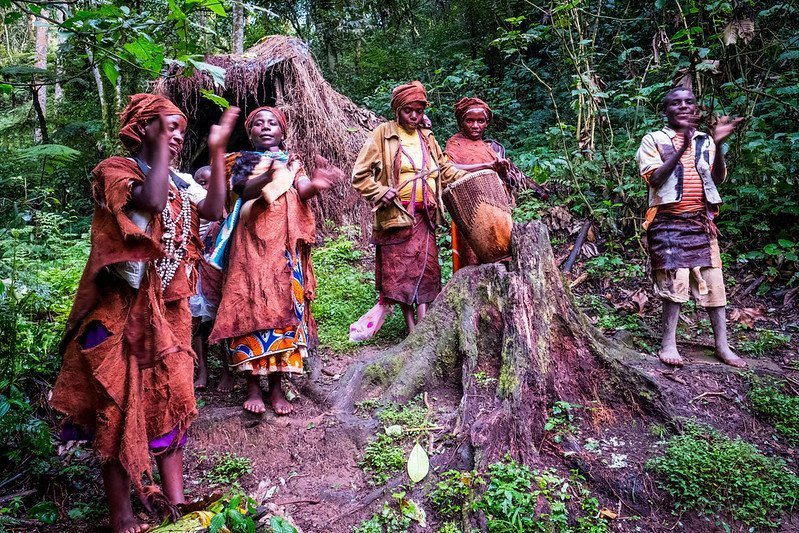
What if a journey into Uganda’s forest landscape is remembered not only for wildlife, but also for the stories shared by people whose lives are deeply connected to it? A Batwa cultural trail tour offers a chance to listen and learn from Batwa guides.
If you’re unsure what the experience involves, or wonder whether it might feel staged, that hesitation is understandable. The trail is most meaningful when visitors arrive ready to listen, meet Batwa guides with respect, and understand the cultural context behind what they share.
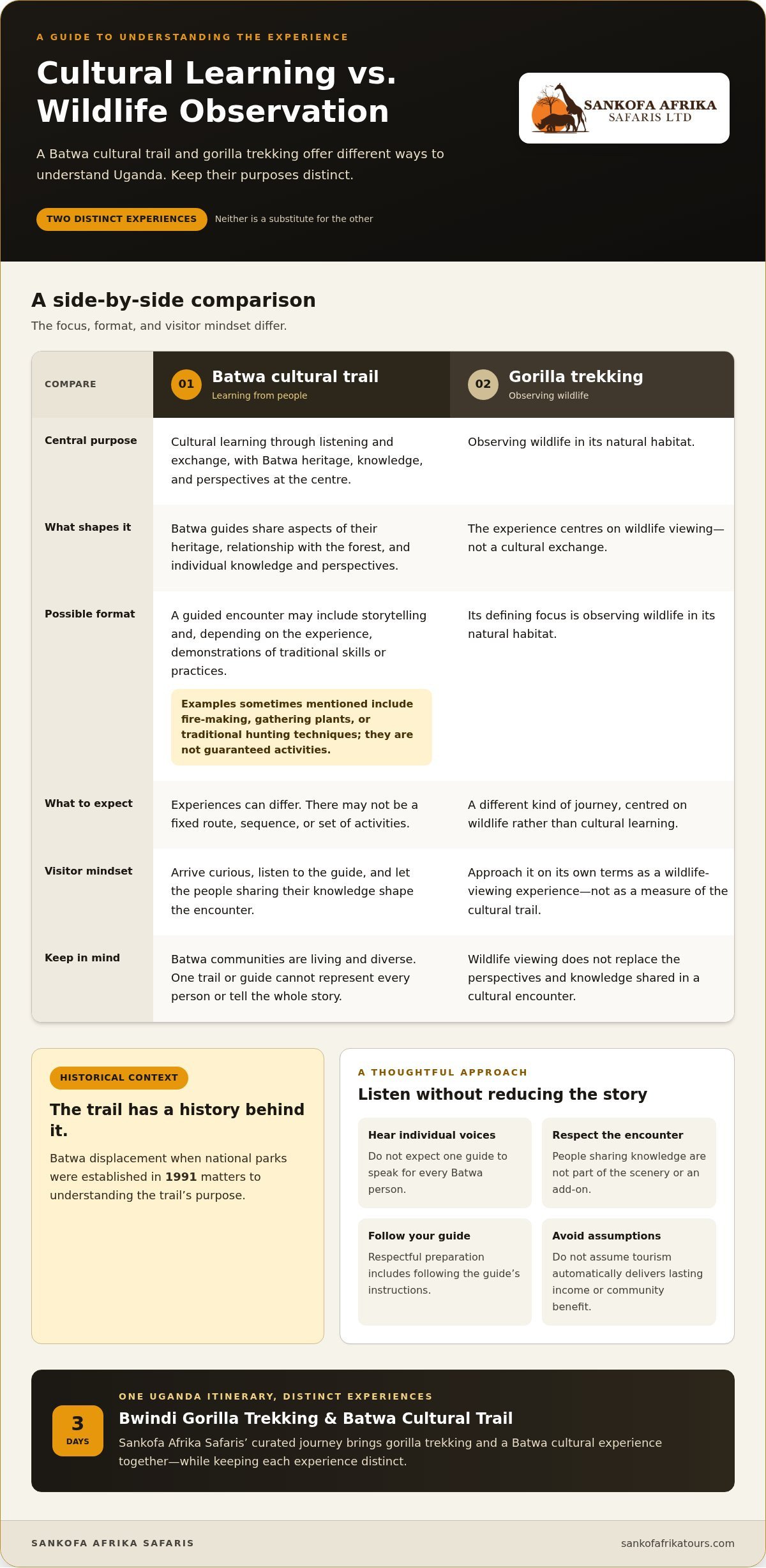
Unlike gorilla trekking, which focuses on observing wildlife, a cultural trail centres Batwa knowledge and living voices. Depending on the experience, visitors may encounter demonstrations of traditional skills and cultural practices. The history of Batwa displacement when the national parks were established in 1991 also matters to understanding the trail’s purpose.
This guide explores what the trail can teach you, how to take part with care, and how cultural learning can complement a wildlife journey. Sankofa Afrika Safaris’ curated 3 Days Bwindi Gorilla Trekking & Batwa Cultural Trail brings these distinct experiences together in a Uganda itinerary.
Key Takeaways
- Understand how Batwa heritage and forest knowledge shape the purpose of a cultural trail.
- A guided format alone doesn’t determine whether an encounter is meaningful. Approach it with curiosity and listen to the people sharing their knowledge.
- Prepare for your Batwa cultural trail tour with respectful expectations, and follow your guide’s instructions throughout.
- Keep cultural learning distinct from wildlife viewing, while recognizing how both can offer different perspectives on Uganda.
- Sankofa Afrika Safaris’ curated 3 Days Bwindi Gorilla Trekking & Batwa Cultural Trail brings gorilla trekking and a Batwa cultural experience together in one journey.
What Is a Batwa Cultural Trail Tour in Uganda?
A Batwa cultural trail tour is a guided experience in which Batwa people share aspects of their heritage, knowledge and relationship with the forest. Its purpose is cultural learning through listening and exchange, not wildlife viewing. Keep that distinction in mind when planning: you’re there to learn from people, rather than to watch an animal encounter.
The Batwa are living communities, not a story confined to the past. Their histories and present-day experiences are varied, and a trail offers one point of engagement rather than a complete account. For broader context, the overview of the Batwa people of Uganda can help visitors approach the experience with greater awareness of their history and contemporary circumstances.
What does the Batwa cultural trail involve?
Visitors generally join a guided encounter where Batwa knowledge and perspectives shape what is shared. Storytelling can explain relationships with the forest, while demonstrations, when included, may illustrate traditional skills or practices. Experiences can differ, so arrive curious rather than expecting a fixed route, sequence or set of activities.
Some descriptions of Batwa cultural experiences mention demonstrations such as fire-making, gathering plants or traditional hunting techniques. Treat these as possible examples, not a checklist of activities to expect on every trail. Listen to the guide’s explanations, and allow the people sharing their knowledge to shape the encounter.
A useful definition is simple: a cultural trail is a guided opportunity to learn from Batwa heritage and knowledge; it is not a wildlife-viewing activity. That framing keeps the focus on human voices and the purpose of the visit.
How is a cultural trail different from gorilla trekking?
Gorilla trekking centres on observing wildlife in its natural habitat. A Batwa cultural trail centres on learning from people: their heritage, perspectives and knowledge. Neither experience is a substitute for the other. They offer different ways to understand a place, and each deserves to be approached on its own terms.
Keeping that distinction clear helps avoid treating the cultural experience as an add-on to a wildlife outing. The people sharing their knowledge are not part of the scenery, and their contribution should be met with attention and respect. Rather than judging the trail by how closely it resembles a trek or how many activities it contains, notice what you learn and whose perspective you’re listening to.
The experiences can sit within the same Uganda itinerary. Pairing cultural learning with gorilla trekking creates a journey with distinct strands: time devoted to wildlife observation and time for a guided cultural encounter. Give each experience room to be understood for what it is.
Batwa Heritage and Forest Knowledge: The Context Behind the Trail
Batwa heritage is not a relic preserved for visitors. Batwa people live in communities today, carrying diverse experiences, knowledge and perspectives that cannot be reduced to a single account of forest life. A trail can offer a meeting point with some of that knowledge, shared by the people guiding and interpreting it. It cannot represent every Batwa person or tell the whole story.
Forest knowledge may include understandings of plants, materials, seasons and ways of moving through a forest environment. The details shared belong to particular guides and communities, so don’t treat one explanation as a universal Batwa tradition. Knowledge is heritage, but it is also connected to people’s lives now, rather than frozen in an imagined past.
How did forest life shape Batwa knowledge?
For Batwa communities with histories of forest life, relationships with the forest have informed practical knowledge as well as cultural identity. A guide’s account might explain how particular plants or resources were understood and used. Such examples are specific, not a checklist of customs shared by every Batwa person. Listen for the meaning behind what is shared, and let the speaker explain its relevance today.
That context also calls for care with historical claims. Batwa displacement from forest areas is part of the story visitors may encounter, but broad summaries can flatten different experiences or suggest that culture ended with displacement. The PBS account of Batwa conservation refugees offers a perspective on the consequences of conservation displacement. Historical details deserve credible sourcing, and Batwa voices should be given priority wherever they are available.
Why does the trail matter today?
Cultural sharing creates space for visitors to learn directly from Batwa guides and encounter perspectives often left out of wildlife-focused travel. Approach that opportunity without assuming that tourism automatically delivers lasting income, recognition or community benefit. Claims about how fees are distributed or what a programme supports need clear, preferably community-led evidence.
Visitors can contribute to a more thoughtful exchange by listening without expecting a single spokesperson to stand for everyone. Notice the difference between learning about history and treating hardship as the whole story. A Batwa cultural trail tour is an encounter with living knowledge and individual perspectives, not permission to define a community from a brief visit.
Carry that attentiveness into your wider travel choices, too. Sankofa Afrika Safaris offers personal, curated journeys. Explore a thoughtfully curated Uganda journey that brings cultural learning alongside wildlife experiences.
Is the Batwa Cultural Trail a Staged Show? Understanding the Encounter
A guided format doesn’t, by itself, tell you whether a cultural encounter is meaningful, respectful or beneficial. Guidance can provide structure and interpretation, while the quality of the exchange depends on whose perspectives are shared, how the experience is shaped, and how visitors take part. Avoid labelling a trail authentic or inauthentic from the outside. Listen to the people involved and consider how they describe the experience.
The question is understandable. Visitors may wonder whether demonstrations are arranged for an audience. But that assumption can miss the difference between sharing knowledge in a guided setting and performing a stereotype. A demonstration may explain a practice and its context. Listen to the explanation rather than judging the encounter by how spontaneous or theatrical it appears.
What makes cultural exchange respectful?
Begin as a guest, not a critic waiting to grade the experience. Pay attention to the guide’s words, and stay open to perspectives that may differ from what you’ve read or expected. If something is unclear, ask a genuine question at an appropriate moment. A thoughtful question invites explanation; a leading question can press someone to fit a visitor’s assumptions.
Demonstrations are shared knowledge, not entertainment detached from the people presenting it. Let your hosts and guides set the boundaries for interaction, including whether photography is welcome. Ask permission before taking someone’s photograph, and accept a refusal without making it awkward. These small choices keep attention on consent and the people sharing their knowledge.
How can visitors think about tourism’s impact?
Tourism’s impact depends on how an experience is designed and delivered. A visitor’s booking alone can’t prove that a community benefits, that all voices are represented, or that a cultural practice is being shared on terms chosen by the people concerned. Claims about income, decision-making or community outcomes need reliable, transparent evidence, ideally from Batwa-led sources.
You don’t need to resolve every question before taking part. Instead, hold uncertainty honestly. Notice who is speaking and how they describe the experience, while resisting the urge to turn one guide’s account into a statement about all Batwa people. Respectful attention is more useful than assuming a brief visit offers a complete picture.
As you reflect on the encounter, keep these distinctions in mind:
- Guided doesn’t automatically mean staged. Look to the context and the voices shaping what is shared.
- A demonstration isn’t a performance for you to judge. Listen for its meaning and follow the guide’s direction.
- One visit isn’t a complete account. Treat each perspective as particular, not universal.
- Good intentions don’t guarantee community benefit. Rely on credible, community-led information for claims about impact.
A Batwa cultural trail tour can invite genuine learning, but visitors don’t get to define its meaning on behalf of the people sharing their knowledge. Arrive ready to listen, ask with care and accept that some questions may have no simple answer.
How to Prepare for a Batwa Cultural Trail Tour
Good preparation is less about packing for a performance and more about arriving with thoughtful expectations. A Batwa cultural trail tour is a chance to listen and learn, but one visit can’t represent the full diversity of Batwa lives. Read the programme description, keep your expectations flexible, and be ready for the experience to take its own shape.
What should visitors understand before they go?
Place the experience in the context of your wider Uganda journey. A cultural encounter has a different purpose from wildlife viewing, and it deserves your attention in its own right. Avoid assuming that every trail follows the same format or includes particular demonstrations. Let the description of your experience shape your expectations.
A simple preparation sequence can help:
- Read the programme details. Use them to understand what the experience describes, rather than filling gaps with assumptions.
- Set aside expectations of a fixed show. Be ready to listen to what your hosts choose to share, without expecting personal access or a particular story.
- Consider the itinerary context. Leave room to approach cultural learning as its own experience, not merely a pause between wildlife activities.
- Arrive open to individual perspectives. One guide’s account may be valuable without representing every Batwa person or community.
This approach keeps your expectations grounded and gives the encounter room to unfold on its own terms.
How can visitors behave thoughtfully during the trail?
During the experience, follow your guide’s instructions. Guidance may cover where to walk, how to take part, and when photography or conversation is appropriate. Ask permission before photographing people, and accept a boundary without pressing for an explanation. Curiosity doesn’t create an obligation for anyone to answer.
Choose questions that invite knowledge rather than demand private disclosure. You might ask about a practice being explained or what a guide would like visitors to understand. Avoid intrusive questions about personal hardship, and don’t assume that a host wants to discuss difficult experiences. If a subject isn’t offered, let it rest.
- Listen without interrupting or steering the account toward a story you expect.
- Follow guidance about photographs, movement and participation.
- Thank your hosts and guides sincerely, without claiming to know what your spending supports.
These gestures can’t determine the wider impact of tourism, but they help make your own presence more considerate. To shape your Uganda journey around attentive cultural learning, explore a thoughtfully curated safari.
Include the Batwa Cultural Trail in a Curated Uganda Journey
A thoughtfully planned Uganda journey can make room for different ways of understanding a place. Gorilla trekking centres on wildlife observation; a Batwa cultural experience creates space for cultural learning and shared perspectives. Bringing them into one itinerary can add breadth, provided the cultural encounter is valued in its own right rather than treated as a brief supplement to seeing gorillas.
Sankofa Afrika Safaris offers the 3 Days Bwindi Gorilla Trekking & Batwa Cultural Trail, a curated three-day journey that brings together gorilla trekking and a Batwa cultural experience. It gives travellers a way to include both wildlife and cultural learning within a single journey, without implying that the experiences are interchangeable or that one explains the other.
Why combine cultural learning with a wildlife journey?
The two experiences offer distinct perspectives. Wildlife observation invites attention to animals and their habitat; cultural learning turns attention to Batwa voices, heritage and knowledge. Keeping that difference in view helps prevent the cultural experience from becoming an “extra” measured by how it enhances a gorilla encounter. Each deserves its own focus, and neither should be asked to stand in for the whole story of a place or its people.
A curated, personal journey can hold these experiences together while preserving their distinct purposes. Approach the cultural trail with the same care you bring to the wider journey: make space to listen, follow the guidance of those leading the encounter, and be open to what they choose to share.
Explore Sankofa’s three-day Bwindi experience
The 3 Days Bwindi Gorilla Trekking & Batwa Cultural Trail brings gorilla trekking and a Batwa cultural experience together over three days. The itinerary combines wildlife and cultural learning, giving each a place in one journey.
As you consider whether this journey suits your plans, think about the balance you want between wildlife and cultural learning. The Batwa experience is not simply a pause in a wildlife itinerary; it is an opportunity to engage with a different perspective, on its own terms. A considered approach begins with that distinction and carries it into the way you listen and participate.
If this combination reflects the kind of journey you have in mind, explore the curated Uganda journey and see how a Batwa cultural trail tour can sit meaningfully alongside gorilla trekking.
Let Your Next Journey Begin with Curiosity
The most meaningful journeys leave space for more than what you planned to see. As you shape your time in Uganda, consider what you hope to learn, whose perspectives you want to hear, and how you can arrive as a thoughtful guest. That intention can shape the way you experience a Batwa cultural trail tour, long after the visit itself has ended.
Sankofa Afrika Safaris’ personal, curated journeys include the 3 Days Bwindi Gorilla Trekking & Batwa Cultural Trail, bringing cultural learning and gorilla trekking into one considered itinerary. Let the experience meet you with openness, and give each part of the journey the attention it deserves.
Explore Sankofa’s 3 Days Bwindi Gorilla Trekking & Batwa Cultural Trail, and take the next step toward a Uganda journey shaped by curiosity and care.
Frequently Asked Questions
Is the Batwa cultural trail the same as the Batwa Trail in Mgahinga?
Not necessarily. “Batwa cultural trail” can describe cultural experiences in different settings, while the Batwa Trail in Mgahinga refers specifically to an experience associated with Mgahinga Gorilla National Park. Names and programmes can vary by location. When comparing experiences, pay attention to the named setting and programme description rather than assuming that every trail follows the same route or offers the same activities.
Can I take part in a Batwa cultural experience without gorilla trekking?
Yes. A Batwa cultural experience is distinct from gorilla trekking, so the two don’t have to be treated as one activity. It may suit travellers whose plans focus on cultural learning rather than wildlife viewing. You can consider cultural learning as its own part of a Uganda itinerary rather than making it dependent on a gorilla trek.
How long does a Batwa cultural trail tour take?
There isn’t one duration that applies to every Batwa cultural trail tour. The time depends on the particular programme. A three-day itinerary that combines the experience with gorilla trekking describes the overall journey, not necessarily the length of the trail activity itself. Use the programme details to plan your day, and don’t assume that a trail takes a set number of hours based on another visitor’s account.
Is a Batwa cultural trail suitable for children?
It can be a meaningful experience for children who are ready to listen, follow guidance and engage respectfully with people sharing their knowledge. Suitability depends on the child’s age, interests and comfort with the programme. Before including children, consider whether they can take part without treating demonstrations or conversations as a show. Prepare them to ask politely, respect personal boundaries and understand that not every question needs to be answered.
Can visitors take photographs during a Batwa cultural trail?
Photography may depend on the people and activities involved, so don’t assume that every moment is available to photograph. Ask permission before taking someone’s picture, and follow your guide’s or hosts’ instructions about when cameras should stay away. If permission isn’t given, put the camera aside without asking repeatedly. A respectful visit doesn’t depend on taking photographs; attentive listening can be a more valuable way to remember what you learn.
How can a Batwa cultural trail support cultural understanding?
A trail can give visitors a chance to hear knowledge and perspectives directly from the people sharing them, rather than relying only on outside descriptions. Understanding grows when you listen carefully, ask questions without demanding personal stories, and remember that one encounter can’t represent every Batwa person. Treat what you hear as a particular perspective, reflect on it after the visit, and avoid presenting a brief experience as a complete account of Batwa life.