

This month we’re taking it back to basics Uganda. We get asked all the time: “Is Uganda really worth it?” So we put together four straight-talking reads to answer that question. Why Uganda earned its nickname, ten real reasons to book it, the spots most visitors skip, and a comparison with Kenya. No fluff. Just the facts you need.
Why Uganda Is Called the Pearl of Africa
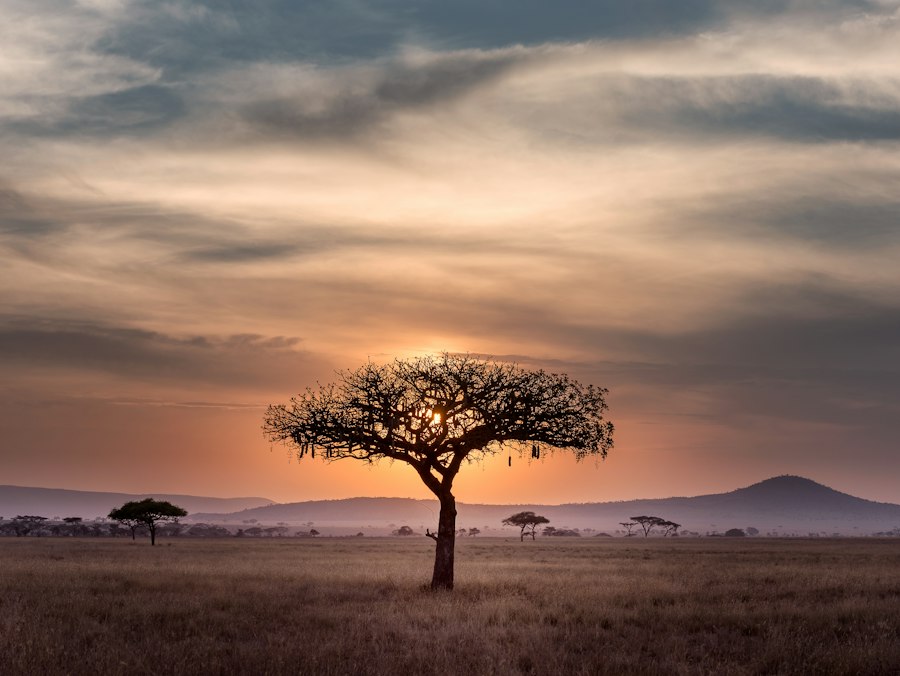
The title dates back to 1908, when Winston Churchill published My African Journey after visiting Uganda in 1907 .He wrote:
“For magnificence, for variety of form and colour, for profusion of brilliant life — bird, insect, reptile, beast — for vast scale — Uganda is truly the Pearl of Africa.”
More than 100 years later, the nickname still holds. Here is what Churchill saw and what you will find today:
- Where two worlds meet. Uganda sits at the point where East African savannah meets West African equatorial rainforest, creating an ecosystem found nowhere else on the continent.
- Packed with biodiversity. Despite being roughly the size of the United Kingdom, Uganda is home to over 1,070 bird species (around 50% of Africa’s total), 10 national parks, and more than 300 mammal species.
- Half the world’s mountain gorillas. Bwindi Impenetrable National Park and Mgahinga Gorilla National Park protect approximately half of the world’s remaining mountain gorillas — a population that has now grown past 1,000 individuals.
- The source of the Nile. The world’s longest river begins in Uganda, at Jinja on Lake Victoria, before travelling 6,650 km to the Mediterranean Sea.
- Mountains with glaciers on the equator. The Rwenzori Mountains — the “Mountains of the Moon” are a UNESCO World Heritage Site and include Margherita Peak, Africa’s third-highest summit at 5,109m, capped with tropical glaciers.
- A title reclaimed. What Churchill wrote as colonial admiration, Ugandans have proudly owned since independence in 1962. Today “Pearl of Africa” is a badge of national identity, not a foreign label.
10 Reasons Uganda Should Be Your Next Safari Destination

People often default to Kenya or Tanzania. Here is why Uganda deserves its own spot on the list and not just as a backup.
- Gorilla trekking in Bwindi. Uganda holds nearly half the world’s mountain gorillas. A trekking permit ($800 USD) gives you one hour face-to-face with a wild gorilla family in Bwindi Impenetrable National Park — one of the most intimate wildlife encounters on earth.
- The best chimpanzee tracking in Africa. Kibale National Park has the highest density of wild chimpanzees in East Africa over 1,500 chimps across the forest. Kyambura Gorge and Budongo Forest are strong additional options.
- Over 1,070 bird species. Around 50% of all bird species found in Africa live in Uganda, including the rare shoebill stork in Mabamba Swamp and 23 Albertine Rift endemics in Bwindi alone. It is consistently rated one of Africa’s top birding destinations.
- Tree-climbing lions. In the Ishasha sector of Queen Elizabeth National Park, lions regularly lounge in fig trees — a rare behaviour documented in very few places worldwide.
- The Big Five, plus primates. Uganda is one of the only countries where you can see gorillas, chimpanzees and the Big Five on a single trip.
- Murchison Falls — the most powerful waterfall on earth. The entire Nile River squeezes through a 7-metre-wide gorge before plunging 43 metres. The boat cruise up to the base of the falls is one of Uganda’s signature experiences.
- Year-round destination. Uganda sits on the equator with a consistent temperature range of 22–30°C. Even in the wet season, showers are short. You can travel any month.
- Fewer crowds, more wildlife. Uganda receives roughly 1.5 million tourists annually compared to Kenya’s 2 million+. You will frequently have a game drive, a gorilla trek, or a boat cruise entirely to yourself.
- More affordable than comparable destinations. Uganda is consistently 20–40% cheaper than Rwanda or Kenya for an equivalent experience. Outside of the gorilla permit, park fees and accommodation are accessible across budgets.
- Conservation that works. 80% of gorilla permit revenue goes directly to conservation and local community projects. Uganda’s mountain gorilla population has grown from around 680 in 2008 to over 1,000 today proof the model is working.
Hidden Gems to Visit on a Uganda Safari
Beyond Bwindi and Queen Elizabeth, Uganda has corners that most itineraries skip entirely. These are worth the detour.
- Sipi Falls, Mount Elgon. Three waterfalls cascade down the slopes of Mount Elgon near Kapchorwa, the highest dropping over 100 metres. Activities include guided hikes to all three falls, abseiling down the main waterfall, coffee farm tours (the volcanic soils here produce some of Uganda’s finest Arabica), and birdwatching. It sits at 1,775m, so the air is cool and the views are wide open. A great weekend escape from Kampala.
- Kidepo Valley National Park. Uganda’s most remote park, a full day’s drive from Kampala in the northeast. The reward is total solitude — vast open plains framed by the Morungole Mountains, over 70 mammal species including cheetahs, ostriches, and some of Africa’s largest buffalo herds, and lions regularly spotted on rocky outcrops. On most days you will share sightings only with a ranger, not another vehicle. Consistently listed among Africa’s most underrated parks.
- Ssese Islands, Lake Victoria. An archipelago of 84 islands in Lake Victoria — Africa’s largest freshwater lake — just a ferry ride from Entebbe. Palm-fringed beaches, calm waters for swimming and fishing, and almost no crowds. A quiet, slow-paced escape that works as a safari add-on for a few days of rest. The Baganda people of the islands are warm hosts.
- Lake Mburo National Park. Uganda’s smallest savannah park, but one where you can do something almost nowhere else offers: walk among zebras, impalas, and giraffes on a guided bush walk. No tsetse flies either, making it a comfortable midpoint stop on the road between Kampala and the western parks. Around 350 bird species have been recorded here.
- Lake Bunyonyi. A highland crater lake near Kabale in southwest Uganda, surrounded by steep terraced hillsides and 29 islands. The water is bilharzia-free, making it one of the few places in Uganda safe for swimming. A quiet, scenic base before or after gorilla trekking in Bwindi, just 2 hours away.
Uganda Safari vs Kenya Safari: Which One Is Better?

Both are excellent. But they are two very different trips. Here is a straight breakdown so you can decide which suits you — or whether to combine both.
| Factor | 🇺🇬 Uganda | 🇰🇪 Kenya |
|---|---|---|
| Headline experience | Gorilla & chimp trekking, Big Five, diverse ecosystems | Great Migration, open plains, classic Big Five game drives |
| Gorillas | Yes — half the world’s mountain gorillas in Bwindi | None |
| Great Migration | Not present | Yes — July to October in the Masai Mara |
| Bird species | 1,070+ (about 50% of Africa’s total) | 1,100+ — also world class |
| Landscape variety | Forest, savannah, mountains, lakes, waterfalls | Open plains, Rift Valley, coast, semi-arid north |
| Crowds | Uganda receives roughly 1.5 million tourists annually compared to Kenya’s 2 million+ | Moderate to high in peak Mara season |
| Best time to visit | June–Aug and Dec–Feb (dry); year-round viable | July–Oct for Migration; Jan–Feb also good |
| Road infrastructure | Improving; remote parks require 4×4 | Better developed; easier self-drive |
| Best for | Primate lovers, adventure seekers, variety travellers | First-time safari-goers, wildlife photographers, luxury stays |
Verdict: Neither is objectively better — they serve different travel goals. Uganda wins on wildlife variety, primate experiences, and value. Kenya wins on the Migration and ease of travel. The best East Africa trip? Combine both: fly into Nairobi, catch the Masai Mara, then take the short hop to Entebbe for gorilla trekking.
Ready to Plan Your Uganda Safari?
Our team can build a custom itinerary around your dates, budget and the experiences that matter most to you — gorillas, birding, waterfalls, or all of the above.
Start Planning →