
5 Days Kidepo Valley Wilderness & Karamojong Homestead Experience

Responsive 3 Image Slider
5-Day Kidepo Valley Wilderness & Karamojong Homestead Experience — Sankofa Africa Safaris

Kidepo Valley National Park sits in the far north-eastern corner of Uganda, cut off from the rest of the country by the rugged Timu and Napore mountains and sharing a frontier with South Sudan and Kenya — a geographical isolation that has preserved it as one of Africa's most pristine and least-visited wilderness areas. This 5-day expedition travels from Kampala through the Ugandan north to Kidepo's sweeping Narus Valley, where elephants, lions, buffalo, and giraffe move across golden savannah under skies undimmed by light pollution or tourist traffic. But the park is only part of the story: this itinerary is as much about the Karamojong people — semi-nomadic pastoralists whose cattle culture, oral traditions, and warrior heritage shape every dimension of life in this landscape — as it is about the wildlife that shares it with them. Remote, raw, and completely unlike Uganda's better-known southern circuit — arranged from start to finish by Sankofa Africa Safaris.

Duration
5 Days
4 Nights
Difficulty
Moderate
Optional hiking
Best Season
Nov – Mar & Jun – Sep
Dry season windows
Trip Highlights
Game drives through Narus Valley — elephants, lions, buffalo, and giraffes in open savannah
Visit a traditional Karamojong homestead (Manyatta) and engage with community members
Guided scenic hike into the Morungole foothills with panoramic views over Kidepo plains
Evening cultural storytelling and traditional dance performance with local elders
True wilderness experience — one of Africa's last great frontiers, far from tourist crowds
Road Journey Culture

Your Kidepo adventure begins with an early departure from Kampala as the city's morning energy gives way to the open road heading north. The drive through Luwero and Nakasongola is one of Uganda's most underappreciated journeys — the central plateau's rolling hills and roadside trading centres gradually ceding to the wider, drier landscapes of the north, the sky opening up and the temperature shifting perceptibly as you leave the lake-influenced humidity of the south behind. Your guide points out the changing vegetation and the first hints of the savannah ecology that will define the days ahead: euphorbia candelabra trees appearing on ridgelines, red laterite soil replacing the darker loams of the south, the occasional kite or vulture high overhead marking the transition from agricultural countryside to something more genuinely wild.

Gulu — the north's largest city and a place of considerable cultural significance — is your overnight stop, and the early evening offers a short walk through the local market: an animated, fragrant space of fresh produce, grilled meat, and the particular commercial energy of a trading town that serves a vast and thinly populated hinterland. The character of northern Uganda is immediately distinct from Kampala — the pace, the architecture, the faces, and the food all carry the particular texture of Acholi culture, and your guide provides context on the history and present-day vitality of this region that makes the overnight stop feel like the beginning of a genuine journey rather than a transit interruption. A half-board dinner of northern Ugandan cooking — groundnut stew, millet bread, fresh river fish — rounds off a day that has covered significant ground in every sense.

Drive First Game Drive Photography

After breakfast, the journey north-east to Kidepo Valley National Park resumes — the final 4 to 5 hours of driving representing a progressively more dramatic entry into one of Uganda's most extraordinary landscapes. The road climbs and descends through the rugged topography of Karamoja, the terrain growing more open and more arid with every kilometre, the population density thinning to near-zero, and the views across the Timu and Napore mountain ranges carrying the particular quality of wild country that has never been thoroughly domesticated. By the time you reach the park gate, the sense of having arrived somewhere genuinely remote is unmistakable — there are no crowds here, no minibuses, no curio vendors; just a ranger post, a dirt track leading into open savannah, and a sky of extraordinary scale overhead.

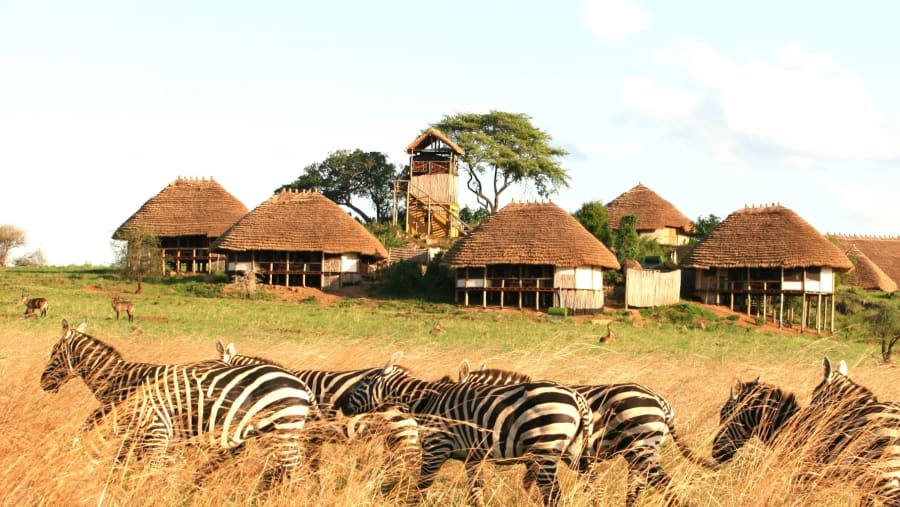
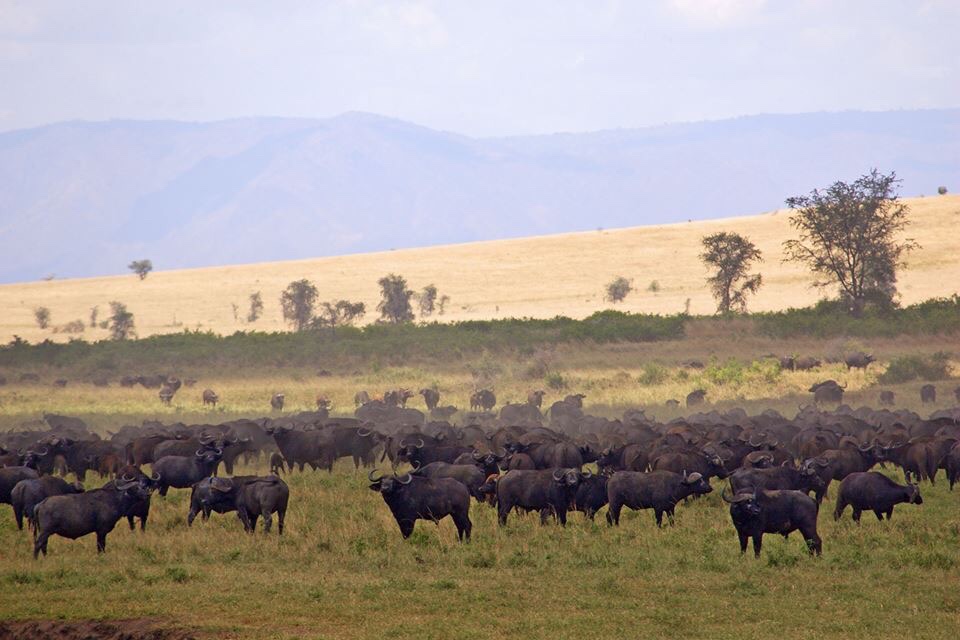
Your first game drive enters Narus Valley — the park's wildlife heartland — in the late afternoon, when the savannah light turns golden and the animals begin to move towards their evening feeding and watering zones. Kidepo is one of the few places in Uganda where you can encounter lion reliably in open country, and the Narus Valley's combination of grassland, seasonal wetlands, and acacia woodland creates the layered habitat that concentrates game in observable numbers. Large herds of buffalo move in dark, slow formations across the valley floor; Rothschild's giraffe browse the acacia crowns with elegant indifference; Uganda kob and Jackson's hartebeest dot the grassland in groups of dozens; and your guide reads the landscape for the elevated ears and moving grasses that signal lions in the area. A sundowner with the mountains behind you and the last light fading over the valley is the perfect close to an arrival day of considerable emotional impact.

Lions & Giraffe Manyatta Visit Sunrise

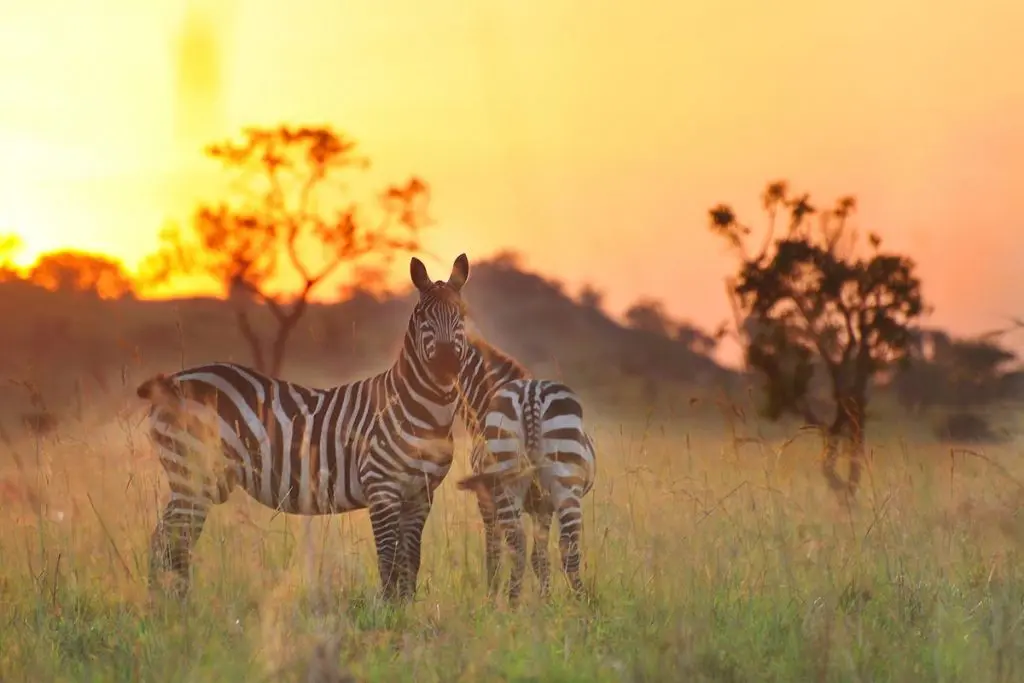
The day begins before sunrise — a pre-dawn departure from the lodge into the cool of the Kidepo morning, when the savannah is at its most active and the quality of light is exceptional for photography. Cheetah are present in Kidepo, making it one of only a few Ugandan parks where this encounter is possible; lions are frequently located in the early hours by ranger radio communication with overnight patrol teams who track movements throughout the night. Rothschild's giraffe, one of the world's most endangered giraffe subspecies, are a Kidepo speciality — the park holds one of Uganda's most significant populations — and the morning light through an acacia canopy with a group of giraffe browsing at camera height is one of east Africa's most reliably stunning wildlife photographs. A picnic lunch in the park allows the full morning of game driving without breaking the flow for a lodge return, maximising time in the valley at the hours when wildlife is most concentrated.

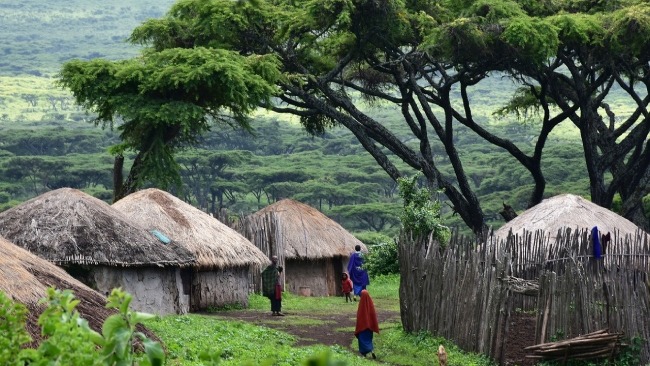
The afternoon transitions entirely into cultural territory with a visit to a Karamojong Manyatta — the traditional circular homestead of thorned acacia fence and tightly clustered mud-and-thatch dwellings that is the fundamental social unit of Karamojong life. The Karamojong are one of east Africa's most distinctive peoples: a Nilotic community whose identity is organised around cattle — their measure of wealth, their spiritual currency, their social adhesive — and whose warrior traditions, age-grade systems, and elaborate beadwork represent a living culture of great depth and complexity. Community members demonstrate their daily routines, the women's extraordinary beadwork traditions are explained and practiced in real time, and the cattle enclosure at the homestead's centre — mud-packed, smelling of livestock and wood smoke, surrounded by the sounds of bells and lowing — is as evocative a cultural environment as anywhere in Africa. The evening closes with traditional dance and storytelling under the open sky: elder voices carrying oral histories that root this place in a depth of human presence long predating any national park boundary.

Morungole Hike Beadwork Birdlife

Mount Morungole — the sacred mountain of the IK people and the dramatic eastern backdrop of Kidepo Valley — offers one of north-east Uganda's finest hiking experiences, and this morning is dedicated to a guided ascent into its lower foothills. The trail climbs through a transition zone between the valley's open savannah and the mountain's montane forest, passing through a progression of vegetation types and birdlife habitats that makes the hike as rewarding for naturalists as for landscape photographers. From the foothills, the Kidepo and Narus valleys spread below in their full geographical context — the flat, sun-bleached grassland stretching south, the mountain ranges of South Sudan visible as a distant blue wall to the north, and the extraordinary sense of standing in a landscape that feels entirely unmodified by the 21st century. Your guide narrates the ecological and cultural significance of Morungole throughout — as a water source, a foraging ground, a spiritual reference point, and a refuge that has shaped human settlement in this valley for centuries.

The afternoon is a gentler, more social experience: a visit to a community women's beadwork initiative that provides economic agency to Karamojong women through the production and direct sale of traditional jewellery. The beadwork of Karamoja is not decorative in the casual sense — each piece carries coded information about the maker's marital status, age grade, and social position, and the colour combinations and construction techniques are a living visual language with regional variation and personal expression built in. Watching experienced makers work — the speed, the precision, the conversational ease with which highly complex patterning is produced — is quietly extraordinary, and the opportunity to purchase directly from the makers provides meaningful income to individual households. The evening at the lodge campfire, the Kidepo sky above — one of Uganda's darkest and most star-filled — is a natural close to a day of exceptional variety.

Final Drive Return South

An early breakfast and one final short game drive out of the park — the morning cool, the valley mist still clinging to the lower ground — serves both as a last wildlife opportunity and as a natural farewell to Kidepo's extraordinary atmosphere. The drive to the exit gate passes through the Narus Valley one more time, the animals moving in the early light as they have done every morning regardless of who is watching: a reminder that this wilderness continues on its own terms long after any visitor has gone. The emotional clarity of leaving somewhere genuinely remote — the awareness of how far you have come, in distance and in experience — is one of the particular gifts of a destination like Kidepo, which makes no accommodations for convenience and asks something real of the people who come to it.

The return to Kampala is a long scenic drive of approximately ten hours, with a lunch stop en route and the landscape running in reverse through the northern terrain, the highlands, and eventually the greener, more populated central region. For those with time constraints or flight connections, a domestic charter flight from Kidepo's airstrip to Entebbe — approximately two hours in the air, with the whole of the Ugandan north visible below — is available at additional cost and provides the aerial context that makes the expedition's geography vividly legible from above. Either way, the expedition concludes with the knowledge of having visited one of east Africa's most compelling and least-known wild places, and Kidepo has the quality, shared by very few destinations, of making return feel not just desirable but inevitable.

Price Per Person (USD)
Group SizePrice Per PersonNotes
Solo (1 pax)$1,290Private vehicle & guide; single room supplement
2 people$890Shared vehicle and guiding costs
3 people$770Good value for small groups
4 people$690Best balance of cost and flexibility
5 people$650Strong shared efficiency
6 people$610Lowest per-head cost; maximum group size

Prices include: private 4x4 safari vehicle with driver/guide, park entry and all game drives, 4 nights accommodation (Gulu boutique lodge + Kidepo safari lodge on full board), community visit and cultural fees, all meals as indicated, bottled water throughout, and all local taxes. Excludes international and domestic flights, travel and evacuation insurance, tips, alcoholic drinks, optional charter flight (Kidepo–Entebbe), and any activities not listed in the itinerary.

Included
Private 4x4 safari vehicle with driver/guide throughout
All park entry fees and game drives
4 nights accommodation — Gulu lodge (HB) + Kidepo safari lodge (FB)
Community and Manyatta visit fees & guide-interpreter
Guided Morungole foothills hike
All meals as indicated and bottled water
Local taxes and levies
Excluded
International or domestic flights and travel insurance
Optional charter flight Kidepo – Entebbe (available at extra cost)
Tips and gratuities for guides and lodge staff
Alcoholic drinks and personal bar expenses
Souvenirs and personal purchases
Activities not listed in the itinerary
Travel Notes & Practical Details
!
The drive from Kampala to Kidepo covers approximately 700 km across rough and adventurous terrain. A 4x4 vehicle is essential throughout. Guests should be comfortable with extended overland driving and moderate physical activity including optional hiking.
!
All game drives and community visits are conducted with experienced guides and rangers. Some areas of Karamoja require armed ranger escort — all safety protocols are followed without exception, and guests must follow guide and ranger instructions at all times.
!
Carry USD cash for lodge incidentals, tips, craft purchases, and any extras. Card payment facilities are extremely limited outside Kampala. Withdraw sufficient cash before departure from the capital.
!
Health essentials: Yellow fever vaccination is required for entry into Uganda. Malaria prophylaxis is strongly recommended for the northern region — consult a travel health clinic at least 4–6 weeks before departure. Comprehensive travel and medical evacuation insurance is essential for this remote itinerary.
!
Packing essentials: light, breathable clothing for daytime, warm layers for morning drives and evenings, sturdy walking shoes, wide-brimmed hat, binoculars, sunscreen, and insect repellent. Best photography light is early morning and late afternoon — a telephoto lens is strongly recommended for wildlife.

Book This Tour

plan safari