

4-Day Women & Weaving Empowerment & Craft Retreat
Spend four days in a Central Uganda women's craft cooperative. Learn to weave and dye with master artisans, eat with their families, and leave with a piece you made yourself.
Tour Overview
This is a small, slow retreat for people who want to learn a craft and meet the women behind it. You stay in a community guesthouse in Central Uganda and spend a full day learning basket weaving and natural dyeing from master artisans. You also visit the local market and the cooperative's social projects, and your fees go straight into the enterprise.
Trip Highlights
Learn to Weave
A full day of hands-on basket weaving with master artisans, and you take your piece home.
Natural Dyeing
See colour made from roots, leaves and minerals, then use it on your own work.
Eat With Artisan Families
Shared meals, a campfire and an evening of music and storytelling.
Your Visit Supports the Cooperative
See the microfinance and community projects your fees help to fund.
Plan Your Craft Retreat
Tell us your dates and how many are travelling and we'll confirm availability with the cooperative and send you a quote.
Day-by-Day Itinerary
Arrive & Meet the Cooperative
Your guide collects you in Kampala and drives you to the cooperative, one to three hours depending on its location. The city gives way to red-earth hills, banana plantations and roadside markets.
You arrive at the community guesthouse to a welcome tea, then sit down with the cooperative's lead artisan or coordinator. You meet the women who will teach you, and hear how the cooperative started and what it does for its members. In the evening there is a shared dinner with local music and storytelling.
- Road transfer from Kampala
- Welcome tea and introduction to the cooperative
- Cultural dinner with music and storytelling
Full-Day Weaving Workshop
The morning starts with the materials. The artisans show you how grasses and plant fibres are chosen and prepared, and how dyes are made from roots, leaves and minerals found nearby. They have practised these techniques for decades.
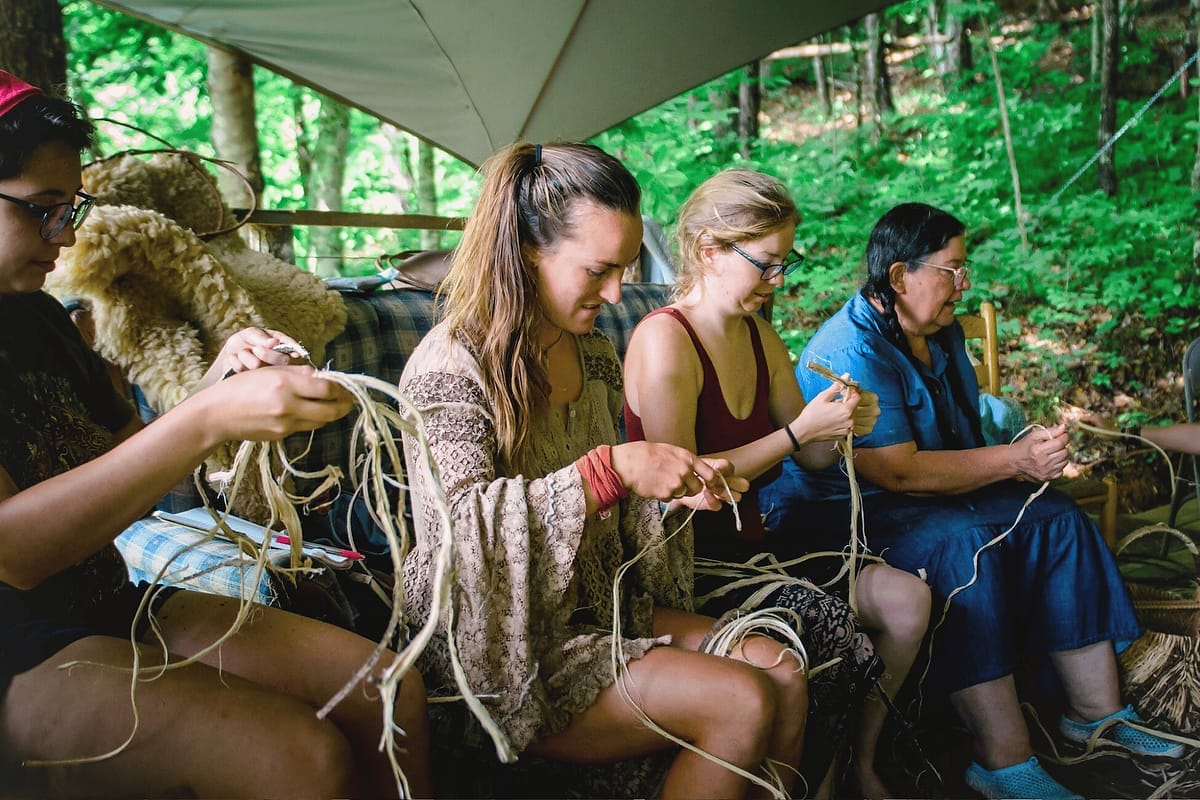
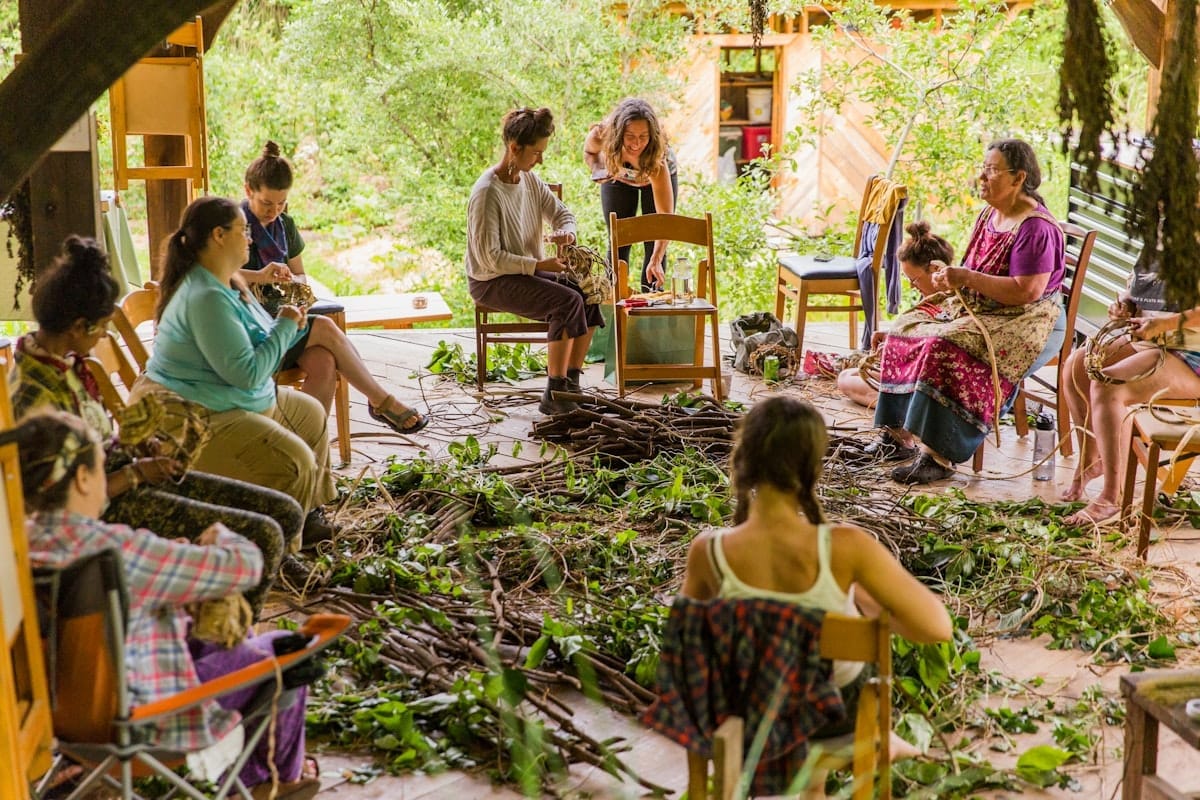
Then you sit down at the weaving table and start your own piece, with an artisan teaching you step by step. It is slower and more absorbing than most guests expect. You eat lunch with the artisan families, then work on in the afternoon, with more advanced techniques if you're progressing quickly. In the evening you sit around a campfire and swap stories with the artisans.
- Materials and natural dye demonstration
- Hands-on weaving of your own piece
- Lunch with artisan families
- Campfire storytelling
Market Visit & Social Enterprise
In the morning your guide takes you through the local market. You see where the dye plants, fibres and tools are sold and how the people who produce, craft and sell the goods are connected. You can buy materials and finished pieces directly from vendors.
In the afternoon you visit the cooperative's wider work: its women's microfinance project, a community school or a social enterprise it supports. A coordinator or cooperative member explains how the loans work and what the extra income means for household food, children's schooling and women's say in family decisions. The evening is free.
- Guided market visit
- Microfinance project, community school or social enterprise visit
- Free evening
Craft Presentation & Departure
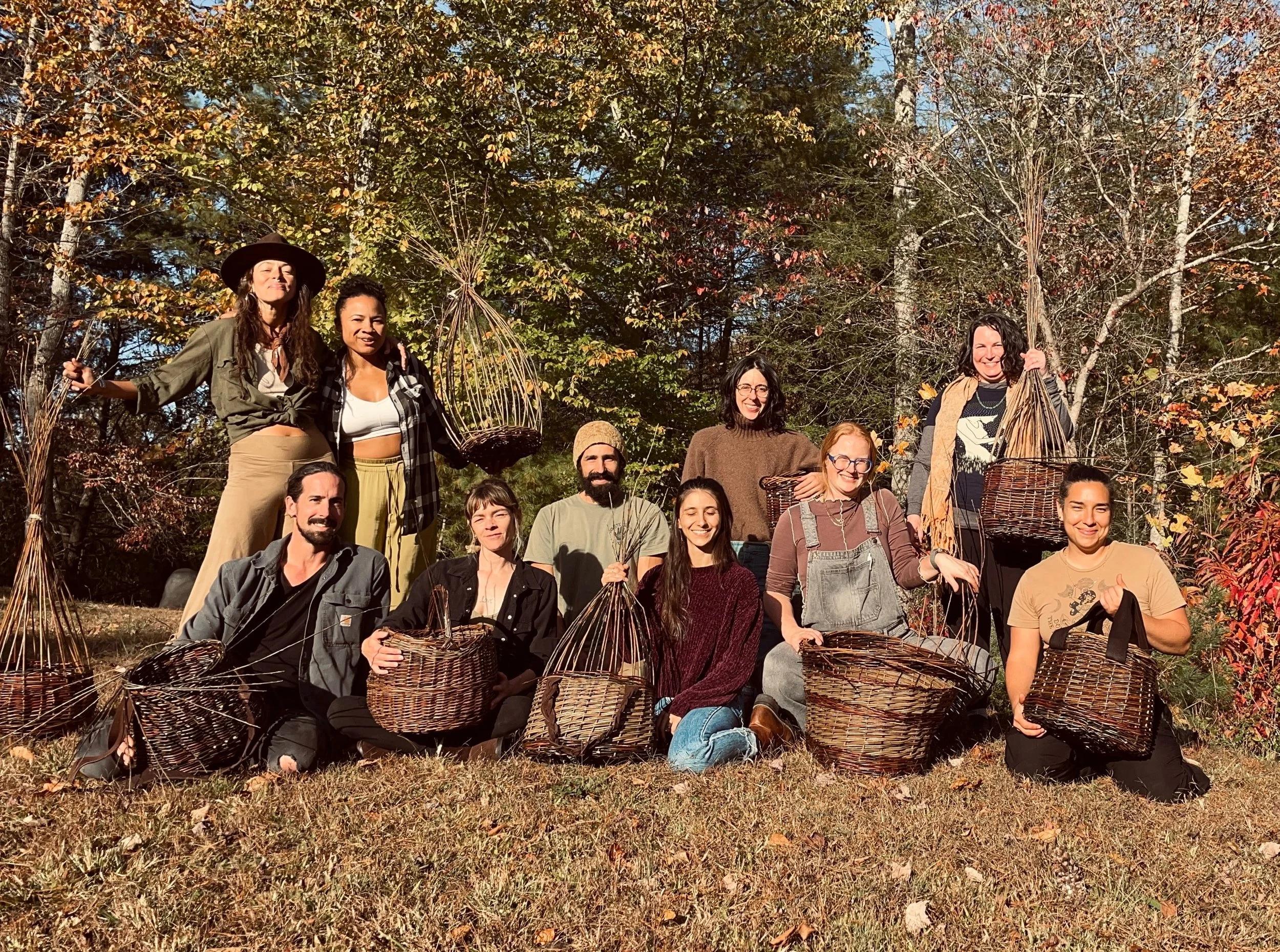
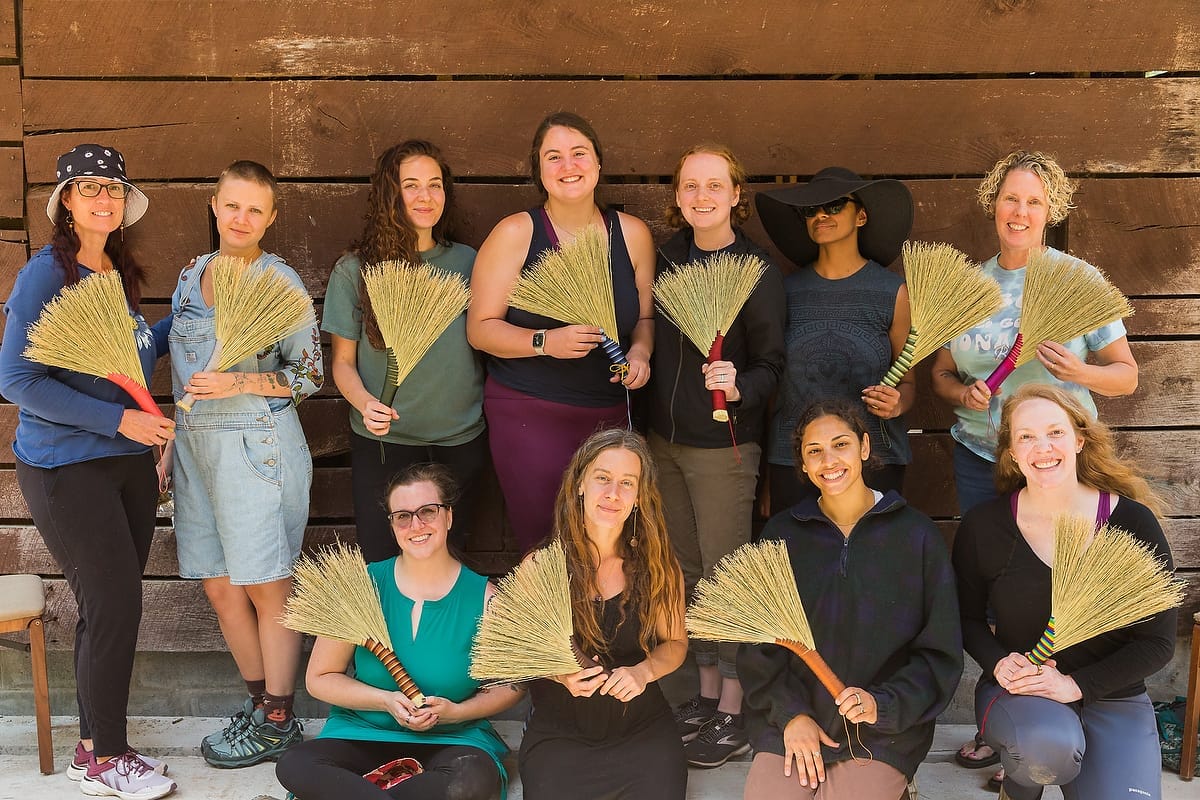
On the last morning each guest shows their finished piece, and the master artisans give friendly feedback on technique and explain how your pattern and colour choices relate to Ugandan basket traditions. It is a celebration, not an assessment.
You share a farewell lunch with the cooperative. Afterwards you drive back to Kampala and arrive in the late afternoon, and your guide takes you to your destination in the city.
- Presentation of your piece
- Farewell lunch with the cooperative
- Transfer back to Kampala
What's Included
Included
- Private road transport from and back to Kampala
- 3 nights at the community guesthouse, full board
- Weaving workshop materials and artisan teaching fees
- Natural dyeing session with materials
- Guided local market visit
- Community and social enterprise visit fees
- Bottled drinking water
- English-speaking guide throughout
- Cultural evening with music, storytelling and supper
Excluded
- International flights
- Uganda visa fees
- Travel and medical insurance
- Tips for guides, artisans and guesthouse staff
- Souvenirs and craft market purchases
- Alcohol and premium drinks
- Optional extras outside the itinerary
Price Per Person
| Group Size | Price per Person | Notes |
|---|---|---|
| 1 traveller | $540 | Private transport |
| 2 travellers | $360 | Per person |
| 3 travellers | $310 | Per person |
| 4 travellers | $280 | Per person |
| 5 travellers | $260 | Per person |
| 6 travellers | $245 | Best group value |
Before You Book
Good to Know
- Fitness: Light activity only, with easy walks and long sessions seated at the workshop. It suits all ages and mobility levels.
- What to wear: Comfortable, relaxed clothes in natural fibres. Don't wear anything you'd mind staining, because the natural dyes can mark fabric.
- Cash: Bring USD cash for craft market purchases and tips for the artisans and guesthouse staff. Card payment isn't available in rural community settings.
- Health: Yellow fever vaccination is required for entry to Uganda. Malaria prophylaxis is recommended, so see a travel clinic 4–6 weeks before you leave.
- Photography: Welcome throughout, but always ask before photographing people. Your guide will show you how.