
21-Day East Africa Safari: Uganda, Rwanda & Kenya
Gorillas in Uganda and Rwanda, chimpanzees, Murchison Falls, Queen Elizabeth, Amboseli, Lake Nakuru and the Maasai Mara, in one private 21-day journey.
Tour Overview
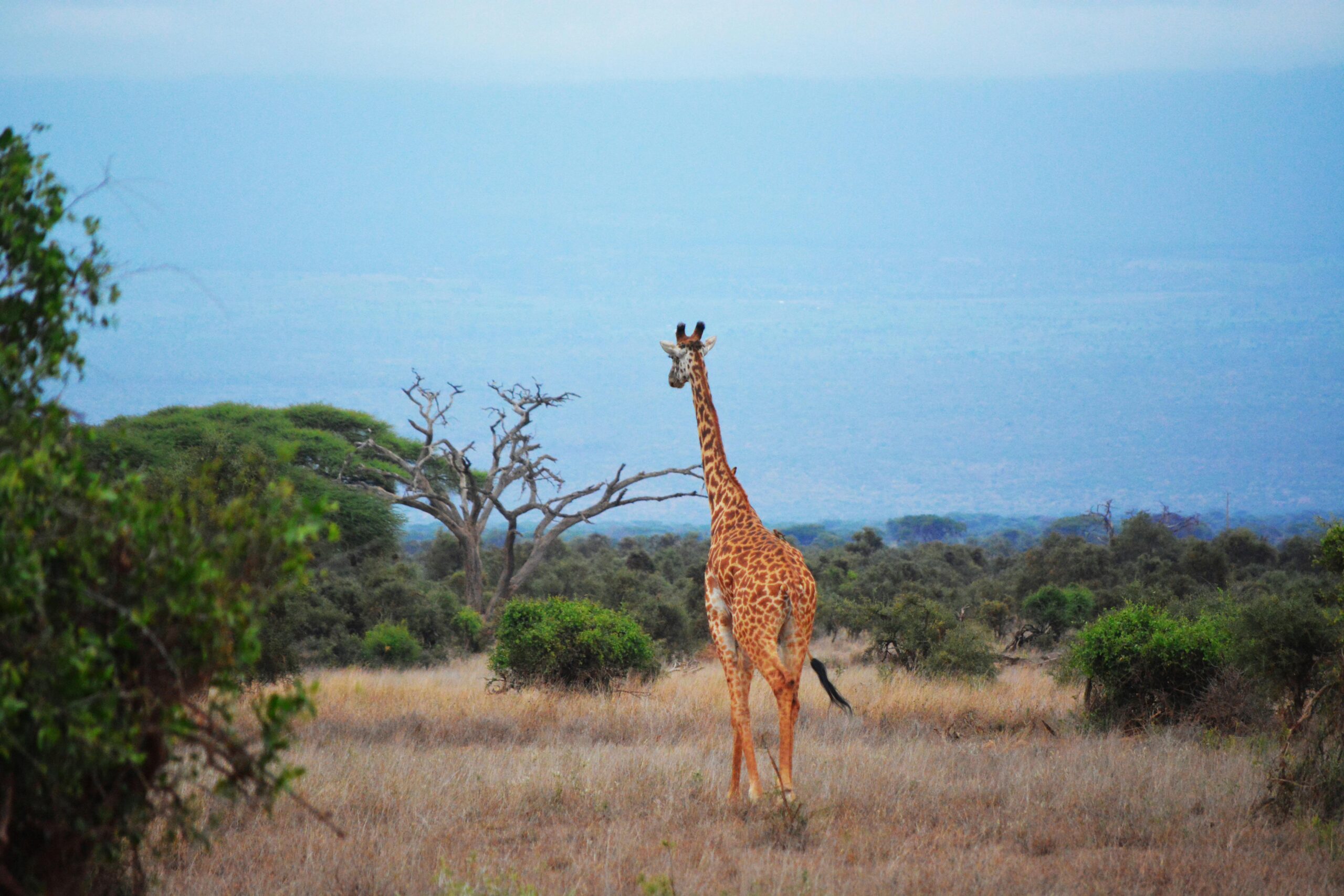
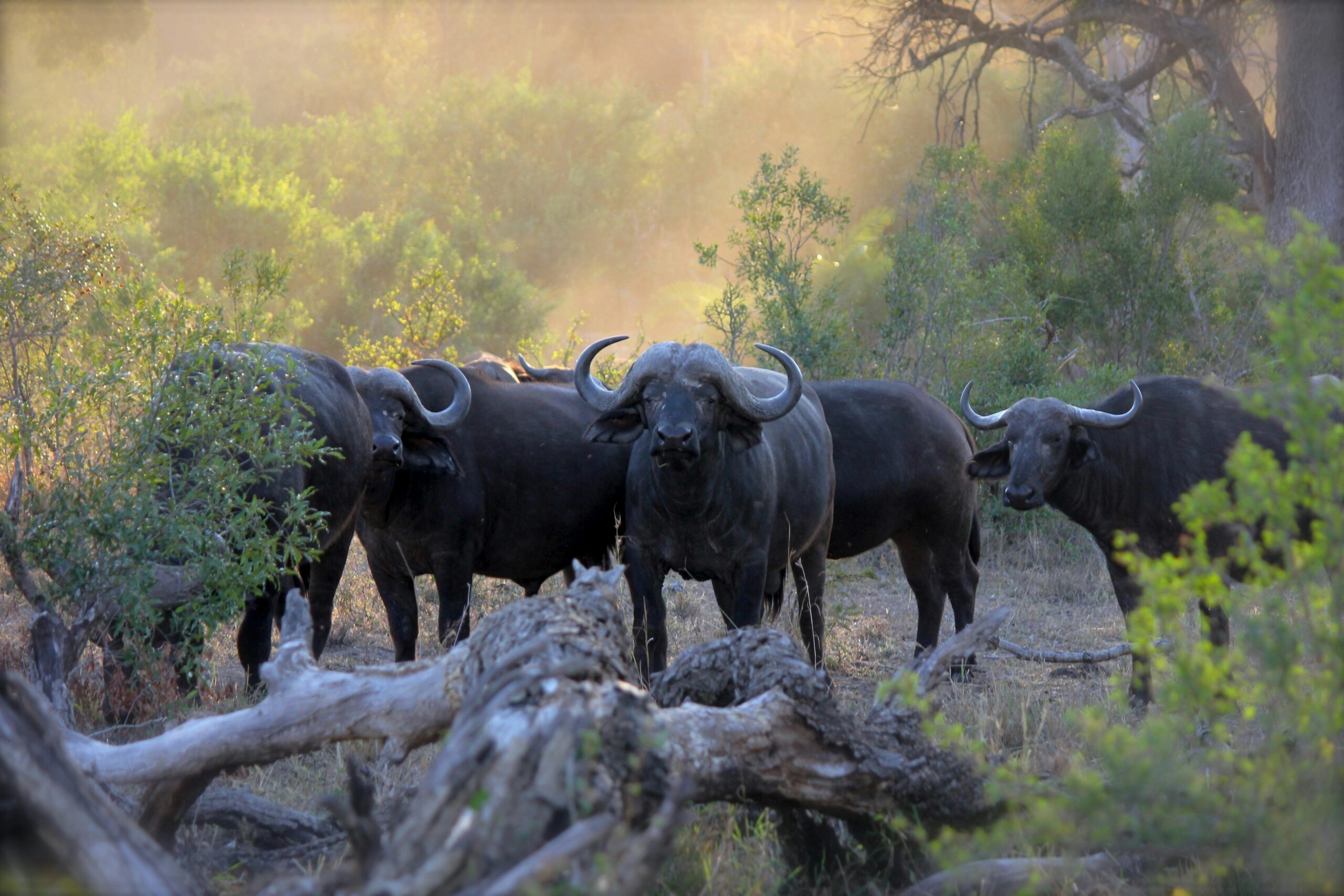
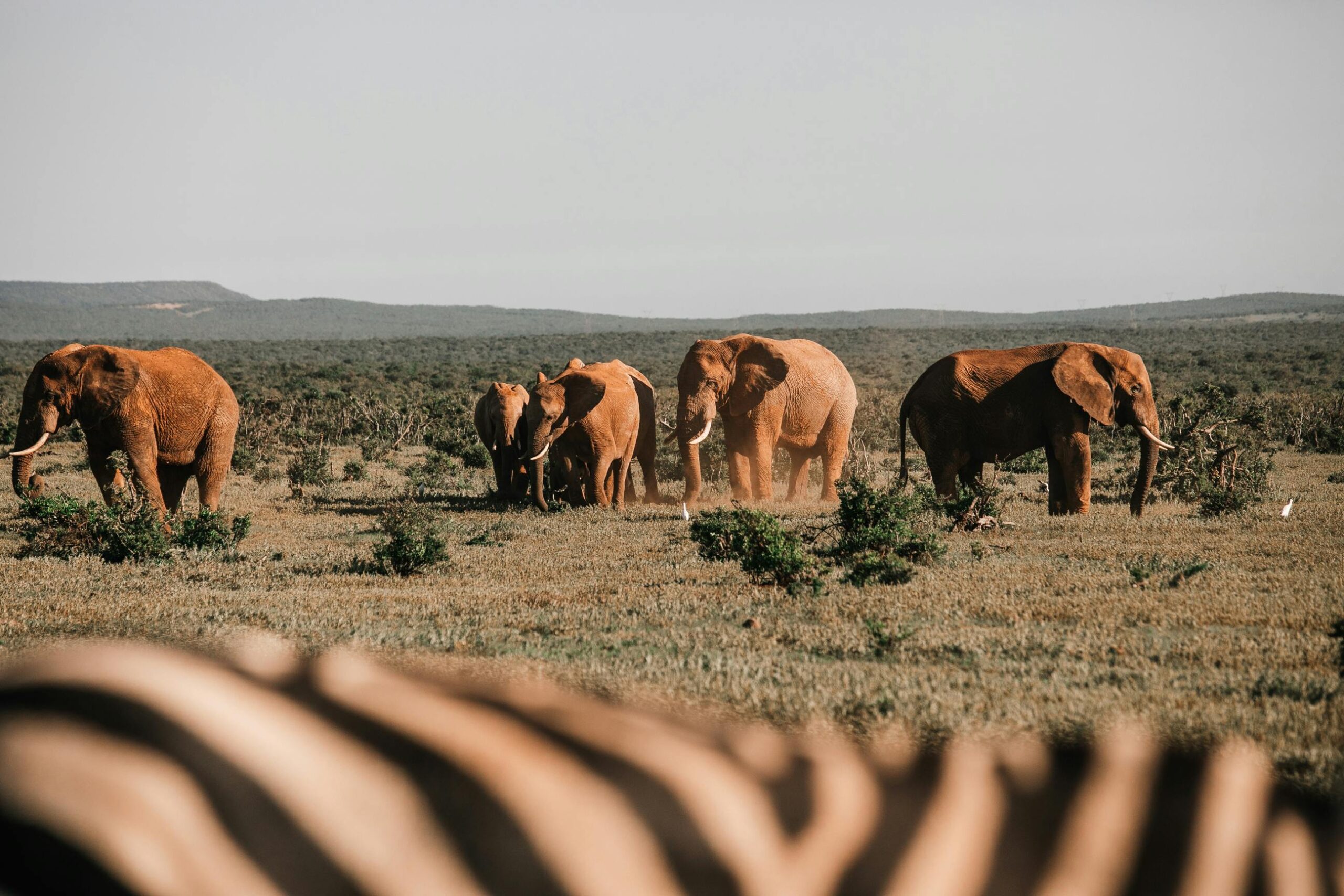
This 21-day private safari links Uganda, Rwanda and Kenya. You track mountain gorillas in both Bwindi and Volcanoes National Park, chimpanzees in Kibale and golden monkeys in the Virunga. You also see Murchison Falls, Queen Elizabeth's tree-climbing lions, Amboseli's elephants, Lake Nakuru and the Maasai Mara. It starts in Entebbe and ends in Nairobi, with a short flight from Kigali to Nairobi in the middle.
Trip Highlights
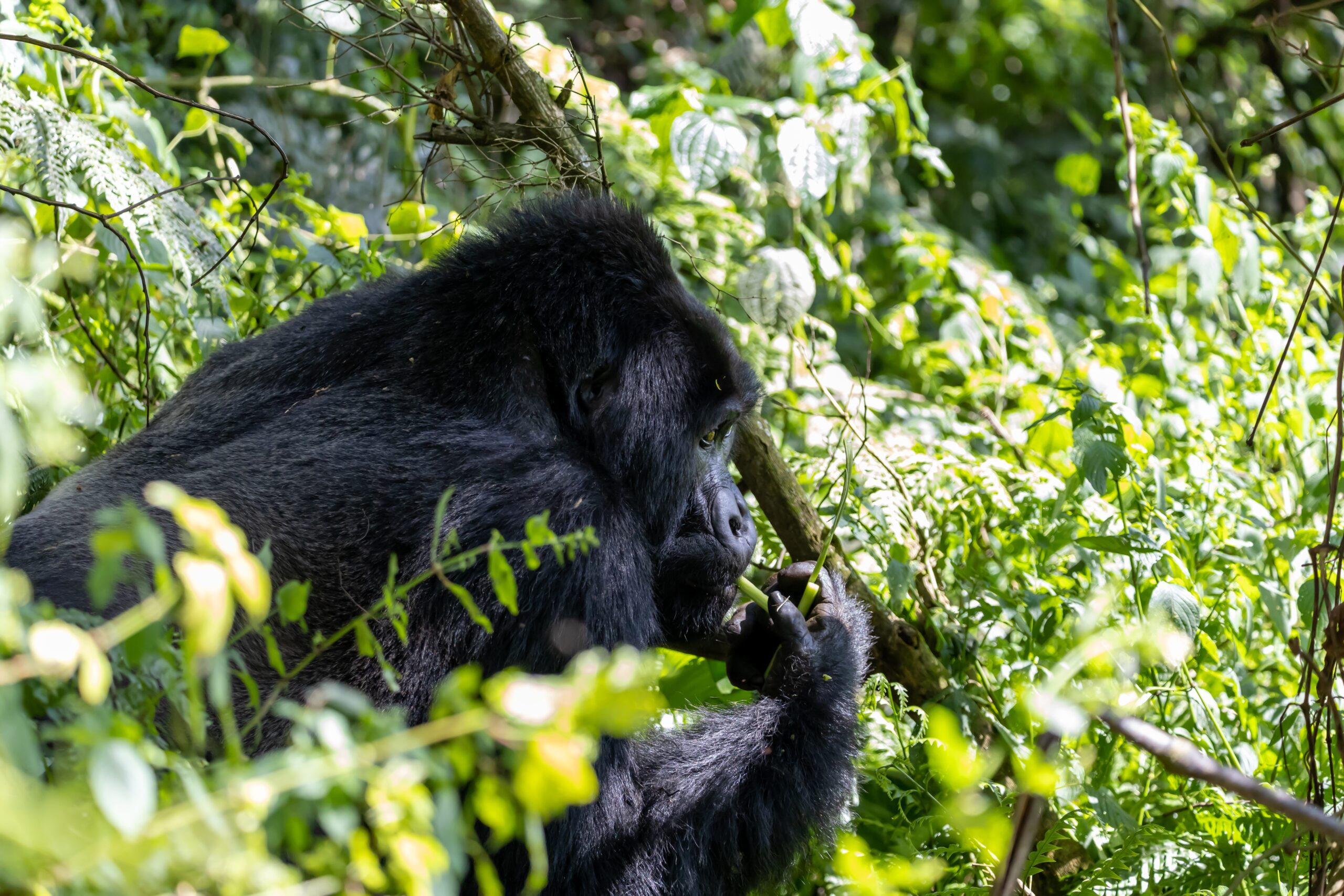
Two Gorilla Treks
One hour with gorilla families in Bwindi (Uganda) and Volcanoes National Park (Rwanda).
Primates
Chimpanzee tracking in Kibale and golden monkeys in the Virunga bamboo.
Uganda's Parks
Murchison Falls, the Kazinga Channel and Ishasha's tree-climbing lions.
Kenya's Parks
Amboseli's elephants, Lake Nakuru and the Maasai Mara.
Kigali & Culture
The Genocide Memorial, Nyamirambo, Bakiga and Maasai village visits.
One Private Trip
One itinerary, guides in all three countries and permits included.
Plan Your East Africa Safari
Tell us your dates and group size. We'll check permit availability and send you a quote.
Day-by-Day Itinerary
Arrive in Entebbe & Kampala
Your driver-guide meets you at Entebbe International Airport and drives you into Kampala. Depending on your arrival time, you take a relaxed city orientation: the Gaddafi National Mosque, the view from Kololo Hill and a visit to a craft cooperative where local artisans make bark cloth and beadwork.
Over a welcome dinner your guide walks you through the whole 21 days: permits, packing for each environment, and the border and flight logistics. Go to bed early, because tomorrow's drive north leaves at dawn.
- Airport pickup
- Kampala orientation
- Welcome dinner and trip briefing
Kampala → Ziwa Rhino Sanctuary → Murchison Falls
You leave Kampala at 6:30 am and drive north across central Uganda. On the way you stop at Ziwa Rhino Sanctuary for a guided walk to see the resident southern white rhinos on foot, at close range with no vehicle between you. After a packed lunch you continue into Murchison Falls National Park, Uganda's largest.
You cross the Nile on the Paraa ferry, with hippos surfacing beside the hull, and reach your lodge on the north bank in the late afternoon.
- Ziwa Rhino Sanctuary walk
- Paraa ferry crossing
- Lodge arrival
Murchison Falls: Nile Cruise & Falls Hike
You start with a sunrise game drive on the Buligi circuit, looking for Uganda kob, Jackson's hartebeest, Rothschild's giraffe, buffalo and, with luck, lions. After breakfast you board the park launch for the three-hour upstream cruise to the base of the falls. You pass hippos, crocodiles, elephants at the water's edge and plenty of waterbirds.
You then get off the boat for a steep 45-minute walk to the top of the falls, where the whole Nile squeezes through a narrow rock gap and rainbows form in the spray. An afternoon game drive finishes the day.
- Game drive
- Nile cruise to the falls
- Hike to the top of the falls
Murchison Falls → Kibale Forest
After an early breakfast you drive south, through northern savannah and then up into the Fort Portal crater lake region, where round volcanic lakes lie among tea estates. You stop at a viewpoint for photos.
You reach your lodge near Kibale Forest in the late afternoon, where it's cooler and more humid. A short guided walk at the forest edge may show red-tailed monkeys and black-and-white colobus, and your guide briefs you on tomorrow's chimp tracking.
- Scenic drive south
- Crater lakes viewpoint
- Forest-edge walk
Chimpanzee Tracking in Kibale
After an early breakfast you go to the Kanyanchu Visitor Centre for the 7:30 am ranger briefing. Groups are small, and trackers have already located the chimps. You hike through lowland rainforest to spend up to an hour with a habituated chimpanzee community. Chimps are noisy, fast and very social, which is a good contrast to the gorillas you'll see later.
After a packed lunch at the forest edge, you walk through the community-run Bigodi Wetland Sanctuary for birds and monkeys. The fees go to the surrounding villages.
- Chimpanzee tracking
- Bigodi Wetland walk
Kibale → Queen Elizabeth National Park
After breakfast you drive south through the crater lake region and down into the Albertine Rift valley. On a clear day the Rwenzori Mountains stand on the horizon. You check in at your lodge on the Mweya Peninsula, where Lake Edward meets the Kazinga Channel and hippos wallow below the terrace.
In the afternoon you take a game drive on the Kasenyi plains, where lions, elephants, buffalo and giraffe are all possible.
- Drive to Queen Elizabeth
- Kasenyi afternoon game drive
Kazinga Channel & Ishasha Tree-Climbing Lions
You begin with a sunrise game drive on the Kasenyi plains, then have breakfast and board the launch for the two-hour Kazinga Channel cruise. Hippos and crocodiles are close to the boat, elephants come down to the water, and the shallows are busy with pelicans, kingfishers and herons.
After a packed lunch you drive south to the Ishasha sector and spend two to three hours looking for the lions that climb the big fig trees there. You sleep in Ishasha.
- Sunrise game drive
- Kazinga Channel cruise
- Ishasha tree-climbing lion search
Ishasha → Bwindi Impenetrable Forest
You can make an optional dawn visit to the Ishasha fig trees before breakfast. The drive east then climbs from the rift valley into the Kigezi highlands, where the Bakiga people have terraced every hillside. At the forest boundary the farmland stops and the wall of Bwindi's canopy begins.
You reach your forest-edge lodge in the early afternoon. Over dinner your guide gives a full gorilla trekking briefing covering etiquette, the 7-metre distance rule and the physical demands.
- Drive into the Kigezi highlands
- Bwindi lodge arrival
- Gorilla trekking briefing
Gorilla Trekking in Bwindi
After an early breakfast you go to the park briefing, where rangers assign you to a gorilla family. A porter, which is included, helps on the steep ground. You trek through dense montane forest while trackers radio the family's position. The trek can take from under an hour to most of the day, depending on where the family is.
When you find them you spend one hour with the family, watching mothers with infants, juveniles playing and the silverback resting close by. Each trekker gets a gorilla trekking certificate. In the afternoon you can take the optional Batwa Cultural Trail with the indigenous forest community.
- Gorilla trek with a porter
- One hour with the gorillas
- Optional Batwa Cultural Trail
Bakiga Village & Lake Bunyonyi
In the morning you visit a Bakiga community near Bwindi. You watch women weave baskets, see local food and banana beer being prepared, and see the energetic Ekizino dance. You can buy baskets and beadwork directly from the makers.
After lunch at the lodge you drive east to Lake Bunyonyi, a calm lake ringed by terraced hills and islands. A late-afternoon canoe ride across the still water ends the Bwindi section.
- Bakiga village visit
- Drive to Lake Bunyonyi
- Canoe ride on the lake
Lake Bunyonyi → Rwanda → Kigali
After breakfast by the lake you drive to the Cyanika border. We handle the paperwork for you. In Rwanda the hills are terraced as far as you can see. You drive east through Musanze (Ruhengeri) to Kigali, which takes about 3–4 hours.
Kigali is clean, modern and green around the edges. After check-in and dinner you get an early night. Tomorrow is a full Kigali day, and the Volcanoes gorilla trek starts at 5:00 am the day after.
- Cyanika border crossing
- Drive through the Rwandan hills
- Kigali arrival
Kigali Cultural Day
You start at the Kigali Genocide Memorial, which documents the 1994 genocide and honours its victims. Allow at least 90 minutes. It's sobering and gives important context for modern Rwanda. Entry isn't included, and we recommend you go.
A guided walk through Nyamirambo, one of Kigali's oldest neighbourhoods, takes you past tailors' workshops, mosques and street food. After a Rwandan lunch you visit the Inema Arts Centre, then Kimironko Market for imigongo panels and agaseke peace baskets. Get an early night, since tomorrow's departure is at 5:00 am.
- Kigali Genocide Memorial
- Nyamirambo walk
- Inema Arts Centre and Kimironko Market
Volcanoes National Park Gorilla Trek
You leave Kigali at 5:00 am and drive northwest to the briefing at Kinigi, arriving by 7:00 am. Rangers check your permit, assign your gorilla family and hand out walking sticks. You climb through farmland and bamboo forest to the misty upper slopes of the Virunga volcanoes.
The forest here is more open than Bwindi, with bamboo, giant lobelias and old lava flows. Treks are often shorter than Bwindi's, but the upper slopes are steep. You get one hour with a habituated family, and each trekker gets a Rwanda Development Board certificate.
- Drive to Kinigi
- Gorilla trek
- One hour with the gorillas
Golden Monkeys & the Dian Fossey Hike
In the morning you track golden monkeys, which live in the bamboo of the Virunga range. They are fast, acrobatic and curious, and easy to photograph. You get one hour with a habituated group.
In the afternoon you hike for three to four hours round trip to the Karisoke Research Centre and the grave of Dian Fossey, the primatologist whose work on mountain gorillas shaped modern conservation. The upper forest is good for birds.
- Golden monkey tracking
- Karisoke and Dian Fossey hike
Kigali → Nairobi: Karen & Giraffe Centre
You transfer to Kigali International Airport for the flight to Nairobi, which takes about an hour and 20 minutes. Your Kenyan driver-guide meets you at Jomo Kenyatta International Airport and takes you into the city.
In the afternoon you visit the Karen Blixen Museum, in the author's former farmhouse near the Ngong Hills. Then you go to the Nairobi Giraffe Centre, where you feed Rothschild's giraffes from a raised platform. Dinner and overnight are in Nairobi.
- Flight Kigali to Nairobi
- Karen Blixen Museum
- Giraffe Centre
Nairobi → Amboseli National Park
You leave Nairobi at 7:00 am and drive south across the Athi Plains toward Amboseli. On a clear day Mount Kilimanjaro appears ahead of you. You reach your lodge in late morning and go out on an afternoon game drive across the wetlands and floodplains, where elephant families are often close, with Kilimanjaro behind them.
At sunset you go up Observation Hill for views over the plains and swamps.
- Drive south to Amboseli
- Afternoon game drive
- Sunset at Observation Hill
Amboseli Game Drives & Maasai Visit
Kilimanjaro is most often clear in the early morning, so you set out at dawn. The wetlands attract most of the park's wildlife, so one drive can show you elephants, lions in the shade, cheetahs and Maasai giraffe.
In the afternoon you visit a Maasai village and meet a resident family. You learn about the thorn-fenced enclosure, the warriors' adornment and the jumping dance of the young men.
- Dawn game drive
- Maasai village visit
Amboseli → Lake Nakuru National Park
After a dawn game drive and breakfast you drive north into the Rift Valley toward Lake Nakuru. The lake is known for flamingos that gather in its shallows in some seasons. The park also has white rhinos, Rothschild's giraffe, lions, leopard, buffalo and colobus monkeys in the fig forest.
An afternoon game drive follows the lake circuit and stops at Baboon Cliff viewpoint, where you can see the whole lake and its shoreline.
- Drive north through the Rift Valley
- Lake Nakuru game drive
- Baboon Cliff viewpoint
Lake Nakuru → Maasai Mara
After a last dawn game drive at Nakuru and breakfast, you drive southwest through the Rift Valley highlands. The land drops into the open grassland of the Maasai Mara.
If you travel in the migration season, the wildebeest herds may be on the plains around your lodge. You arrive in early afternoon and go straight out on a game drive in the afternoon light.
- Drive to the Maasai Mara
- Afternoon game drive
Maasai Mara Full Day
A full day in the Mara. At 6:00 am you can take an optional hot air balloon flight over the plains, followed by a bush breakfast on the savannah. It costs about $500 per person.
The game drives cover the Mara's best circuits for lions, leopards, elephants and buffalo. Between July and October you can watch the Mara River crossings, where wildebeest gather in large numbers before entering the water. Sightings can't be guaranteed, but the Mara is among the best places in Africa to see the Big Five.
- Full-day game drives
- Optional hot air balloon
- Mara River crossing points (July–October)
Maasai Mara → Nairobi & Departure
You take one last dawn game drive in the Mara, then have breakfast and check out for the 5–6 hour drive to Nairobi. We stop for lunch in a Rift Valley town, with time for craft markets. You reach Nairobi in the late afternoon and your driver-guide takes you to Jomo Kenyatta International Airport for your flight home.
- Dawn game drive
- Drive to Nairobi
- Airport transfer
What's Included
Included
- Gorilla permits: Uganda ($800 pp) and Rwanda ($1,500 pp)
- Kibale chimpanzee permit ($250 pp) and golden monkey permit ($100 pp)
- Private 4×4 safari vehicle and expert driver-guides in all three countries
- 20 nights in lodges and camps, full board
- All national park and reserve entry fees in the three countries
- Porter during the Bwindi gorilla trek
- Murchison Falls Nile cruise and Kazinga Channel cruise
- Ziwa Rhino Sanctuary walk, Bigodi Wetland walk and Bakiga village visit
- Dian Fossey hike and Karisoke trail fee
- Kigali cultural day guide and transport
- Giraffe Centre entry and Maasai village visit
- Uganda–Rwanda border crossing assistance
- Bottled drinking water
Excluded
- International flights (Entebbe in, Nairobi out)
- Kigali–Nairobi flight (about $150–$250)
- Visa fees for Uganda, Rwanda and Kenya (the East Africa Tourist Visa covers all three)
- Travel and medical insurance
- Tips for guides and lodge staff
- Alcohol and premium drinks
- Optional Maasai Mara hot air balloon (about $500 pp)
- Optional Batwa Cultural Trail fee
- Karen Blixen Museum and Kigali Genocide Memorial entry
- Souvenirs and personal shopping
Get Your Price
The price depends on your group size, and travel dates. Send us a message and we'll reply with a quote that includes your gorilla, chimp and golden monkey permits.
Before You Book
Good to Know
- Permits: Gorilla permits are limited and sell out, so book well ahead. We confirm your permits and dates when you book.
- Fitness: Moderate. The gorilla treks are steep and can last from an hour to most of the day, and there are long drives on several days. Early starts are needed on Days 2, 13 and 16.
- Flights: Your international flights go into Entebbe and out of Nairobi. The Kigali to Nairobi flight on Day 15 is not included.
- Visas: You need visas for Uganda, Rwanda and Kenya, or an East Africa Tourist Visa that covers all three. Requirements depend on your nationality, so check before you travel.
- Wildlife: Sightings can't be guaranteed. The wildebeest migration is in the Mara roughly from July to October.
- Health: Yellow fever vaccination is required for entry to Uganda and recommended for the whole route. Malaria prophylaxis is recommended, so see a travel clinic before you go. Anyone with cold or flu symptoms may be asked not to trek, to protect the gorillas.
- Insurance: Comprehensive travel and medical insurance is strongly advised.