
9-Day Northern Kenya Nomad Safari
Game drives in Samburu, walking safaris with Samburu guides in Kalama Conservancy, and forest trails in the Matthews Range. A route most Kenya visitors never see, with domestic flights included.
Tour Overview
Northern Kenya is dry, open and remote, with semi-desert plains rising into forested mountains where pastoral cultures still shape the land. This nine-day safari moves through three areas: Samburu National Reserve, Kalama Conservancy and the forested Matthews Range. In Samburu you drive alongside Grevy's zebra, reticulated giraffe and gerenuk on the Ewaso Nyiro River. In Kalama you walk the open wilderness with Samburu guides who read the land. In the Matthews Range you follow forest trails far from any conventional safari circuit. You fly north from Nairobi and fly back at the end, in a private vehicle with a driver-guide throughout.
Trip Highlights
Samburu's northern species
Grevy's zebra, reticulated giraffe and gerenuk, found nowhere in southern Kenya, along with elephants and crocodiles on the Ewaso Nyiro River.
Walking with Samburu guides
A full walking safari day in Kalama with Samburu ranger-guides, learning to track animals and read the land.
Kalama Conservancy
A community-owned conservancy of over 150,000 acres with very few visitors, where drives can go off-road and follow the animals.
Forests of the Matthews Range
Rising above 2,500 metres, the range has cool forest trails, streams, viewpoints and elephants. The mountains are sacred to the Samburu.
Plan Your Northern Kenya Safari
Tell us your dates and group size. We'll confirm availability and send you a quote.
Day-by-Day Itinerary
Arrival in Nairobi
Your guide meets you in the arrivals hall at Jomo Kenyatta International Airport and takes you to your boutique hotel. Nairobi sits at 1,700 metres on the edge of the Rift Valley escarpment, so the air is cool. The afternoon is yours to recover from your flight.
In the evening your guide briefs you on the route north through Samburu, Kalama and the Matthews Range. The briefing covers realistic wildlife expectations, what the Kalama walking safaris involve, how to behave in community visits, what to pack and a walk through the route on a map.
- Airport pick-up and hotel transfer
- Evening briefing and route walkthrough
Nairobi to Samburu National Reserve
After an early breakfast you transfer to Wilson Airport for a scheduled flight north. Within about forty minutes of leaving the highlands, the land below turns from green to ochre. The broad sandy course of the Ewaso Nyiro River appears among doum palms and dry acacia woodland. Your guide and vehicle meet you at the airstrip, and the game drive to camp starts straight away.
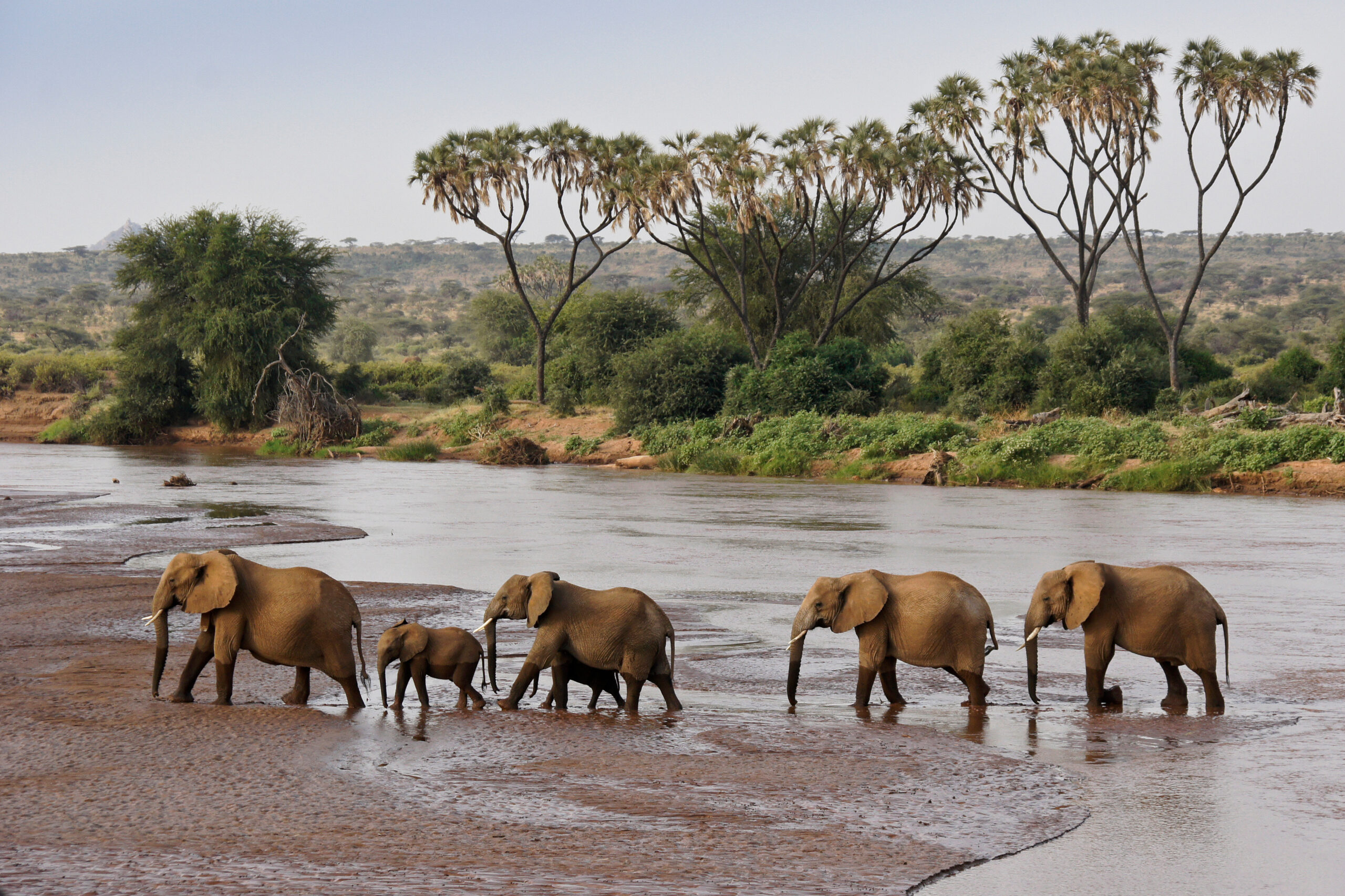
Samburu has species you will not see in southern Kenya. Grevy's zebra, the world's largest wild equid, moves through the acacia scrub in small harems led by a stallion. Reticulated giraffe browse the taller trees, and gerenuk, the long-necked antelope, feed standing upright on their hind legs. The afternoon drive along the Ewaso Nyiro River takes in crocodiles, elephants and many birds.
- Scheduled flight from Wilson Airport to Samburu
- Game drive to camp
- Afternoon drive along the Ewaso Nyiro River
Full Day in Samburu
You leave early, before the heat, when predators are still active and elephant herds are moving between the river and their feeding areas. Lions live in Samburu in reasonable numbers, and their tawny coats match the dry grass so well that a resting group can be spotted only when one animal moves. Leopards are harder to find, but the riverside fig trees and rocky outcrops along the Ewaso Nyiro suit them, and patient watching of likely spots is often rewarded.
The Ewaso Nyiro is the only permanent water in a dry landscape, so every species comes to it. Elephant herds arrive in late morning to drink, and the calves play in the water. The riverbanks also have the reserve's highest concentration of Nile crocodiles, some very large, lying in lines on the sand. You rest at camp through the midday heat, then drive again into the golden hour.
- Morning game drive for lions, elephants and leopard
- Midday rest at camp
- Afternoon drive into the golden hour
Samburu to Kalama Conservancy
You start with one last morning game drive in Samburu, then head north into remote country. Kalama is a community-owned conservancy covering over 150,000 acres of northern rangeland, and it is one of the least visited conservation areas in East Africa. Visitor numbers are kept low, and the conservancy allows off-road driving, so game viewing follows the animals rather than the tracks.
You reach the eco-camp, a low-impact tented camp, in time for lunch. The conservancy holds healthy numbers of elephant, lion, leopard, cheetah, wild dog and northern antelope, and both Grevy's and plains zebra use it as a movement corridor. On the afternoon drive you see a landscape that has not been arranged for tourists, with cattle tracks crossing game trails and Samburu herders in the distance.
- Morning game drive in Samburu
- Drive north to Kalama
- Afternoon off-road safari
Walking Safari in Kalama
Today is a long walk through the landscape with Samburu rangers whose knowledge of the conservancy is passed down through generations. They teach you to read elephant tracks in the dust, tell a leopard's scratch marks on acacia bark from a lion's claw marks, and work out which antelope fed where from the height of the browsing and the plants eaten. They also share Samburu knowledge, such as which plants signal underground water, which birds' calls warn of predators and why cattle move with the seasons.
If you prefer, you can explore by camel instead, at the pace of a walking animal and slightly above the bush. The afternoon is free or a short game drive. In the evening you can join an optional night drive and sweep spotlights across the scrub for civets, genets, aardvark and small cats, with hyena calls carrying over the plains.
- Guided walking safari with Samburu rangers
- Optional camel exploration
- Optional night drive
Kalama to the Matthews Range
You drive north out of Kalama, and the land changes as you climb. Open acacia scrub gives way to denser bush, then to cooler, deeper-soiled montane country. The Matthews Range rises above 2,500 metres. It is named after General Lloyd Mathews, but the Samburu have long called it Ol Doinyo Lenkiyio. Its forest is very different from the lowlands you have left.
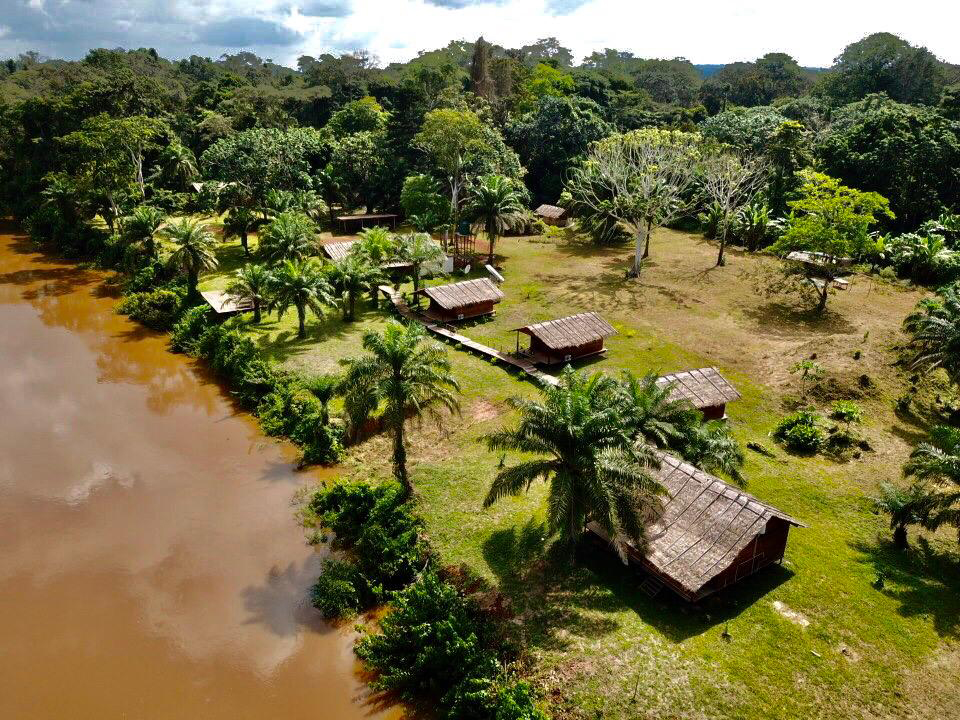
You arrive at a remote eco-lodge set among forested hills, with views down through the canopy to the plains. In the afternoon a guided forest walk introduces the medicinal plants used by Samburu and Dorobo communities and a rich variety of birds, including fig-eating flocks and forest specialists not found in the lowlands. The air at this altitude is cool and smells of forest.
- Drive north and climb into the Matthews Range
- Check-in at the eco-lodge
- Afternoon guided forest walk
Full Day in the Matthews Range
Today is on foot. You follow forest trails across clear mountain streams, through cedar and podocarpus forest and out to viewpoints over the plains of northern Kenya. The focus is landscape and culture rather than wildlife numbers, so the day is quieter and more reflective than a drive in Samburu. Elephants live in the forest and are often met on the trails, black-and-white colobus move through the upper canopy, and the birdlife is rich.
Your guide also explains the mountains' cultural side. They are sacred to the Samburu, linked with particular deities and rituals, and some forest areas are off limits, which has protected them for generations. The afternoon is free, whether you read, rest or watch the light change over the canopy from the lodge veranda.
- Guided forest hike with stream crossings
- Viewpoints over the northern plains
- Free afternoon at the lodge
Matthews Range to Nairobi
After an early breakfast, with a dawn chorus of altitude-specialist birds, a vehicle takes you to the nearest airstrip for the scheduled flight to Nairobi. The flight reverses Day 2: forest gives way to northern scrub and the ochre plains of Samburu, then Nairobi's green highlands.
The afternoon in Nairobi is relaxed. The farewell dinner is Kenyan food: nyama choma with kachumbari, spiced pilau rice, coastal-style vegetables and tropical fruit such as mango, papaya and passion fruit.
- Transfer to the airstrip and flight to Nairobi
- Afternoon at leisure
- Farewell dinner
Departure
After breakfast at the hotel, a private transfer takes you to Jomo Kenyatta International Airport. Your guide accompanies you to the departures hall.
- Breakfast and private airport transfer
What's Included
Included
- All domestic scheduled flights as per the itinerary
- Private vehicle and professional driver-guide throughout
- 8 nights in mid-range eco-lodges and tented camps
- All meals as indicated for each day
- Park and conservancy entrance fees
- Guided walking safaris and night drives (where permitted)
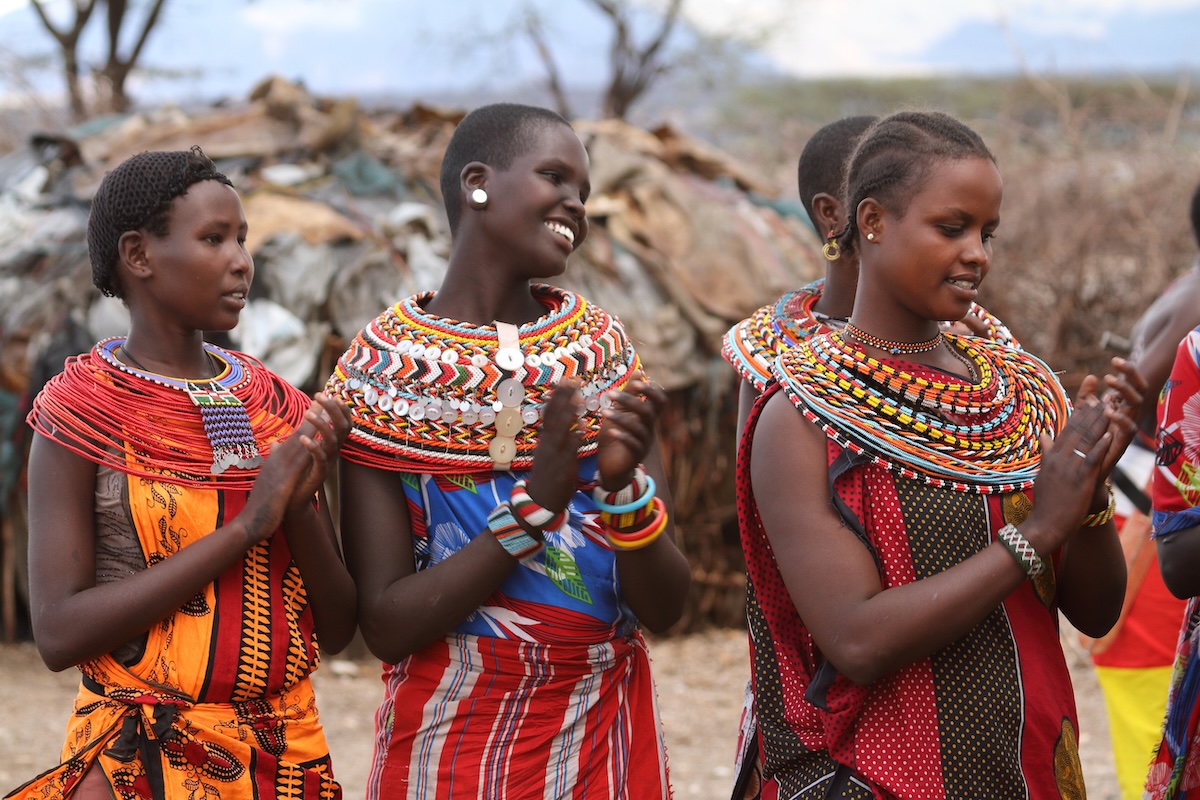
- Cultural interactions with Samburu communities
- Bottled drinking water during all activities
- Airport transfers on arrival and departure
- Local taxes and levies
Excluded
- International flights to and from Nairobi
- Kenya visa and related entry fees
- Travel, medical and evacuation insurance
- Tips for guides, rangers and camp staff
- Alcohol and premium drinks
- Souvenirs and personal purchases
- Optional activities not listed in the itinerary
- Costs from itinerary changes due to weather or conditions
Price Per Person
| Group Size | Price per Person | Notes |
|---|---|---|
| 1 person | $9,450 | Solo traveller rate |
| 2 people | $7,250 | Per person |
| 3 people | $6,350 | Per person |
| 4 people | $5,750 | Per person |
| 5 people | $5,450 | Per person |
| 6 people | $5,350 | Best group value |
Before You Book
Good to Know
- The walking: The Kalama walks and Matthews Range hikes are on uneven ground. You should be comfortable walking two to four hours on rough ground in warm conditions. You need reasonable stamina but no technical fitness.
- Safety: All walking safaris and night drives in Kalama are led by experienced, armed Samburu ranger-guides. Follow your guide's instructions at all times.
- Cash: Carry US dollars for tips, purchases and extras at remote camps. Cards are rarely accepted outside Nairobi, so withdraw enough cash before you leave the capital and keep small bills for tips.
- Health: Malaria prophylaxis is strongly recommended for Samburu and Kalama, so see a travel clinic 4 to 6 weeks before you leave. Travel and medical evacuation insurance is essential for remote areas like the Matthews Range.
- What to pack: Lightweight, breathable clothes in neutral tones, a warm fleece for Matthews Range evenings and early flights, sturdy closed shoes, binoculars, sunscreen, insect repellent and a wide-brimmed hat.
- When to go: June to October and January to March are the dry seasons.
Ready for Northern Kenya?
Send us your dates and group size. We'll confirm availability and send a quote.